.webp)


_2026-06-09_14-32-58.avif)
What is lichen sclerosus?
Lichen sclerosus is a chronic inflammatory disease where the skin becomes thinner, whiter, and more fragile. The condition primarily affects the skin around the genitals and anus but can also occur on the torso, breasts, neck, or back. According to DermNet NZ is one of the most overlooked chronic skin conditions.
Other names: vulvar lichen and BXO
In women, lichen sclerosus is also called "vulvar lichen" or "lichen sclerosus et atrophicus." This is the same condition. In men, the genital variant is called "balanitis xerotica obliterans" (BXO), a term found in older medical texts.
The condition affects women and men of all ages but has two peaks: in women around menopause (40-60 years) and in girls before puberty (3-10 years). Men can be affected at any age. Women are significantly more likely to be affected than men, with a ratio of approximately 10:1.
Lichen sclerosus is not contagious and not sexually transmitted.
Do you suffer from Lichen sclerosus?
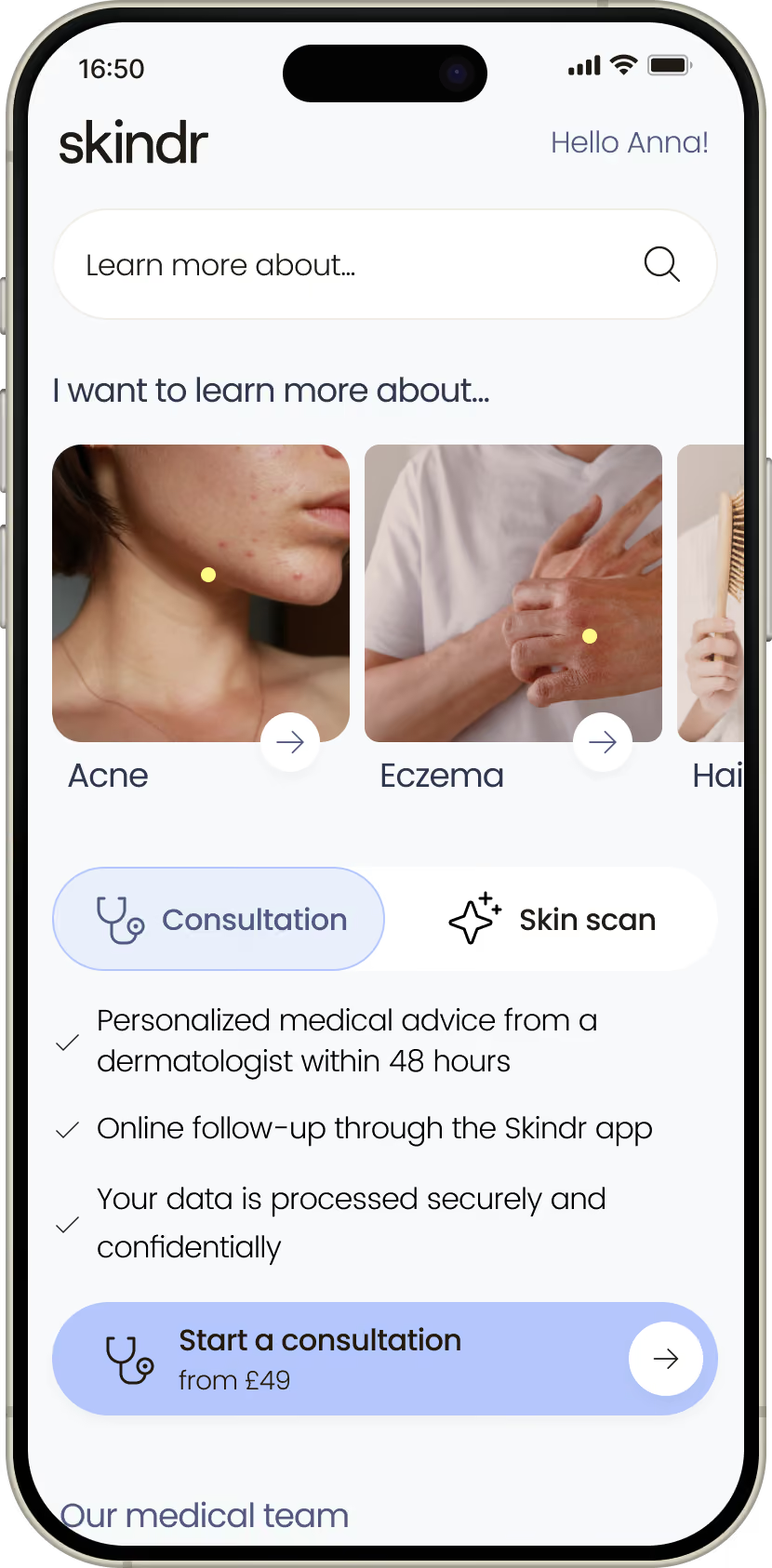
Personalized advice for your skin, completely online. Upload a few photos through the Skindr app and receive medical advice from a licensed dermatologist within 48 hours. No waiting room or referral required.
How does lichen sclerosus develop?
The exact cause of lichen sclerosus is not yet fully known. Researchers assume it involves a combination of factors. You can read more about the pathophysiology in the medical handbook of huidziekten.nl.
Autoimmune background
The immune system plays a central role: in people with lichen sclerosus, the immune system partly targets the body's own skin. The condition is therefore often associated with other autoimmune diseases such as thyroid disorders, vitiligo, and alopecia areata.
The role of hormones (estrogen)
Estrogen deficiency makes the skin more susceptible to inflammation. This explains why the disease peaks in menopausal women and pre-pubescent girls, two life stages with low estrogen levels. In men, testosterone appears to play a similar protective role.
Genetic predisposition also plays a role: lichen sclerosus is more common within the same family. Skin trauma or chronic irritation can trigger or worsen the disease in those with a predisposition. The condition is not contagious and has no infectious cause.
Symptoms and characteristics of lichen sclerosus
The symptoms of lichen sclerosus vary greatly by individual and age. Common to all variants are white or whitish-grey patches, thinning of the skin, and severe itching.
In women (vulva and anus)
The most common symptom in women is intense itching in the vulva and around the anus, which can be worse at night. The skin becomes thinner, whiter, and more fragile, and may show small tears upon touch. Pain during sexual contact is common. In more severe cases, the skin folds contract.
In men (penis and phimosis)
In men, white patches appear on the glans and foreskin. Itching, a burning sensation, and pain during erection or sexual contact are characteristic. A common complication is phimosis: the foreskin becomes too tight to retract.
In children (girls)
Lichen sclerosus in pre-pubescent girls manifests as white patches on the vulva and around the anus, sometimes accompanied by small bleeds or tears. Important: these symptoms can be confused with signs of sexual abuse. A dermatologist can make the distinction.
Extragenital forms
Lichen sclerosus can also occur on the torso, breasts, neck, upper back, or upper arms. Extragenital areas typically itch less.
Cancer risk
Long-term lichen sclerosus increases the risk of squamous cell carcinoma (SCC). In women, this lifetime risk is 3 to 5%, and in men, approximately 2%. This risk is manageable with regular dermatologist check-ups. Thuisarts.nl confirms that regular check-ups are essential. Unsure about a spot? A certified Skindr dermatologist can assess your spot within 48 hours. See also our page on skin cancer or squamous cell carcinoma.
Where does lichen sclerosus occur?
Lichen sclerosus primarily affects the anogenital region: the vulva, perineum, and anus in women, and the glans and foreskin in men. In children, it is usually limited to the genital and perianal area.
Extragenital sites occur on the trunk, breasts, neck, and upper back. The mouth and mucous membranes are rarely affected.
Do you suffer from Lichen sclerosus?
Personalized advice for your skin, completely online. Upload a few photos through the Skindr app and receive medical advice from a licensed dermatologist within 48 hours. No waiting room or referral required.
Treatment for lichen sclerosus
Lichen sclerosus is a chronic condition that cannot be fully cured, but it can be well managed. With the right treatment, symptoms significantly decrease, and the risk of complications remains limited.
The first-line treatment is an anti-inflammatory ointment. Your doctor or dermatologist will discuss which approach and duration suit your situation. It is crucial not to stop treatment as soon as the itching improves: a relapse is almost certain if you stop too early.
For men with phimosis or severe narrowing, circumcision or another surgical procedure may be indicated. For women with severe scarring, plastic surgery correction may be considered.
For self-care, it helps to use mild, unscented detergents, wear cotton underwear, and use lubricant during sexual contact. Monthly self-examination with a mirror is useful. Lichen sclerosus requires long-term follow-up: at least one annual check-up with a dermatologist is recommended. For pain during sex, a referral to a pelvic floor physical therapist can significantly reduce symptoms.
Do you have genital symptoms that you can't quite identify? Through Skindr, you'll receive advice from a certified dermatologist within 48 hours.
What doesn't work for lichen sclerosus?
Stopping treatment as soon as itching improves is a common mistake: lichen sclerosus is chronic and almost always returns without a maintenance dose.
Strong soaps, perfumed shower gels, or wax further dry out the already delicate skin and worsen symptoms.
Self-treatment with antifungal cream is another pitfall: the white patches resemble a fungal infection, but that cream does not help with lichen sclerosus and can delay a correct assessment.
In children, it is particularly important not to stop treatment after symptom reduction without a dermatologist's check-up. Doing nothing when symptoms worsen increases the risk of progressive scarring and, in the long term, raises the chance of skin cancer.
Frequently Asked Questions about lichen sclerosus
What is lichen sclerosus?
Lichen sclerosus is a chronic skin disease in which the skin becomes thinner, whiter, and more fragile. The condition primarily affects the genitals and anus but can also occur elsewhere on the body.
Does lichen sclerosus go away on its own?
In most cases, no. In children, spontaneous improvement sometimes occurs after puberty, but in adults, the condition is chronic and recurs without maintenance treatment.
Is lichen sclerosus contagious or sexually transmissible?
No. Lichen sclerosus is not contagious, not infectious, and not sexually transmissible. It is an autoimmune condition, not an infection.
What is the life expectancy with lichen sclerosus?
Lichen sclerosus does not affect life expectancy with regular dermatologist check-ups. The risk of squamous cell carcinoma (3-5% in women, approximately 2% in men over a lifetime) is manageable with annual follow-up.
Can lichen sclerosus turn into cancer?
Long-term lichen sclerosus increases the risk of squamous cell carcinoma: 3 to 5% in women and approximately 2% in men over a lifetime. Regular check-ups by a dermatologist are essential.
How is lichen sclerosus treated?
First-line treatment is an anti-inflammatory ointment. Your doctor or dermatologist will discuss which approach and duration suit your situation. In cases of phimosis or severe scarring, surgery may be indicated.
Can Skindr help with lichen sclerosus?
Yes. Through Skindr, you send a photo and description, and a certified dermatologist will provide personalised advice within 48 hours. This is also useful to rule out a sexually transmitted infection like genital herpes .
Resources
Skindr certified dermatologists (www.skindr.com)
DermNet NZ: Lichen sclerosus
Huidziekten.nl: Lichen sclerosus
Thuisarts.nl: Lichen sclerosus
Apotheek.nl: Lichen sclerosus


](https://static.legitscript.com/seals/624359.png)