.webp)


.png)
What is folliculitis?
Folliculitis is an inflammation of the hair follicles, the small sacs in the skin from which hairs grow (DermNet NZ). The condition is also known as an "inflamed hair follicle." It is usually a superficial inflammation that appears as small red pimples with a hair in the center.
The condition is not contagious from person to person and can affect anyone, regardless of age or gender. Folliculitis is one of the most common skin conditions and is often mild in nature.
Folliculitis looks very similar to acne and can be confused with it. The distinguishing feature is that with folliculitis, the pimples are always centered around a visible hair. A boil or furuncle goes deeper and is more painful. Folliculitis that penetrates deeper into the hair follicle can evolve into a boil, which is an extra reason to treat the condition in a timely manner.
Do you suffer from Folliculitis?
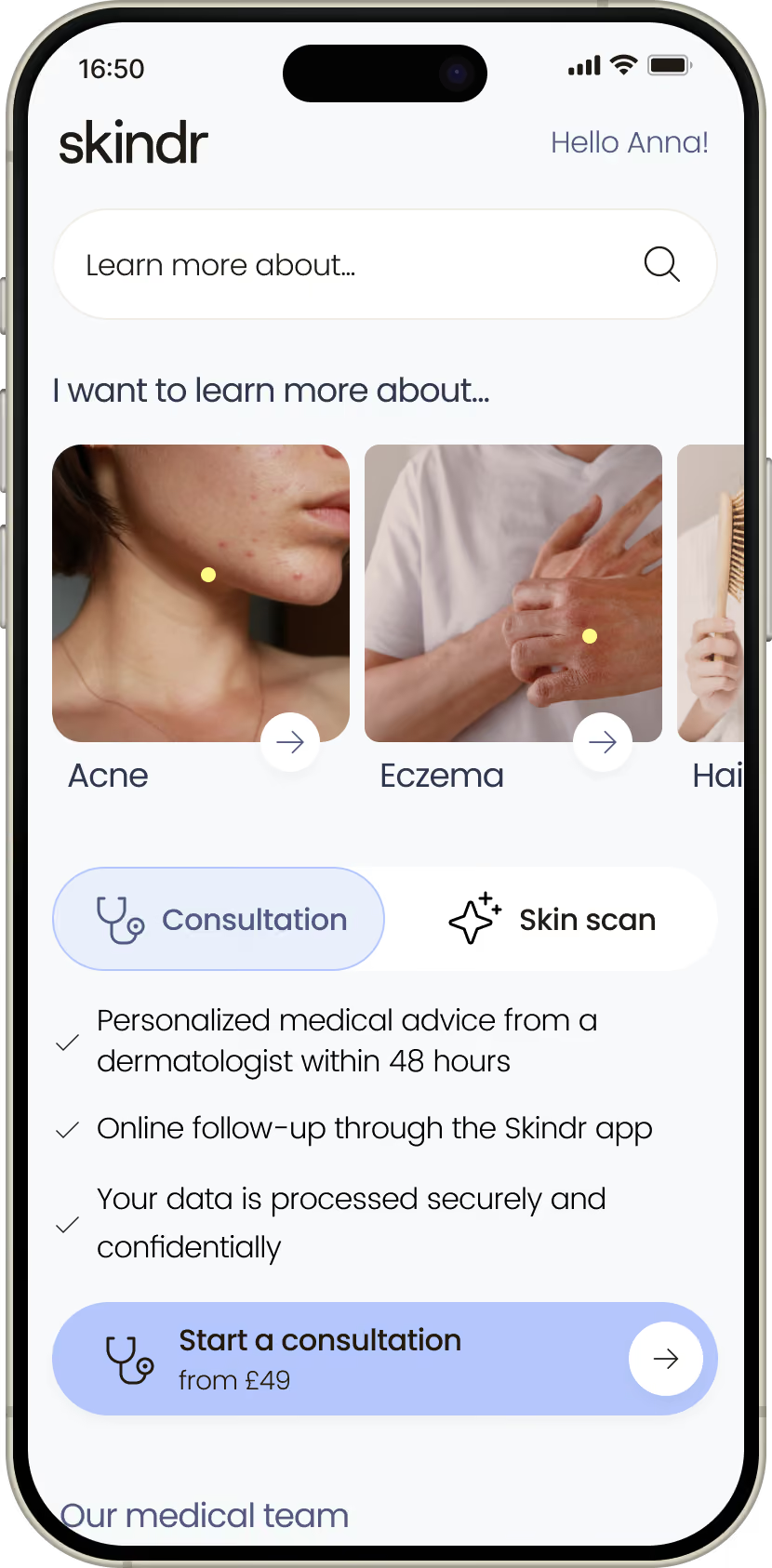
Personalized advice for your skin, completely online. Upload a few photos through the Skindr app and receive medical advice from a licensed dermatologist within 48 hours. No waiting room or referral required.
How does folliculitis develop?
Folliculitis occurs when a hair follicle becomes irritated or infected. The direct cause varies, but the most common culprits are bacteria, yeast, or mechanical irritation.
Bacterial folliculitis is caused by Staphylococcus aureus. The bacteria can enter through a small abrasion caused by shaving or friction.
Pityrosporum folliculitis (Malassezia folliculitis) is caused by a yeast that naturally occurs on the skin. In warm weather, with excessive sweating, or after prolonged treatment, the yeast can overgrow.
Mechanical folliculitis is caused by shaving over sensitive areas. In people with curly hair, the hair sometimes grows back into the skin, causing ingrown hairs that further irritate the hair follicles.
Hot tub folliculitis occurs after contact with contaminated water and typically resolves on its own within 7 to 10 days. Risk factors include a weakened immune system, diabetes, obesity, and tight clothing. Also, hair loss and damage to the hair follicle can increase the risk of folliculitis.
Symptoms and characteristics of folliculitis
Folliculitis is characterized by small red bumps or pimples with a white or yellow head, each surrounding a visible hair. On light skin tones, they are clearly visible as red. On dark skin tones, they may appear more dark brown or purplish.
There is a distinction between superficial folliculitis (only the upper part of the hair follicle) and deep folliculitis (deeper in the skin, more painful).
Folliculitis is not contagious from person to person. However, the bacteria or yeast can spread to other hair follicles on your own body if you squeeze them.
Note: pimples that spread rapidly, redness/warmth around a larger area, fever, swollen lymph nodes, or folliculitis present for longer than two weeks are reasons to consult a dermatologist.
Are you unsure if it is folliculitis? A certified Skindr dermatologist will examine your skin within 48 hours.
Where does folliculitis occur?
Folliculitis can occur anywhere hair follicles are present.
In the beard area: due to shaving (Staphylococcus aureus). On the scalp: due to sweating or the wrong shampoo (Pityrosporum). In the armpits and groin: due to shaving and friction. On the buttocks and in the pubic area: due to pressure, friction, and heat. On the arms and legs: due to shaving or epilating combined with tight synthetic clothing.
Do you suffer from Folliculitis?
Personalized advice for your skin, completely online. Upload a few photos through the Skindr app and receive medical advice from a licensed dermatologist within 48 hours. No waiting room or referral required.
Treatment of folliculitis
Treatment depends on the cause.
Self-care: warm, moist compresses, antiseptic soap, and loose-fitting cotton clothing. If skin issues persist, eczema may also play a role as a secondary condition.
Topical and oral treatment: for bacterial folliculitis, a treatment on a doctor's advice. For yeast folliculitis, a different approach on a dermatologist's advice (the approach for bacterial folliculitis is ineffective for this type).
Prevention: shave in the direction of hair growth, use a sharp razor, and use an electric shaver for curly hair. Avoid hot tubs with insufficient chlorine.
When to see a dermatologist: if folliculitis does not improve after two weeks, or in cases of deep, painful inflammation, recurring episodes, fever, or spreading.
With Skindr, you receive advice from a board-certified dermatologist within 48 hours, without needing a referral or waiting room.
What doesn't work for folliculitis?
Squeezing spreads bacteria to neighboring hair follicles and increases the risk of a boil or abscess.
The approach for bacterial folliculitis does not work for yeast folliculitis and can make the yeast infection worse.
Heavy (occlusive) ointments or oils further clog the hair follicles.
Shaving over active lesions mechanically spreads bacteria.
Waiting it out does not resolve recurring folliculitis: Staphylococcus aureus carriage requires targeted advice from a dermatologist.
Frequently asked questions about folliculitis
Is folliculitis contagious?
Not from person to person. However, the bacteria can spread to other hair follicles on your own body if you squeeze them.
How long does folliculitis last?
Mild: 7 to 14 days. Deep or recurrent: longer, requires medical supervision.
Can I squeeze the pimples?
No. It spreads the bacteria and increases the risk of deeper inflammation.
Does folliculitis go away on its own?
Superficial cases sometimes resolve if the cause is removed. Deep or recurrent cases do not resolve spontaneously.
Is folliculitis the same as acne?
No. Folliculitis always involves a hair in the center. Acne has a broader sebaceous gland-related cause.
Which shampoo helps with folliculitis on the scalp?
For Pityrosporum folliculitis: an antifungal shampoo or cream, or a shampoo that helps reduce scalp flaking and irritation. Consult a dermatologist for the correct choice.
When should I see a dermatologist?
If there's no improvement after two weeks, if symptoms return, if you have a fever, deep swellings, or if you're unsure about the cause. Get advice from a certified dermatologist via Skindr within 48 hours.
Resources
Skindr dermatologists (www.skindr.com)
Health and Science (EBPNet/CEBAM): gezondheidenwetenschap.be
Thuisarts.nl (NHG): thuisarts.nl
DermNet NZ: dermnetnz.org/topics/folliculitis


](https://static.legitscript.com/seals/624359.png)