.webp)


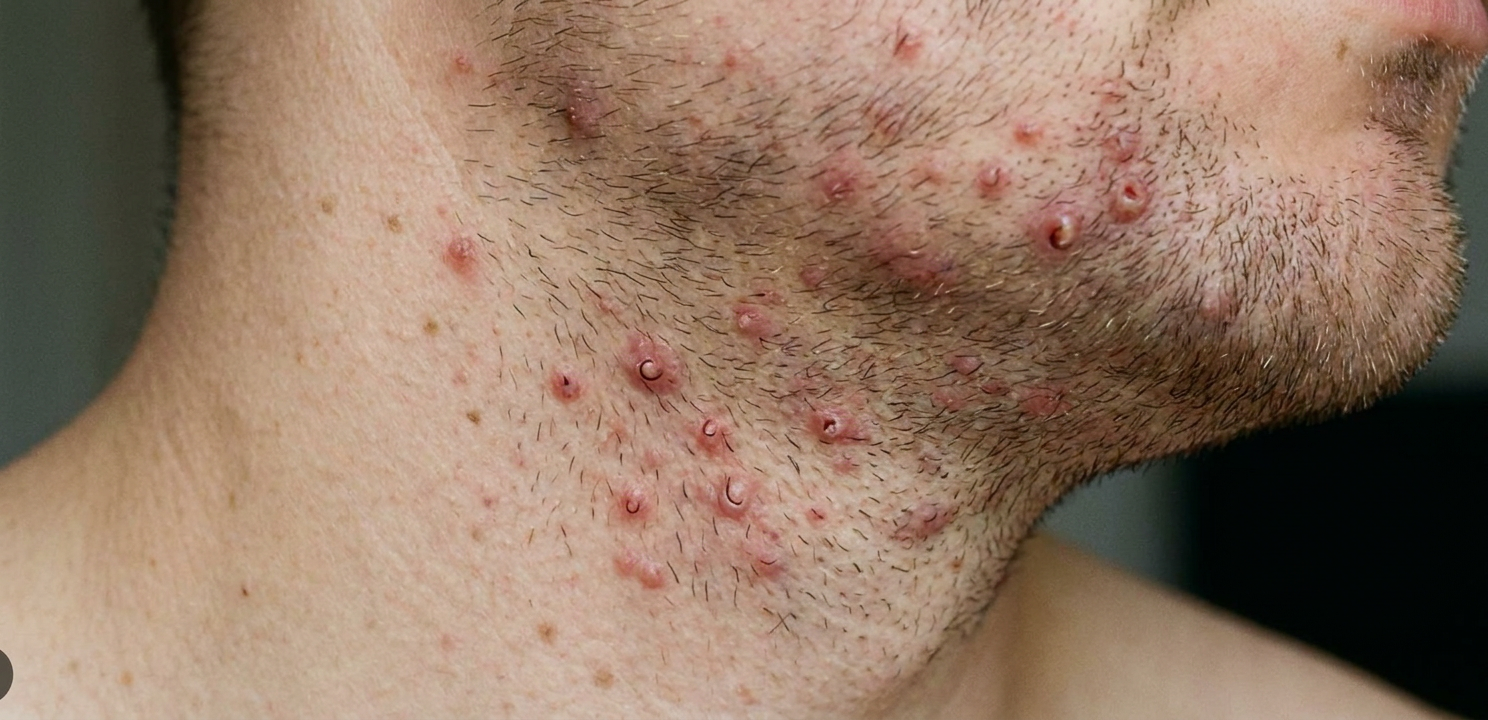
What are razor bumps?
Razor bumps are small red or white bumps that appear after shaving. They form when cut hairs grow back with a sharp tip that pierces or curls back into the skin, triggering a local inflammatory reaction. As with acne, blocked hair follicles play a role, but the mechanism and approach differ. The medical term is pseudofolliculitis barbae: "pseudo" means false or mechanical (not a true infection), while "folliculitis" refers to the follicle inflammation that occurs.
Razor bumps are not a true infection but a mechanical reaction of the skin. They are harmless and not contagious.
Razor bumps vs. razor burn: what is the difference?
Razor burn is a broader skin irritation caused by the razor itself, with redness and a burning sensation. Razor bumps are more specific: they are caused by ingrown hairs and form small individual pustules. Both can occur at the same time.
Razor bumps vs. folliculitis: what is the difference?
True folliculitis is a bacterial infection of the hair follicles, which is more painful and accompanied by yellow pus. If in doubt, or if symptoms persist, it is worth having a boil or folliculitis assessed by a dermatologist. Most razor bumps are harmless and clear up on their own within 1 to 2 weeks.
Do you suffer from Pseudofolliculitis barbae?
Personalized advice for your skin, completely online. Upload a few photos through the Skindr app and receive medical advice from a licensed dermatologist within 48 hours. No waiting room or referral required.
How do razor bumps form?
Razor bumps form when a cut hair is sharp enough to pierce or re-enter the skin. The angled cut of a razor creates a sharp tip that, as the hair grows back, heads toward the surrounding skin rather than upward. This creates an ingrown hair that irritates the skin and causes a minor inflammation.
Why are people with curly hair more prone?
People with curly or coarse hair are significantly more prone to razor bumps, as the hair naturally curls back toward the skin after shaving. This is more common in people with darker skin tones.
Shaving-related risk factors
Shaving against the direction of hair growth increases the risk of sharp hair tips. Shaving too closely, using a blunt or old razor blade, wearing tight clothing immediately after shaving, and shaving frequently all increase the likelihood of razor bumps.
Symptoms and characteristics of razor bumps
Razor bumps appear as small red or white bumps on the shaved skin, sometimes with a visible ingrown hair inside. The bumps can itch or feel mildly painful to the touch.
On lighter skin, the bumps appear reddish. On darker skin, they are darker in colour and may leave dark marks after healing: post-inflammatory hyperpigmentation, which generally fades on its own. In people with rosacea or contact eczema, similar redness can occur and be mistaken for razor bumps.
Most razor bumps clear up spontaneously within 1 to 2 weeks with a shaving break. If the bumps grow larger, contain yellow pus, are painful or are accompanied by fever, true folliculitis may be present.
Severe itching or bumps that won't clear up? Have your skin assessed via Skindr: advice from a certified dermatologist within 48 hours.
Where do razor bumps appear?
Razor bumps can appear anywhere the skin is shaved. In men, they are most common on the face, chin, cheeks and neck, and on the scalp in those who shave their head. In women, razor bumps occur on the legs, underarms and bikini line. Both men and women can experience them on the underarms and neck.
Do you suffer from Pseudofolliculitis barbae?
Personalized advice for your skin, completely online. Upload a few photos through the Skindr app and receive medical advice from a licensed dermatologist within 48 hours. No waiting room or referral required.
Treatment of razor bumps
Most razor bumps clear up on their own with a shaving break and good skincare. For persistent or recurring symptoms, more targeted options are available.
Prevention: before, during and after shaving
Avoid shaving every day — every other day gives the skin time to recover. Before shaving, apply a hot damp towel to the area and use a good shaving gel to prepare the skin. Cleanse and exfoliate the skin before shaving to prevent ingrown hairs. Shave in the direction of hair growth, do not stretch the skin and avoid pressing too hard. Use a sharp razor or a professional tool such as a trimmer with an adjustable guard. After shaving, apply a moisturising, alcohol-free cream to restore the skin barrier. Avoid tight clothing immediately after shaving.
Home treatment for existing razor bumps
Apply a warm damp compress to the affected skin to soothe the inflammation. Use a gentle moisturising cream and take a temporary break from shaving. Never squeeze the bumps.
Medical treatment options
For stubborn or recurring razor bumps, medical options exist. Creams containing salicylic acid or glycolic acid help to exfoliate the skin and free ingrown hairs. A dermatologist may recommend a suitable treatment for persistent cases. For a definitive solution, laser hair removal is the most effective option: it partially damages the hair follicle so that it produces less or no hair, preventing new ingrown hairs.
Consulting a dermatologist is advisable if symptoms persist for more than 2 to 3 weeks, if there are pustules or inflammation with pus or pain, if episodes recur, or if scarring or keloid formation develops.
Via Skindr, receive advice from a certified dermatologist within 48 hours, including on medical options such as laser hair removal.
What does not work against razor bumps
Squeezing or pricking razor bumps is the most common mistake: it increases the risk of infection and can cause scarring. Continuing to shave over irritated skin worsens inflammation and slows recovery. Dry shaving without preparation creates more friction and increases the risk of ingrown hairs. Blunt or old razor blades cut unevenly and leave sharper hair tips. Using a treatment without medical advice is also not routinely recommended for razor bumps. For persistent symptoms, a dermatologist will make the right assessment and rule out more serious causes.
Frequently asked questions about razor bumps
Are razor bumps the same as folliculitis?
Not exactly. Razor bumps (pseudofolliculitis barbae) are a mechanical reaction to ingrown hairs; true folliculitis is a bacterial infection of the hair follicles. If there is pus, pain or fever, true folliculitis may be present.
How long do razor bumps last?
Most clear up spontaneously within 1 to 2 weeks with a shaving break and good skincare. In chronic or recurring cases, medical treatment is advisable.
Are razor bumps contagious?
No. Razor bumps are a mechanical reaction of the skin to ingrown hairs and are not transmitted through skin contact.
What works fastest against razor bumps?
Take a temporary shaving break, apply a warm compress and use a gentle moisturising cream. Never squeeze the bumps: this increases the risk of infection.
When should I see a dermatologist for razor bumps?
If symptoms last more than 2 to 3 weeks, if there is pus or intense pain, if episodes recur, or if there is scarring or hyperpigmentation after healing.
Can Skindr help with razor bumps?
Yes. Through Skindr, a dermatologist assesses your skin using your photos and advises you on suitable care and treatment options.


](https://static.legitscript.com/seals/624359.png)