.webp)


What is sixth disease?
Sixth disease (also known as exanthema subitum or roseola infantum) is a common viral infection in babies and toddlers, caused by human herpesvirus type 6 (HHV-6) or, less commonly, type 7 (HHV-7).
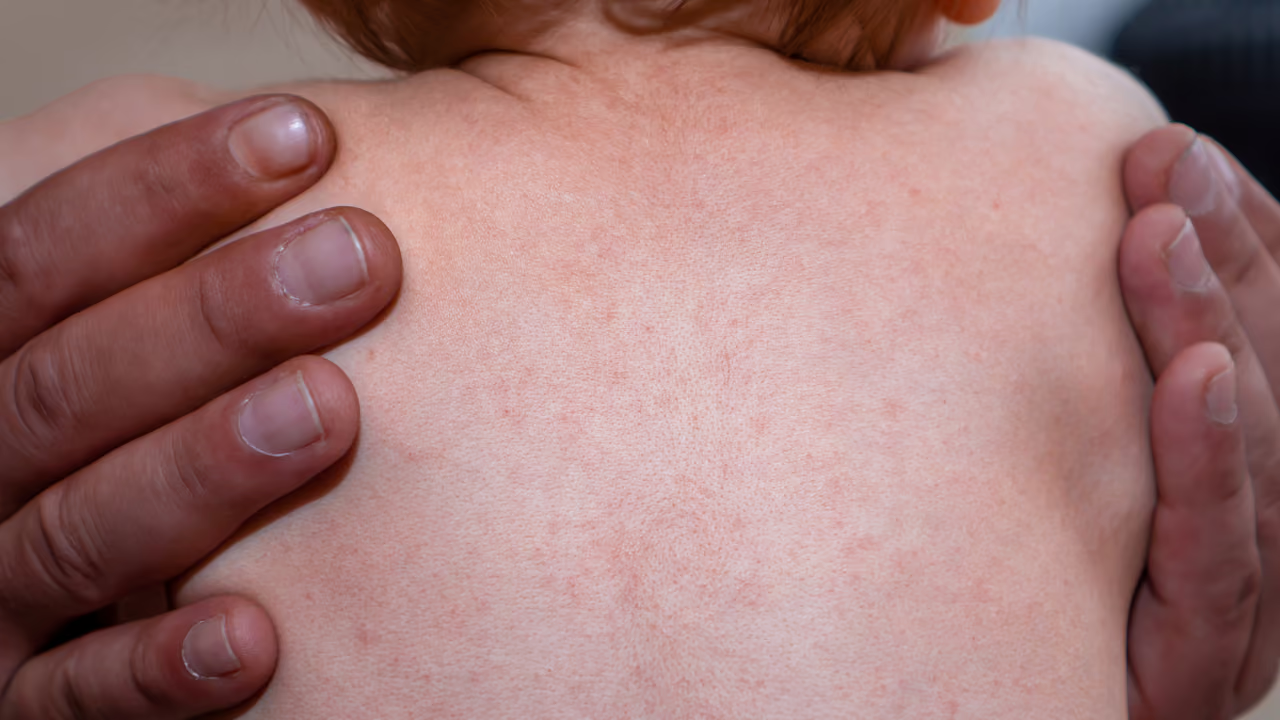
The hallmark of sixth disease is the sequence: your child first has 3 to 5 days of high fever. Only then, when the fever drops, does a light pink rash appear on the trunk. This sequence is key to assessing the condition. According to DermNet NZ, this pattern is the most recognisable feature of exanthema subitum.
Sixth disease almost always affects babies and toddlers between 6 months and 3 years old. Nearly every child goes through sixth disease before their third birthday, after which they have lifelong immunity.
Sixth disease is benign and resolves on its own. As with other skin problems in children, reassuring parents is an important part of the care.
Difference between fifth disease and sixth disease
Fifth and sixth disease are regularly confused, but they are easy to tell apart:
- Fifth disease (parvovirus B19): the rash starts on the cheeks (red as if slapped), followed by a blotchy pattern on the trunk and limbs. Also affects adults. More dangerous during pregnancy.
- Sixth disease (HHV-6): first 3 to 5 days of high fever without a rash, then a light pink rash on the trunk. Almost exclusively in babies and toddlers. Not dangerous during pregnancy.
Do you suffer from Viraal Exantheem?
Personalized advice for your skin, completely online. Upload a few photos through the Skindr app and receive medical advice from a licensed dermatologist within 48 hours. No waiting room or referral required.
How does sixth disease spread?
Sixth disease is caused by human herpesvirus type 6 (HHV-6), which belongs to the same virus family as herpes simplex. The virus spreads via droplets and saliva, including from adults who carry the virus without any symptoms.
Routes of transmission:
- Droplet infection via coughing and sneezing
- Direct contact with saliva (kissing, shared toys, hands to mouth)
The incubation period is 5 to 15 days after exposure. Crucially, your child is contagious DURING the fever phase, but NO LONGER once the rash appears. Nearly all children go through sixth disease before their third birthday, after which they are protected for life. See also Thuisarts.nl on sixth disease for additional information from a GP's perspective.
Symptoms and features of sixth disease
Sixth disease follows two clearly recognisable phases.
Phase 1: high fever (3 to 5 days)
- Fever of 38.5 to 40 degrees Celsius, appearing suddenly
- Child is irritable and tearful
- Lymph nodes in the neck and behind the ears may be slightly swollen
- Sometimes small red spots on the oral mucosa and palate (Nagayama spots)
- Sometimes mild conjunctivitis
Phase 2: the rash after the fever
When the fever drops, a light pink, non-itchy rash appears on the trunk. The rash spreads from the trunk to the arms and legs. The face remains largely clear (unlike urticaria, where the rash is more widespread). The rash disappears within 1 to 3 days. From this point on, your child is NO LONGER contagious.
Febrile seizures in sixth disease
In 10 to 15% of children, a febrile seizure occurs. This is frightening for parents but rarely dangerous and causes no lasting harm. What to do during a febrile seizure:
- Place your child in the recovery position
- Do not put anything in their mouth
- Time how long the seizure lasts
Does the seizure last longer than 5 minutes? Call 112.
Glass test: Press a glass against the spots. If they do NOT fade under pressure, call 112 immediately (possible meningitis).
Not sure about the rash or its severity? A certified Skindr dermatologist will assess your photos within 48 hours.
Where does the sixth disease rash appear?
The sixth disease rash starts on the trunk: abdomen, back and chest. It then spreads to the arms and legs.
The face remains largely clear. This is an important distinction from other childhood rashes, such as atopic eczema in children, which can have different distribution patterns.
The spots are light pink and non-itchy. They disappear within 1 to 3 days without leaving scars.
Do you suffer from Viraal Exantheem?
Personalized advice for your skin, completely online. Upload a few photos through the Skindr app and receive medical advice from a licensed dermatologist within 48 hours. No waiting room or referral required.
Treatment of sixth disease
There is no specific treatment for sixth disease. Treatment focuses on comfort.
Reducing fever and maintaining hydration
- Give a fever reducer suitable for children at the correct weight-based dose to bring the fever down
- NEVER give salicylate-based painkillers to children (risk of Reye's syndrome)
- Ensure adequate fluid intake: water, diluted juice, breast milk or formula
- Let your child rest
A fever reducer does not prevent febrile seizures.
Checking for dehydration
Look out for signs of dehydration:
- Skin pinch: if the skin on the abdomen does not spring back immediately when pinched, dehydration is possible.
- Fontanelle (in babies): a sunken fontanelle may indicate dehydration.
- Fewer than 3 wet nappies per day
- Dry mouth and lips
- Crying without tears
When to see a doctor or call for help?
Call 112 immediately:
- Febrile seizure lasting more than 5 minutes
- Child unresponsive or impossible to wake
- Spots that do NOT fade with the glass test (possible meningitis)
- Serious breathing difficulties
See a doctor the same day:
- First febrile seizure (even if it resolved on its own)
- Fever in a baby under 3 months old
- Fever above 40 degrees Celsius despite a fever reducer
- Signs of dehydration
See a doctor on a weekday:
- Persistent concern
- Baby under 6 months with a rash
There is no vaccine available for sixth disease. For more information on fever management guidelines in children, visit RIVM.nl.
Via Skindr, you receive advice from a certified dermatologist within 48 hours — no referral or waiting room required.
What does not work against sixth disease
While parental concern is understandable, some approaches are unnecessary or even harmful.
- Additional treatment: Sixth disease is a viral infection. An additional treatment usually has no effect on it; discuss this with your doctor.
- Keeping your child home when the rash appears: The rash means the contagious phase is OVER. Once the rash appears, your child may return to nursery or school.
- Salicylates in children: never give salicylate-based painkillers for fever. There is a serious risk of Reye's syndrome.
- Buying an antiviral treatment without medical advice: Not necessary in a straightforward case of sixth disease.
- Wrapping to drive up the fever: An outdated approach that is not recommended.
Frequently asked questions about sixth disease
Is sixth disease contagious?
Yes, but only during the fever phase. Once the rash appears, your child is NO LONGER contagious and may go to nursery or school. The illness spreads via droplets and saliva.
How long does sixth disease last?
The fever phase lasts 3 to 5 days. The rash then appears and remains visible for 1 to 3 days before fading on its own. Sixth disease lasts approximately 1 week in total.
Can my child go to school or nursery with sixth disease?
Yes, once the rash has appeared. At that point, your child is no longer contagious. During the fever phase, your child stays home because they are unwell — but the rash itself is not a reason to keep them home.
What is the difference between fifth disease and sixth disease?
In fifth disease, the cheeks turn bright red, followed by a blotchy pattern on the body. In sixth disease, there are first 3 to 5 days of high fever without a rash, then a light pink rash on the trunk.
Is sixth disease dangerous during pregnancy?
No. Unlike fifth disease, sixth disease poses no risk to pregnant women or their unborn child. Pregnant women who have contact with the illness do not need to take any extra precautions.
Can Skindr help with sixth disease?
Not sure whether your child's rash is really sixth disease or something else? Via Skindr, a certified dermatologist assesses your photos within 48 hours — no waiting room or referral needed.


](https://static.legitscript.com/seals/624359.png)