.webp)


.avif)
What is allergic contact eczema?
Allergic contact eczema is a skin reaction that occurs after your skin comes into contact with a substance that recognizes your immune system as threatening. In fact, it's an exaggerated immune response by your body against actually harmless substances. Your skin normally acts as a strong barrier between your body and the outside world, but in allergic contact eczema, your immune system overreacts to certain foreign substances.
The special thing about allergic contact eczema is that you do not get symptoms immediately upon first contact. The skin contains specialized cells that absorb foreign substances and present them to your white blood cells. At the first contact with an allergen, your body is made sensitive, as it were, to this substance, a process known as sensitization. Only with repeated contact does your immune system overreact, leading to the typical eczema symptoms.
Allergic contact eczema affects both men and women and can develop at any age. The disease is not contagious and cannot be transmitted to others. It is estimated that it affects more than 1% of the population, making it one of the more common skin conditions.
Do you suffer from Allergic contact eczema?
Have your skin assessed by a licensed dermatologist via the Skindr app. Upload photos and get a diagnosis with personal advice within 48 hours. No waiting room, no referral required.
How does allergic contact eczema occur?
Allergic contact eczema is caused by a complex interaction between your skin and certain substances in your environment. The development of this disorder takes place in two different phases: first the sensitization phase and then the actual allergic reaction.
During the first phase, when your skin comes into contact with a potential allergen for the first time, your immune system is stimulated. Special cells in your skin absorb the foreign substance and store the information about it, as it were. This process can take weeks or even months. During this period, you notice nothing and you have no symptoms, but your body is now in a kind of state of alarm. The next time you contact the same substance, your immune system reacts immediately and violently. Your white blood cells recognize the substance as foreign and trigger an inflammatory response. This leads to the red, itchy rash that is so characteristic of contact eczema.
There are two different forms of allergic contact eczema: the immediate form and the delayed form. In the immediate form, the symptoms appear immediately as soon as your skin has contact with the allergen. This is what you see, for example, with allergies to latex, certain vegetables or animal hair. The delayed form is much more common and only develops after repeated contact over weeks or months. Typical examples include allergies to nickel in jewelry, rubber, glue, or certain perfumes. So it can happen that you wear the same watch or earrings without problems for years, only to suddenly develop an allergic reaction.
Several factors can increase the risk of developing allergic contact eczema. Damaged or dry skin makes you more sensitive to the entry of allergens. Your profession also plays a role: people who regularly work with chemicals, such as hairdressers, cleaners or construction workers, have an increased risk. Genetic predisposition can also play a role, although in principle anyone can develop allergic contact eczema.
Symptoms and characteristics of allergic contact eczema
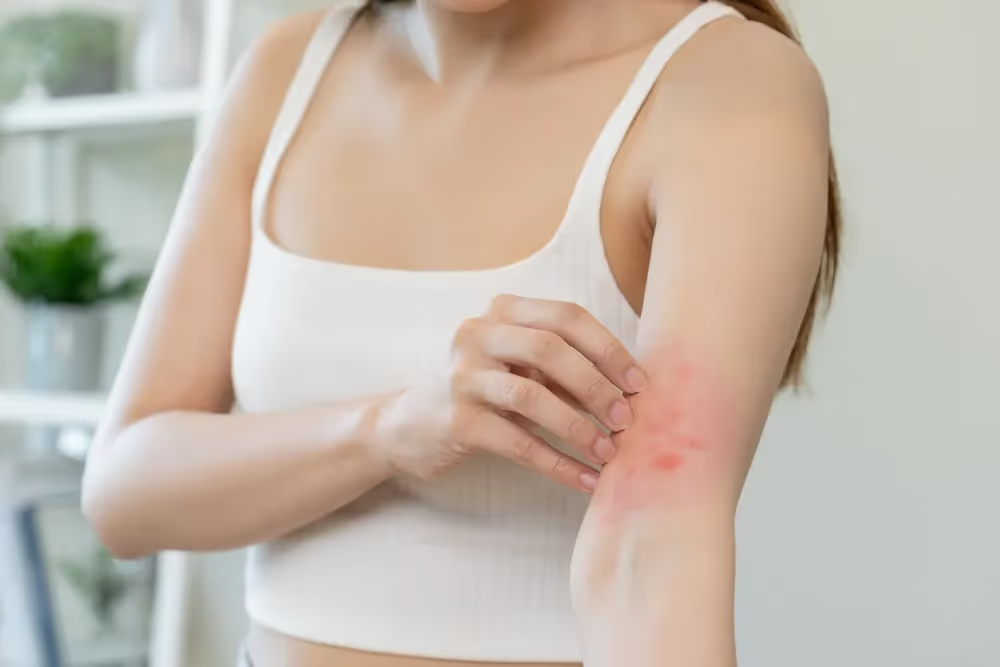
The most common symptom of allergic contact eczema is an itchy rash that occurs where your skin has come into contact with the allergen. This itch can be mild, but it can also be so severe that it interferes with your daily activities and sleep. The rash itself is recognisable by a red area in the affected area. You often also see small bumps, blisters, scabs or flakes. The skin may look puffy and irritated. Some people develop wet eczema, where fluid comes out of the blisters. This moisture dries up over time and forms a crust or fleece on the skin.
The rash can range from mild to severe. In mild forms, you only see some redness and dryness. In more severe cases, painful cracks can occur in the skin, especially in areas that move a lot, such as your hands or fingers. Long-term eczema can lead to skin thickening and a rougher, dry surface. The intensity of the symptoms can also vary: sometimes you only suffer from mild dryness and itching, while at other times it can develop into a severe, painful rash that affects your daily functioning. Scratching makes eczema worse and can lead to wounds and infections.
The eczema may look different in people with dark skin than in people with light skin. Instead of bright red, the affected skin may appear purple, dark brown or gray. After the eczema has healed, dark or light spots may remain, although they usually fade over time.
Where does allergic contact eczema appear?
The unique thing about allergic contact eczema is that the rash almost always occurs where your skin has come into contact with the allergens. By looking closely at the location of the eczema, you can often already suspect the possible causative agent.
In the face and neck, allergic contact eczema is often caused by cosmetics, perfume, hair dye, earrings or necklaces. Nickel in jewelry, in particular, is a common cult. Allergic reactions can also occur when wearing glasses where the frame touches the skin. The armpits are a classic spot for contact eczema caused by deodorant or shaving cream, while the wrist and hands are often affected by watches, bracelets, gloves, or tools you use while working. People who work a lot with water and cleansers, such as hairdressers or nurses, often get eczema on their hands.
You can get a rash on the chest and hips due to metal fasteners on your bra, buttons or belts. Even the buttocks may be affected, for example due to the use of ointments or suppositories against hemorrhoids that contain allergenic substances. Allergic contact eczema occurs on the legs and feet due to leather in shoes, dyes in socks, rubber boots or treatment products for fungal infections and sweaty feet. Sometimes you'll see a pattern in the rash that matches exactly the shape of the object that had contact with your skin, such as the strap of a watch or the shape of a shoe.
It is also possible that the eczema may spread to areas that did not have direct contact with the allergen. This can happen by rubbing or scratching the affected area, bringing the substance to other parts of the body with your fingers.
Do you suffer from Allergic contact eczema?
Have your skin assessed by a licensed dermatologist via the Skindr app. Upload photos and get a diagnosis with personal advice within 48 hours. No waiting room, no referral required.
Treatment of allergic contact eczema
The treatment of allergic contact eczema focuses on two important goals: alleviating acute symptoms and preventing new outbreaks. The most effective treatment is always avoiding contact with the allergen causing the reaction.
To alleviate the acute symptoms, your doctor usually prescribes a cortisone cream or ointment. Cortisone is an anti-inflammatory drug that suppresses the strong response of your immune system. This gives your skin a chance to heal and reduces redness, swelling and itching. It is important not to use cortisone creams for too long in a row, because prolonged use can actually make the skin more brittle, which in turn can lead to new skin problems. Your doctor will tell you exactly how long and how often you should use the cream.
In addition to cortisone treatments, you are often also prescribed a moisturizing or moisturizing cream. You should use it daily, even when the eczema is already better. Well-hydrated skin forms a better barrier and is less sensitive to stimuli and allergens. Preferably choose neutral, hypoallergenic creams without perfumes, dyes or preservatives, as these substances themselves can also cause allergic reactions. Your doctor may prescribe antihistamines for itching. These remedies especially help when the itching interferes with your night's sleep. They sometimes make you a bit obnoxious, so it's wise to take them at night before bed.
In severe cases, when topical treatment does not help enough, your doctor may prescribe cortisone in tablet form. This is usually short lived and only necessary in exceptional situations. In case of persistent eczema that does not respond to standard treatments, your doctor may refer you to a dermatologist. This skin specialist may consider other treatments, such as medicines that act on your immune system or special light therapy.
The duration of treatment varies from person to person and depends on the severity of the eczema. Mild eczema can heal within a few weeks, while more severe forms can last several weeks to months. The good news is that once you know and avoid the allergen causing the reaction, you can often prevent future outbreaks.
What doesn't work against allergic contact eczema?
There are several misunderstandings about allergic contact eczema and treatments that are not effective or may even be harmful.
You can't cure allergic contact eczema by simply waiting for it to go away on its own without avoiding the allergens. As long as your skin continues to come into contact with the substance you're allergic to, the eczema will keep coming back or even get worse. It is a misconception that your body gets used to it on its own or that the allergy disappears spontaneously. Sensitivity usually persists for life.
Using random store-bought skin care products can be counterproductive. Many creams, lotions and ointments contain perfumes, preservatives or other substances that can actually trigger allergic reactions or worsen existing eczema. Even products that present themselves as natural or hypoallergenic can contain problematic ingredients. It is therefore important to always consult with your doctor or pharmacist before using new products.
Excessive washing and scrubbing of affected skin does not help and can actually make the eczema worse. Too much water and soap dry out your skin and weaken the natural skin barrier, making it easier for allergens to penetrate. Showers or baths that are too hot are also not recommended. Home remedies such as vinegar, lemon or other acidic substances are also not recommended, as they can further damage already irritated skin and lead to pain and inflammation. The same goes for using alcohol or other aggressive fluids to disinfect the skin.
Finally, it is a misunderstanding that a certain diet or dietary supplements can make allergic contact eczema disappear. Unlike some other types of eczema related to food allergy, allergic contact eczema is caused by external contact with allergens. What you eat has no influence on this.
Frequently asked questions about allergic contact eczema
Is allergic contact eczema contagious?
No, allergic contact eczema is definitely not contagious. You can't transfer it to others through touch, sharing towels, or other forms of contact. It is a reaction of your own immune system to a specific substance and has nothing to do with bacteria or viruses that can pass from person to person.
How long does it take for the eczema to go away?
The duration depends on various factors, such as the severity of the eczema, how quickly you can avoid the allergens, and how consistently you follow the treatment. In mild cases, you can see improvement within one to two weeks. More severe eczema can take four to six weeks or longer to heal. It is important that you completely avoid contact with the allergens, otherwise the eczema will keep coming back.
Can you prevent allergic contact eczema?
Complete prevention is not always possible, especially if you do not know which substances you are sensitive to. However, you can reduce the risk by taking good care of your skin with neutral, hypoallergenic products and by being careful with new cosmetics or materials. Once you know what you're allergic to, you can often completely prevent new outbreaks by avoiding contact with that substance.
When do you need to see a doctor?
See your doctor if you have an itchy, red rash that doesn't improve within a week, if the eczema becomes painful, if you see signs of infection such as festering or yellow scabs, or if the itching seriously interferes with your sleep. Even if you repeatedly suffer from rashes in the same area or after using certain products, it is wise to go to your doctor for an examination.
Will the eczema keep coming back?
If you keep avoiding the allergen you're sensitive to, the eczema doesn't have to come back. The sensitivity to the substance usually persists for life, so the reaction may recur if contact occurs again. By consciously using products and materials that you are sensitive to, you can usually prevent the eczema from coming back.
How do I know for sure what I'm allergic to?
If it's not clear which substance causes your eczema, your doctor may perform a patch test. This involves applying small amounts of various common allergens to your skin with special patches, usually on your back. After two to three days, the doctor looks at which substances cause a reaction. The exact allergen is not always found, but fortunately, the treatment is often the same regardless of the specific cause.



-min.avif)
-min.avif)
-min.avif)