.webp)



.avif)
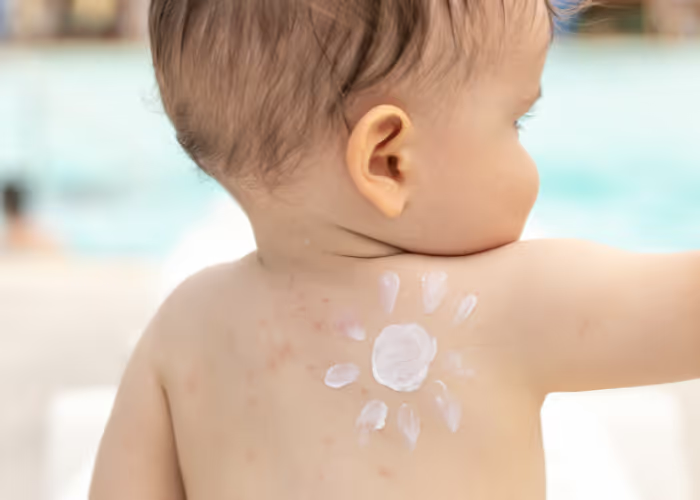
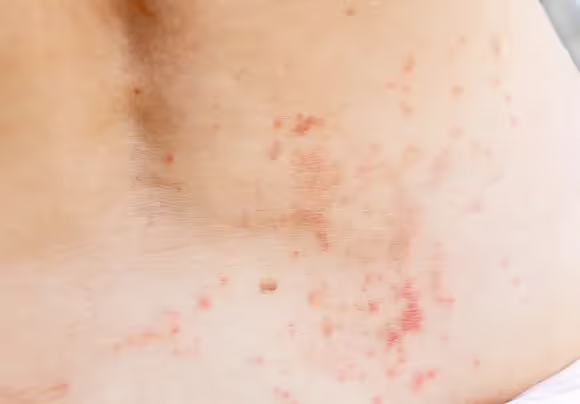
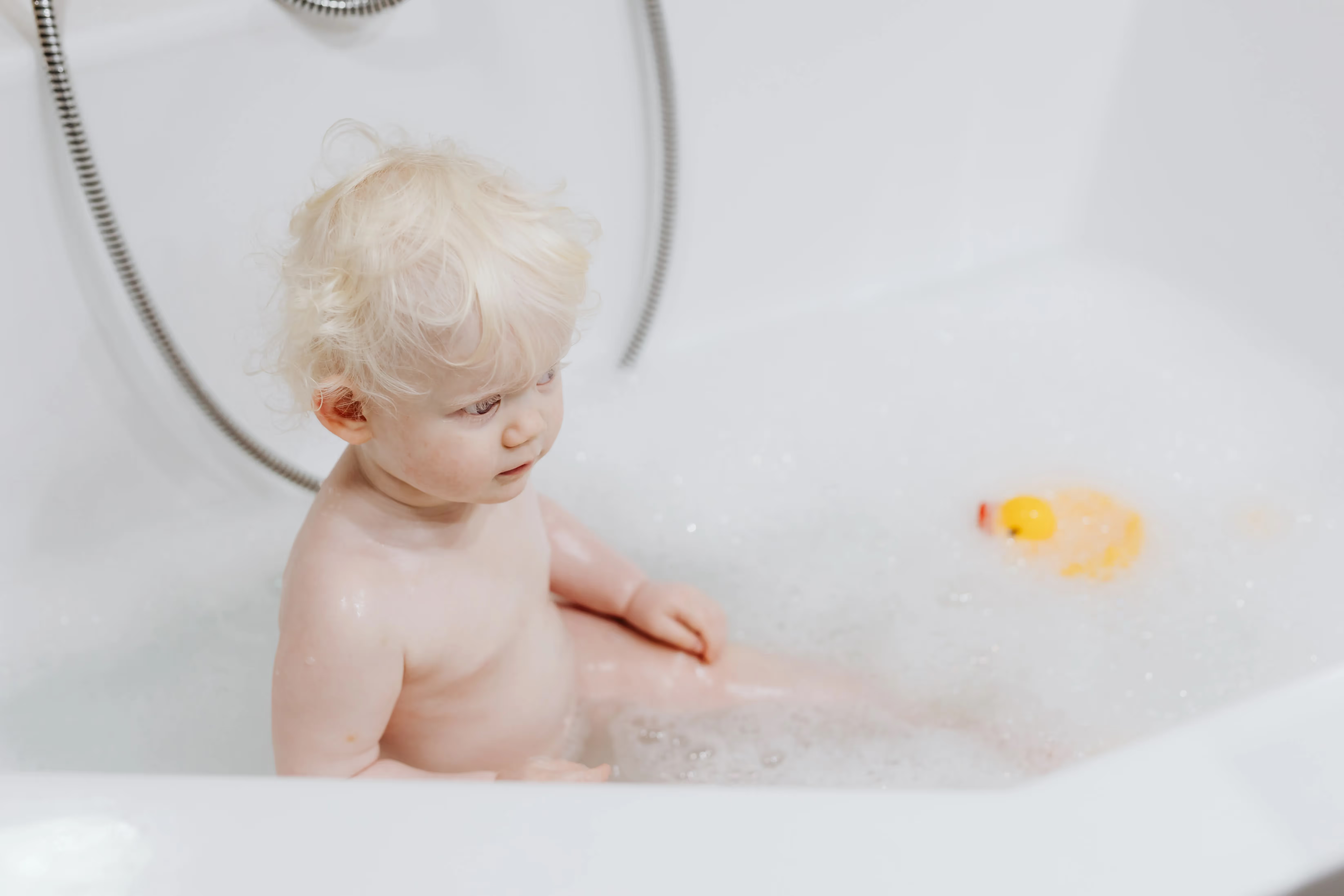
Baby eczema is the most common skin disease in children under the age of four. The red spots can be very itchy. Skin feels dry and scaly. Many children are affected. More than one in five boys and one in seven girls. Baby eczema is not that harmless because this group of babies is more likely to develop an allergy later in life. From my experience as dermatologist I explain how it occurs and how to treat it.
What is baby eczema and how does it occur?
Baby eczema is an itchy skin disease in which the skin inflames. It is an inherited disorder. So you cannot prevent it even though environmental factors such as air pollution do play a role. Baby eczema (also called constitutional eczema or atopic eczema) has a fluctuating course. It comes and goes. So it's not like if your baby just got rid of it, it won't come back. Quiet periods often alternate with new flurries.
The largest group susceptible to this skin disease is boys under one year old. 22.7% of all boys will suffer from eczema. Among girls in this age group, the figure is only 14.1%. As babies get older, the risk decreases. After 1 year, it only occurs in 7% of boys and 6.4% of girls.
We see that children with baby eczema are more susceptible to allergies. They are more likely to develop a food allergy or an inhalation allergy. In the latter case, the allergy occurs when substances are inhaled. Common examples include hay fever or dust mite allergy.
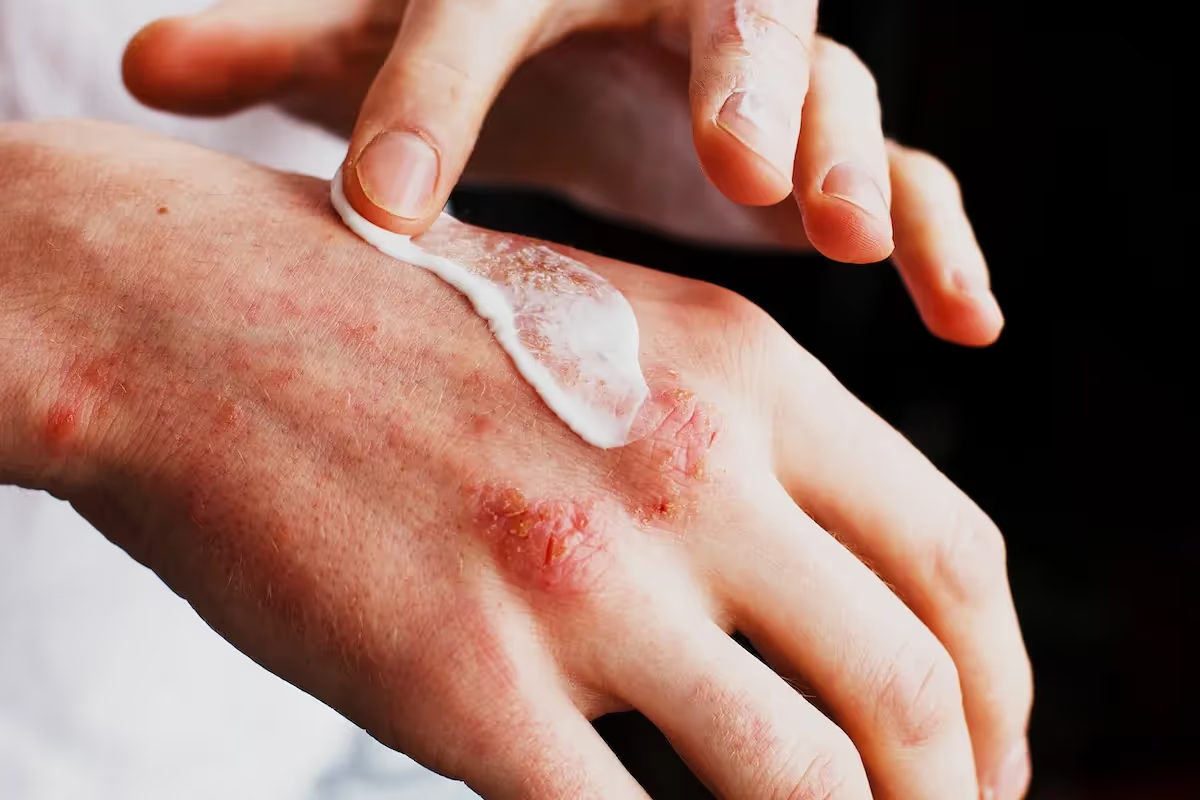
Treating baby eczema with cortisone ointment
Although baby eczema has no cure, it is important to control it. This is possible with good treatment at the dermatologist. Over time, the child will grow out spontaneously, usually around two or three years of age. Only in severe cases does the skin condition last up to seven years.
Baby eczema isn't pretty to see, but it's also annoying for those who suffer from it. The eczema is itchy. The children often lie awake because of it, sleep poorly and have a tendency to scratch. But that doesn't make the condition worse. So don't leave your baby with it hoping it will go away on its own or start treating it yourself with a moisturizer. Good and adequate treatment is a must.
In many cases, the dermatologist will prescribe a cortisone ointment. Parents sometimes shudder at the thought of treating their little sprout with cortisone ointment. That is unjustified.
Cortisone got its bad reputation when the first cortisone ointments came on the market and the proportions were not yet good. This is how side effects occurred. Meanwhile, fifty years later, these ointments are completely harmless and preferable to neutral ointments that will not reduce eczema. Don't you fully trust it yet? Be followed by a dermatologist who can make quick adjustments if necessary. Over time and depending on the severity, the dermatologist decide to use a combination of cortisone ointment and a neutral ointment.
A handy tool for calculating how much ointment you can apply to the area to be treated is the cream calculator (www.creamcalculator.com)

%20(1).avif)
.avif)


%20(1).avif)
.avif)
.avif)

.avif)


-min.avif)
-min.avif)
-min.avif)
.avif)


.webp)


























](https://static.legitscript.com/seals/624359.png)