.webp)




Skin cancer is one of the most common forms of cancer that is becoming increasingly common worldwide. While treating skin cancer in the early stages is often beneficial, without timely diagnosis and care, it can have more serious consequences. It is important to understand that self-diagnosis can be dangerous. If you are unsure about a spot or blemish on your skin, it's crucial to consult a dermatologist. This article discusses skin cancer symptoms, main types, and practical tips for keeping your skin healthy and protected.
Types of skin cancer
Not all forms of skin cancer are the same. There are three main categories that differ from each other in severity, appearance, and treatment.
Basal cell carcinoma
Basal cell carcinoma is the most common form of skin cancer. It usually occurs in skin that is exposed to a lot of sunlight, such as the face and neck. It often looks like pearly bumps or red spots. Although this form does not spread in principle, it can grow and damage surrounding tissue without treatment.
How do you recognize basal cell carcinoma?
- A shiny, transparent bump, often with visible blood vessels
- A red, scaly spot that is slowly getting bigger
- A wound that doesn't heal or keeps coming back
Spinocellular carcinoma
This form of skin cancer is somewhat more aggressive than basal cell carcinoma. It often appears as scaly patches, rough bumps, or sores that don't heal. Squamous cell carcinoma can spread to other parts of the body if not treated in a timely manner.
How do you recognize a spinocellular carcinoma?
- A rough, scaly patch that won't go away
- A hard lump with a crust that sometimes bleeds
- An ulcer or wound that slowly increases in size and does not heal
melanoma
Melanoma is the most serious form of skin cancer and originates in pigment cells. While melanoma is less common, it can spread to other organs if not diagnosed early. Recognizing early symptoms using the ABCDE method is therefore essential.
How do you recognize melanoma?
- A - Asymmetry: In skin cancer, a mole or patch of skin may be asymmetric, meaning that one half does not match the other half. Normal birthmarks are usually symmetrical in shape.
- B - Border Irregularity: Suspicious areas often have irregular, jagged, or blurred edges. This edge may look different than a normal mole.
- C - Color: The color of a suspicious spot is often not uniform. You can see different shades of brown, black, red, white, or even blue. An even color is a sign of a healthy mole
- D - Diameter: A spot larger than 6 millimeters (about the size of a standard pencil eraser) may be suspicious. However, some forms of skin cancer may be smaller.
- E - Evolution: Keep a close eye on changes. A spot that gets bigger, changes color, or develops in a different way can be a warning sign.
Does it meet any of these characteristics? Then there is no reason to panic. Does it comply with multiple deviations? Is this a reason for extra control but not necessarily a melanoma.
How does a dermatologist assess suspicious spots?
During a consultation, a dermatologist looks closely at suspicious areas and uses specialized instruments:
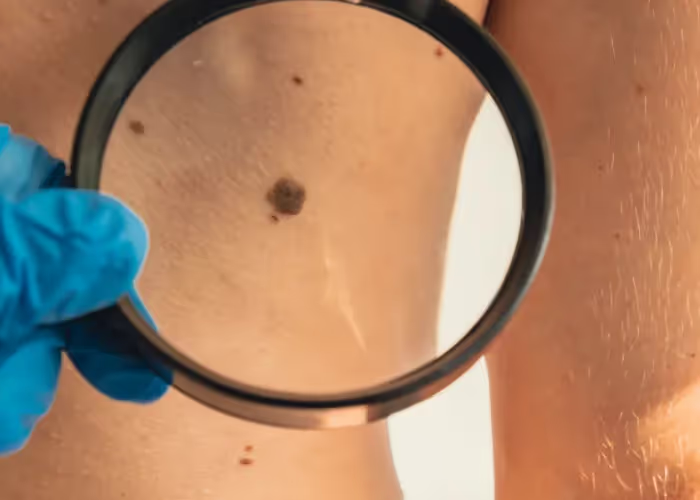
- Dermatoscopy: This is a non-invasive technique that uses a dermatoscope, a type of magnifying glass with built-in lights. This allows the dermatologist to look below the surface of the skin and recognize patterns and structures that are not visible to the naked eye. This way, you can better distinguish whether a spot is benign or malignant.
- Biopsy: If a site remains suspicious after clinical inspection and dermatoscopy, the dermatologist may decide to remove a piece of tissue (biopsy). This is then examined microscopically by a pathologist to make the final diagnosis.
- Surgical excision: When a spot actually appears to be skin cancer, surgical removal is usually the appropriate treatment. The dermatologist cuts away the tumour with a margin of healthy skin around it to make sure all cancer cells have been removed. Special techniques such as Mohs surgery are sometimes used, where the cut edges are checked directly.
Tips to Prevent Skin Cancer
Prevention is always better than cure. Here are some practical steps you can take to minimize the risk of skin cancer:
- Limit sun exposure: Avoid direct sun exposure and UV radiation, especially during peak hours between 10 a.m. and 4 p.m.
- Use sunscreen: Choose a sunscreen with an SPF of at least 30 and apply it generously, even on cloudy days. Remember to renew the cream every two hours and after swimming.
- Wear protective clothing: Opt for long sleeves, wide-brimmed hats, and UV-protected sunglasses when you're outside.
- Avoid tanning in the sun or tanning beds: Put your health above cosmetic considerations and stay away from harmful UV rays.
- Perform regular self-exams: Check your skin monthly for suspicious spots or moles that show signs of change. Use mirrors to inspect hard-to-see areas.
- What can you do when in doubt?
- If you notice a suspicious skin change, it is important to contact your doctor first. This can assess whether a referral to the dermatologist is necessary. For a reliable assessment of suspicious spots, a physical evaluation by a dermatologist is essential. This often involves the use of a dermatoscope and, if necessary, a diagnostic procedure such as a biopsy or excision. These techniques are not available online.
- Skindr is therefore primarily not suitable for assessing (possible) skin cancer. However, if a dermatological appointment is not possible within the desired period, Skindr can provide support. In such cases, we may make a risk assessment based on medical photos and additional information. If necessary, we can also mediate in speeding up a physical check-up with a dermatologist.
- So don't hesitate to consult your doctor or a doctor via Skindr if you have any concerns. Acting quickly can make the difference.




%20(1).avif)
.avif)


%20(1).avif)
.avif)
.avif)

.avif)


-min.avif)
-min.avif)
-min.avif)

.avif)


.webp)


























.avif)


](https://static.legitscript.com/seals/624359.png)