.webp)



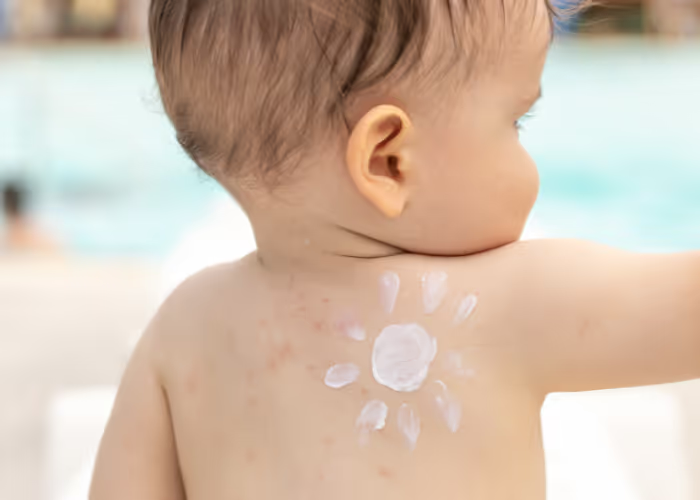
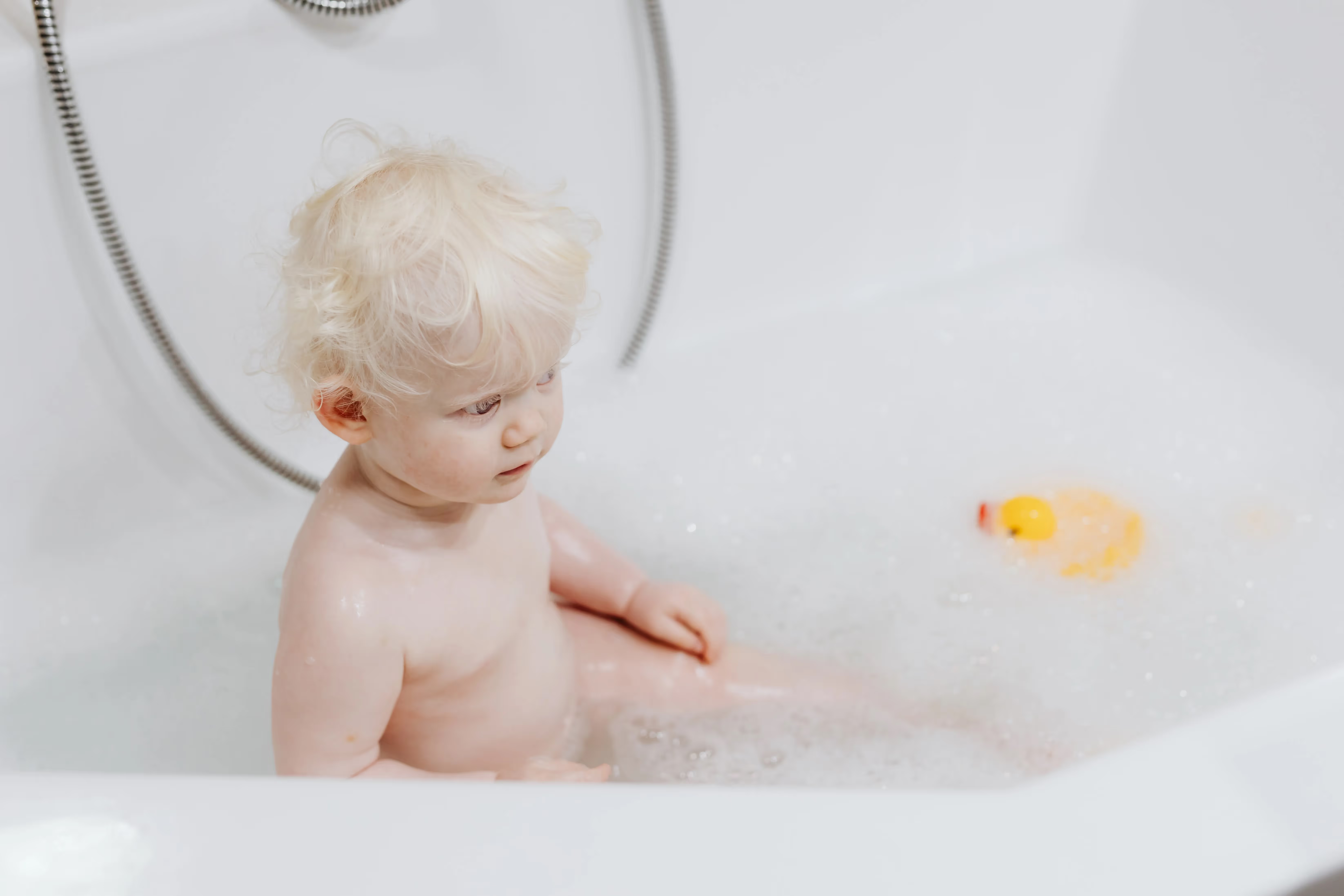
Bright red cheeks and terrible itching, does your child have eczema? Since baby skin not fully protected yet becomes, it is extra sensitive to the very things that cause eczema. So it's no wonder that baby eczema is one of the most important skin conditions for small children: it affects more than one in five boys and one out of seven girls. So let's just zoom in on it.
What is baby eczema?
Baby eczema is an itchy skin disease in which the skin inflames. It is an inherited disorder. So you cannot prevent it even though environmental factors such as air pollution do play a role. Baby eczema has a fluctuating course. That means it comes and goes. Quiet periods often alternate with new flurries.
The largest group susceptible to this skin condition is boys under one year old. 22.7% of all boys will suffer from eczema. Among girls in this age group, the figure is only 14.1%. As the babies get older, the risk decreases.
How does my child get eczema?
In all cases, the skin's natural fat barrier is weakened and the skin therefore inflames more easily, but the causes of eczema can vary from baby to baby. As a result, different types of eczema can develop:
Atopic eczema
Causes: heredity and non-allergenic stimuli
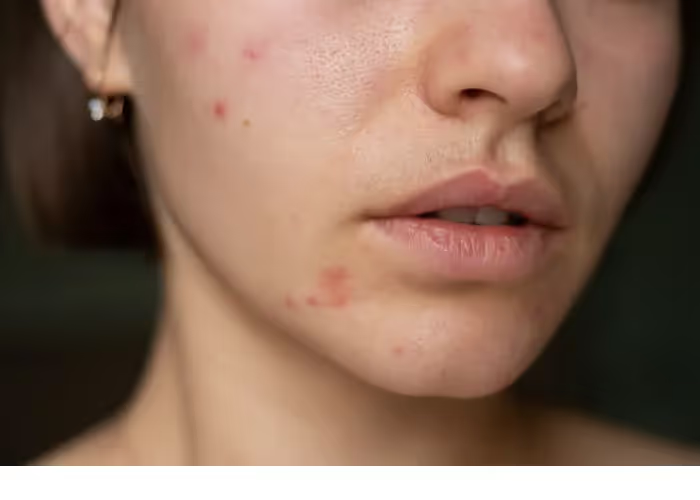
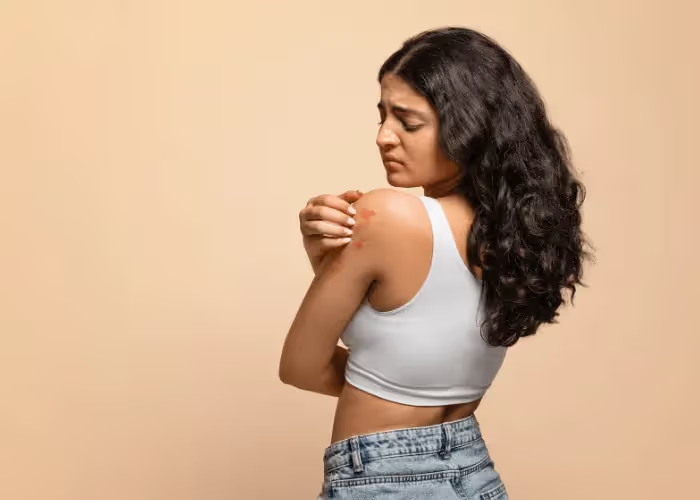
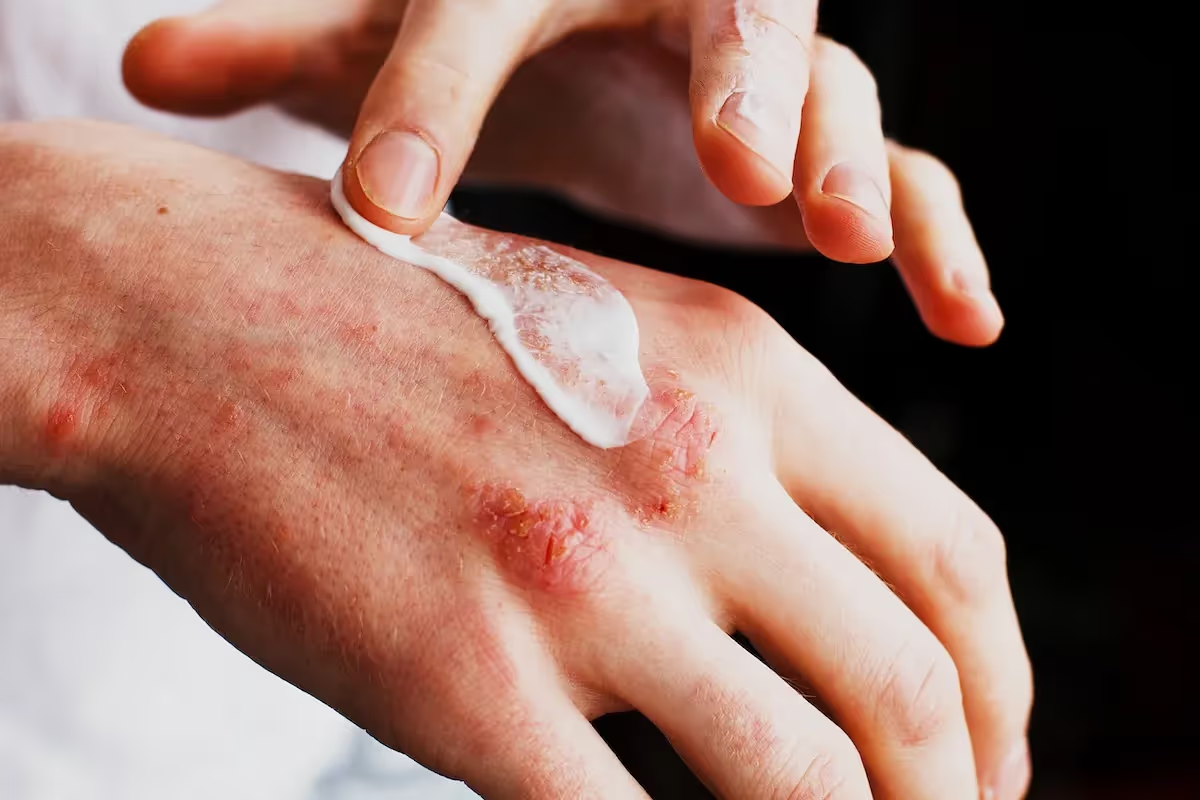
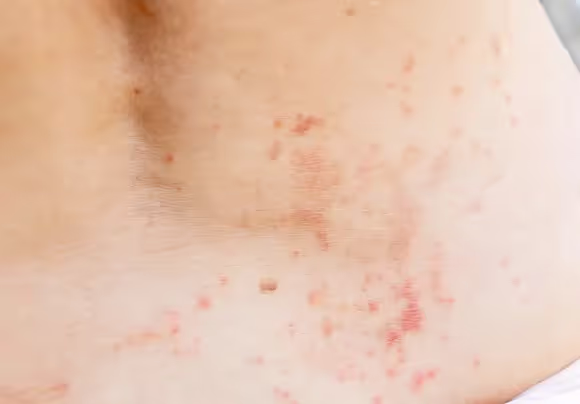
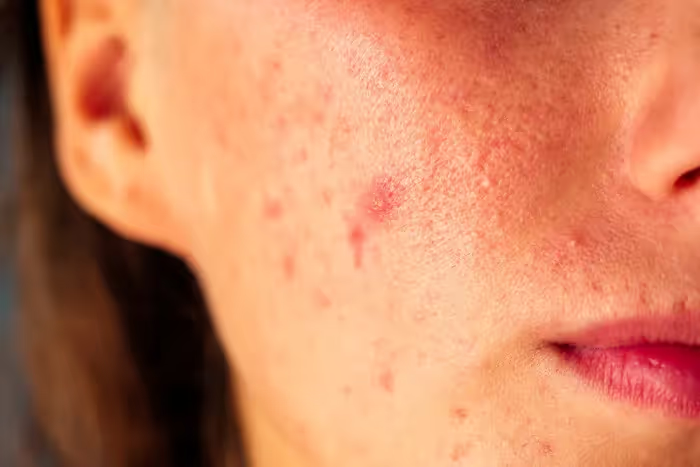
Atopic eczema is the most common type of eczema. It is a congenital hypersensitivity on irritants. This can range from wool to soap and cold air. These will irritate the skin more quickly and thus trigger inflammation. This results in blisters and bright redness, spread all over the body, that cause your child a lot of itching. The rest of the skin will also feel drier than normal.
In the Netherlands, this form of eczema is also known as 'dewworm' mentioned. “Dew” because the rash is moist, “worm” because the rash is often ring-shaped (so it has nothing to do with real worms).
Seborrheic eczema
Causes: Heredity
Do you notice rRedness and oily, light yellow flakes on with your child? Then it's about seborrheic eczema. This eczema occurs most often on the scalp and is recognisable by the dandruff. But eczema can also affect other areas of the skin, so be sure to check your baby's face, neck, diaper area, groin folds and eyebrows for seborrheic eczema as well.
Is that the same as' mountain '?
Approximately. Berg is a mild form of seborrheic eczema: you will notice the same scaling, but also a greasy and yellowish rash. This occurs in areas where there are many sebaceous glands.
Contact eczema
Causes: allergenic stimuli
As a last type, there is also contact eczema, although cometh this one for babies and young children but little for. This form of eczema is caused by a hypersensitivity to certain allergens - but of course you have to be exposed to the substance several times before that.
In addition, contact eczema is also sometimes caused by skin irritation. In that case, you will see that the eczema occurs on spots that are more often damp.
How to care for baby eczema
Although baby eczema has no cure, you can control until your child grows out (around 2 to 3 years of age). A good and local treatment by a dermatologist is therefore always a must. Primarily to keep eczema under control, but certainly also to calm the itching.
In addition, before starting a treatment, it is important to determine what form of eczema your child has. This is to be able to best tailor the treatment plan to what your baby needs. You Skindr dermatologist will listen to your story and symptoms and thus provide advice.
And also the follow-up by a experienced dermatologist plays an important role. Eczema tends to disappear largely with treatment, but usually not to the extent that treatment can be stopped. By closely monitoring them and adjusting them where necessary, you will get the best results.
What can you do yourself to soothe the itching?
- First and foremost, it is important that your child not pot scratching to eczema. Think of short nails, for example. This is because if they scratch open the eczema, it can cause a further infection.
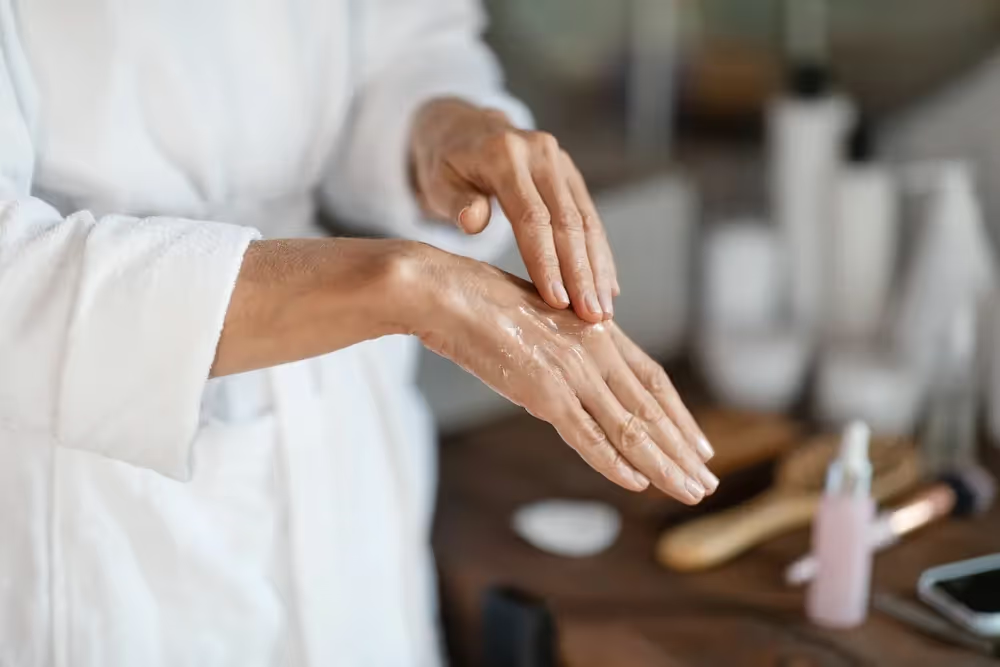
- Secondly, the baby's skin needs to be hydrated as well as possible. Lubricate, lubricate, lubricate so with mild bath oil and skin lotion.
- Finally avoid your best crude fabrics (such as wool) and movements (such as dry rubbing).
%20(1).avif)
.avif)


%20(1).avif)
.avif)
.avif)

.avif)
-min.avif)
-min.avif)
-min.avif)
.avif)


.webp)





















.avif)


](https://static.legitscript.com/seals/624359.png)