.webp)




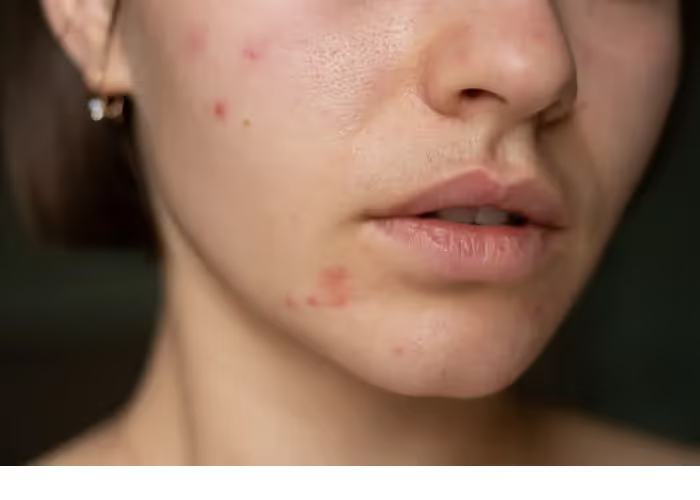
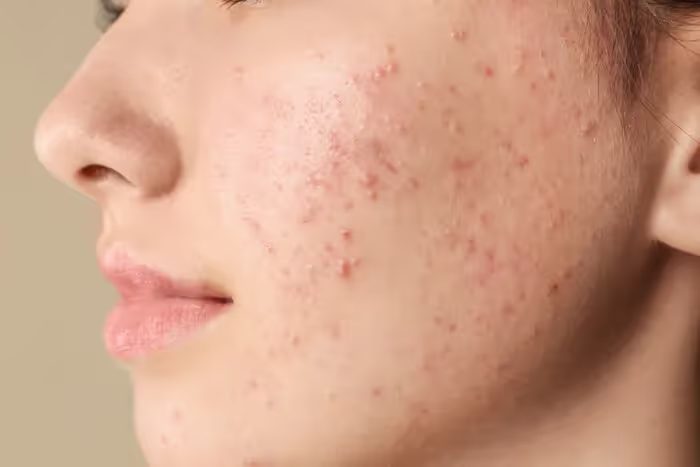
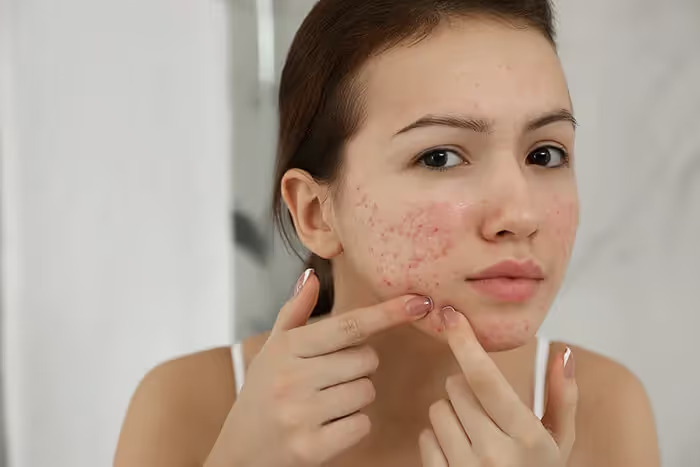
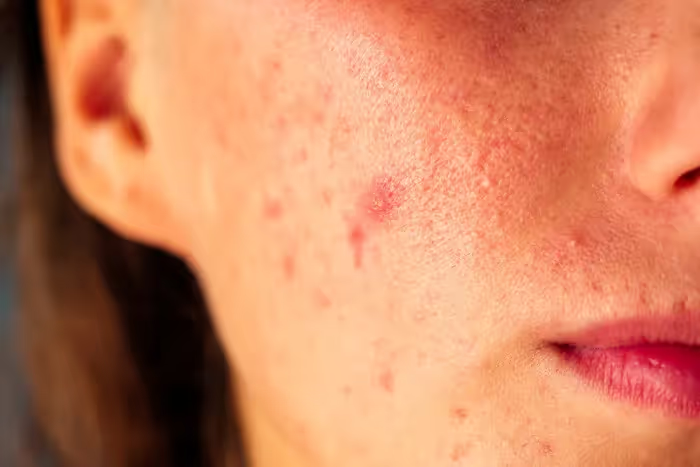
If you acne have, you know better than anyone that your hormones play a major role. What you see on the outside shows that a lot is going on underneath on the inside.
How do those hormones behave? What causes specific effects on your skin, and where do those flare-ups keep coming from? And is contraception really the solution that seems too good to be true?
Acne during the different phases of your cycle.
Week 1: the follicular phase
During the first week of your cycle, your estrogen levels gradually rise. Estrogen helps reduce the stimulation of the sebaceous glands. The glands become less and less active, less sebum and oil are produced, and that gives your pores a rest: the chance of clogging, and therefore the development of breakouts, decreases.
Week 2: the ovulation phase
Your skin will look its best during this phase. Your estrogen is at its peak. This brings your female hormones, estrogen and progesterone, into a nice balance. They have the chance to optimally hydrate your skin and suppress male hormones. Less oil is produced, making your skin at its clearest, with the lowest risk of clogged pores.
Week 3: the luteal phase
After you ovulate, your estrogen drops and the male hormone testosterone has more room. This shift has an effect on sebum production, which will increase rapidly. So rapidly that your pores struggle to process the sebum, and thus the risk of clogged pores rises again.
Week 4: the menstrual phase
Your estrogen is now at its lowest. Just before and during your period, you will therefore suffer more often from acne, but also from drier skin.
Is contraception a good remedy for acne?
Your skin clearly reacts strongly to hormonal fluctuations, which quickly manifest as hormonal acne. So hormones cause acne, but hormonal contraception is also often prescribed for acne. How does that actually work?
Combined oral contraceptive pills, which contain both estrogen and progestogen, will indeed reduce your symptoms. They bring your female hormones into perfect balance which also helps the rest of your body settle down. Your sebaceous glands will produce less sebum or oil which lowers the risk of clogged pores.
Did you know
Fourth-generation pills provide the best results against acne? These pills contain a progestogen that inhibits the effect of male hormones. The fewer male hormones, the less stimulation for the sebaceous glands.
In that respect, the combined pill seems like a miracle cure in your battle against acne. But there is a major catch. The pill offers no long-term guarantee that your acne will stay away. It suppresses it, but it doesn't cure it. It does not balance your hormones naturally. On the contrary, because the root cause of your acne is not being addressed you will experience flare-ups again once you stop taking the pill. And these can be even worse than before.
Discover Julie's testimonial here about the impact of acne on her daily life.
How does acne react to different forms of contraception?
Furthermore, the combined pill is the only form of contraception that can offer a temporary solution. If we look at other forms of contraception, we see the opposite effect. These can worsen acne and trigger severe breakouts.
Mini-pill
The mini-pill offers an alternative for women who cannot take estrogen. It contains only progestogen and that immediately explains why it is not effective against acne. As previously demonstrated, the estrogen level in your body is at least as important as the progestogen level. To keep the sebaceous glands from working as much as possible, the two female hormones must be in balance . If you only take progestogen, you won't achieve that balance. This has a 'masculine' effect on your skin: the sebaceous glands produce more sebum and trigger acne flare-ups.
Contraceptive injection
The contraceptive injection also contains only progestogen and will not balance your female hormones. This means overactive sebaceous glands, excess sebum, and clogged pores = acne flare-ups.
IUD
Many young women switch to an IUD because the hormones are released only locally and don't circulate throughout your entire body. But if you suffer from acne, this is not a good idea. The IUD contains a progestogen. That hormone kills sperm and therefore causes increased sensitivity to testosterone. Your sebaceous glands will perceive the male hormone as a stimulant faster than normal, which will make your skin oilier and thus more susceptible to clogging and inflammation, and consequently to acne breakouts. A copper IUD, on the other hand, has no effect on acne. This can therefore be a good alternative if you have acne-prone skin.
Are you suffering from acne after stopping the pill and do you want quick dermatological advice? At Skindr, we listen to your story and, as dermatologists , we can start a customized treatment that addresses the cause of your acne in several phases. With products and ingredients that your skin truly needs. Start your consultation with a experienced dermatologist via Skindr and receive personal advice and a treatment plan within 48 hours.

%20(1).avif)
.avif)


%20(1).avif)
.avif)
.avif)

.avif)

-min.avif)
-min.avif)
-min.avif)

.avif)


.webp)





























.avif)


](https://static.legitscript.com/seals/624359.png)