.webp)



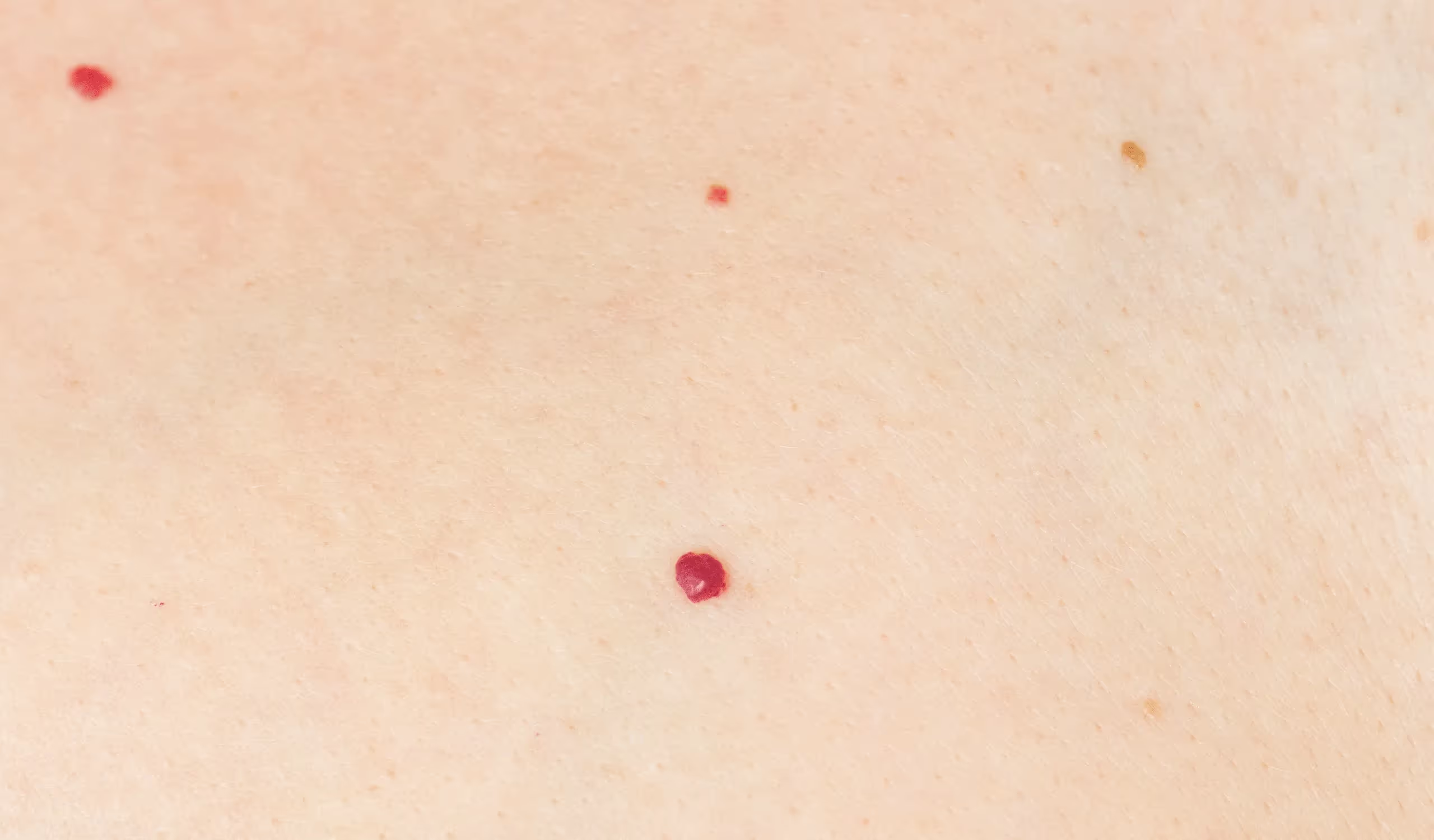
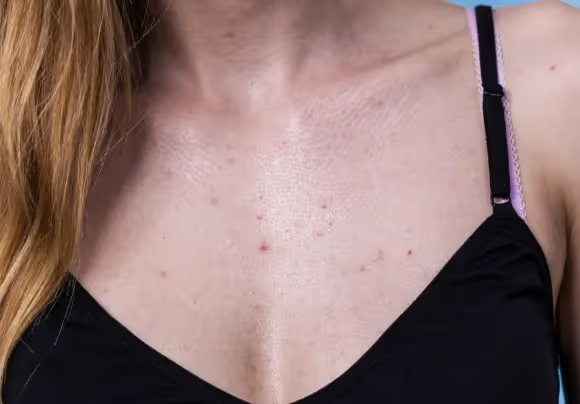
Red spots on the skin can raise some questions. Is it something serious? Do you have to do something with it? Chances are you are dealing with cherry warts, also known as cherry angiomas. These are small, bright red spots that often occur in adults. But what exactly are these cherry warts, and what can you do about them?
In this blog, we explain what cherry warts are, what the causes and risk factors are, how to recognize them, and what treatment options are available. We also provide preventative skin care tips to keep your skin healthy.
What are cherry warts?
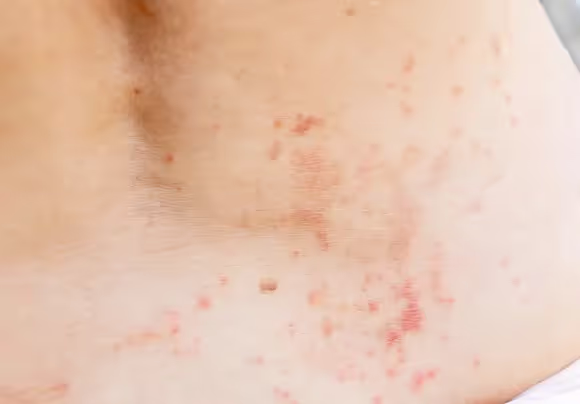
Cherry warts, also known as cherry angiomas, are small benign growths of blood vessels that lie just below the surface of the skin. They are usually bright red in color and can range from a few millimeters to a few millimeters in diameter. Some cherry warts lie flat on the skin, while others are slightly raised. Sometimes they are dark purple and can be confused with dark moles.
They are common in adults, particularly from the age of 30. Although completely harmless, they can be cosmetically annoying, especially when they appear in visible areas such as the face, neck, or hands.
Causes and Risk Factors
The exact cause of cherry warts is unknown, but there are some theories and risk factors associated with their occurrence.
- Age: The risk of cherry warts increases as you get older, especially from the age of 30.
- Genetic predisposition: If cherry warts are more common in your family, you are more likely to develop them too.
- Skin type: People with lighter skin are more likely to suffer from cherry warts or are at least more noticeable.
- Hormonal changes: Pregnancy, menopause, or other hormonal fluctuations can trigger the formation of cherry warts.
Diagnosis and when to see a doctor
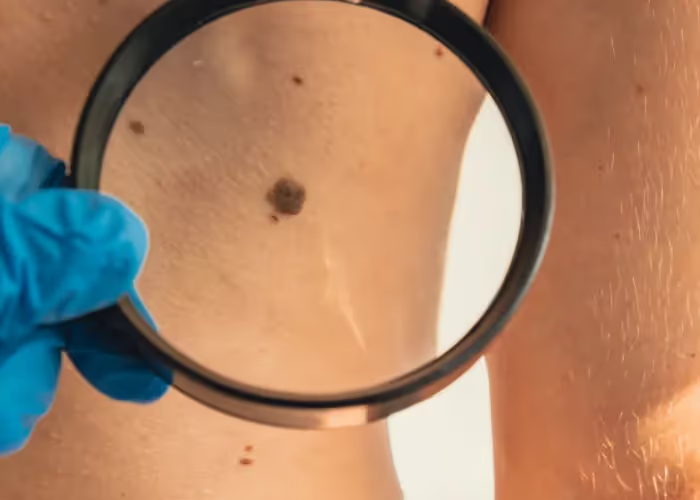
Cherry warts are usually easy to recognize because of their characteristic rounded shape and bright red color. Your doctor or dermatologist can often make a diagnosis with the naked eye.
Cherry warts are always benign. The only situation where you should see a doctor is when you are unsure whether it is really a cherry wart.
Treatment options available
Good news! If you want to remove cherry warts, there are several safe and effective treatments available. Most of these options can be performed at a dermatologist's clinic.
- Laser treatment: Here, a laser is used to break down the cherry wart without damaging the surrounding tissue. Often they first become dark purple because the blood coagulates due to the heat of the laser beam. After a few weeks, they will fade away.
- Electrocautery: This is a procedure where the cherry wart is burned away with an electric current.
- Cryotherapy: This uses liquid nitrogen to freeze and remove the cherry wart.
- Surgical removal: Larger cherry warts may require minor surgical intervention.
While cherry warts have no medical need to be removed, this may be cosmetically desirable. Always discuss your options with a specialist. This is because when treated for cosmetic reasons, it is important that they do not leave scars.




%20(1).avif)
.avif)


%20(1).avif)
.avif)
.avif)

.avif)


-min.avif)
-min.avif)
-min.avif)

.avif)


.webp)



























.avif)


](https://static.legitscript.com/seals/624359.png)