.webp)




With ski holidays, snow and sun ahead, we'd like to highlight our absolute favorite when it comes to taking care of your skin: sunscreen. Sunlight, and especially the UV rays it brings, you could see them as the biggest enemy for your skin.
From accelerated aging to skin cancer, you'd rather protect yourself from it. How does sunscreen do that? And why do you need that in the winter, the sun barely shines anyway?
How does sunscreen work?
Sun cream is a sunscreen that filters sunlight. And in particular the ultraviolet radiation, or UV radiation, in that light. It consists of two types of rays:
- UVA rays = the rays that cause skin aging and skin cancer.
- UVB rays = the rays that help you produce vitamin D but also cause you to burn.
There are therefore two types of sunscreen. One type only protects you against UVB rays, the other protects you against both. And we recommend the latter as dermatologist on. Why?
UVB sun protection works with chemical sunscreens that make radiation harmless, but these filters are unstable. Protection is therefore not guaranteed.
A sunscreen that protects against UVB and UVA rays works on the basis of titanium dioxide and zinc oxide. These ingredients help to reflect the radiation so that it cannot reach your skin.
Why also wear sunscreen in the winter?
Although the sun doesn't always seem to shine, and the rays don't feel warm or strong during the winter, there is indeed sunlight with UV rays. These continue to break down skin cells no matter what season it is.
What makes the winter sun so dangerous? In winter, the ozone layer is at its thinnest. This also means that the sun's harmful UV rays can easily penetrate it. Sun cream can therefore be extra important in the winter.
And to come back to the skiing holidays: sun protection seems to be more established there and for good reason. This is because the risks are even greater when snow and/or ice are present. According to NASA research, these reflect up to 90% of UV light
What if I skip sunscreen in my skin care routine?
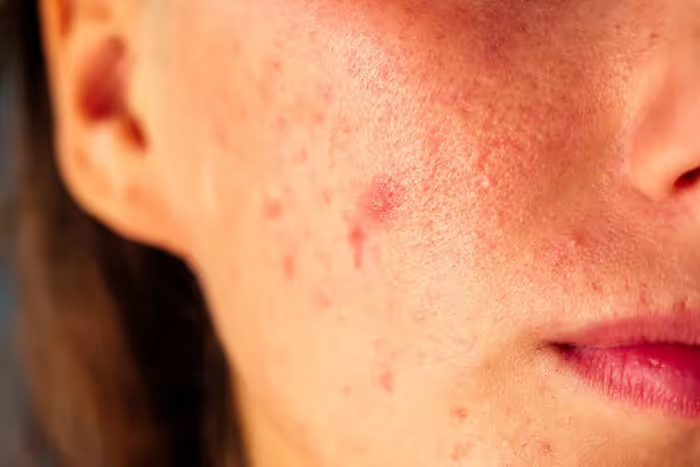
Exposure to UV light can result in a broad spectrum of damage. Think of the usual suspects such as premature skin aging, skin cancer, but also other conditions such as:
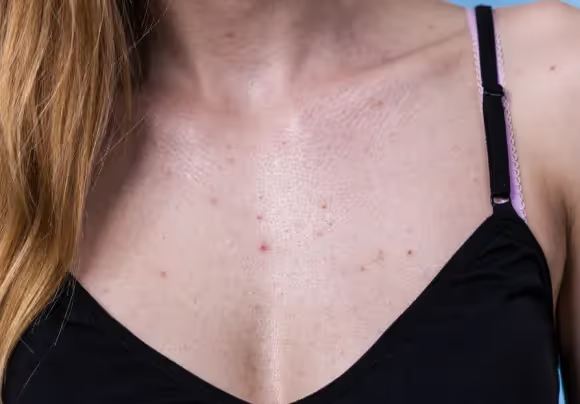
- Changes in the texture of your skin. This mainly appears as fine wrinkles because your skin becomes thinner, especially around your eyes (crow's feet), on your chest and on the forearms and back of your hands.
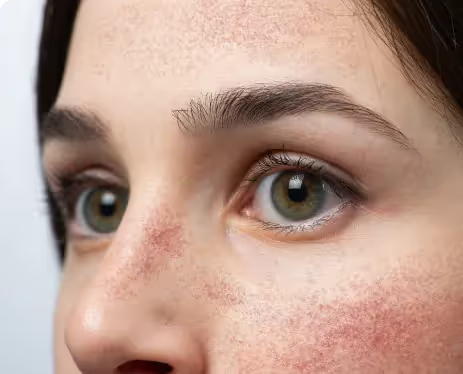
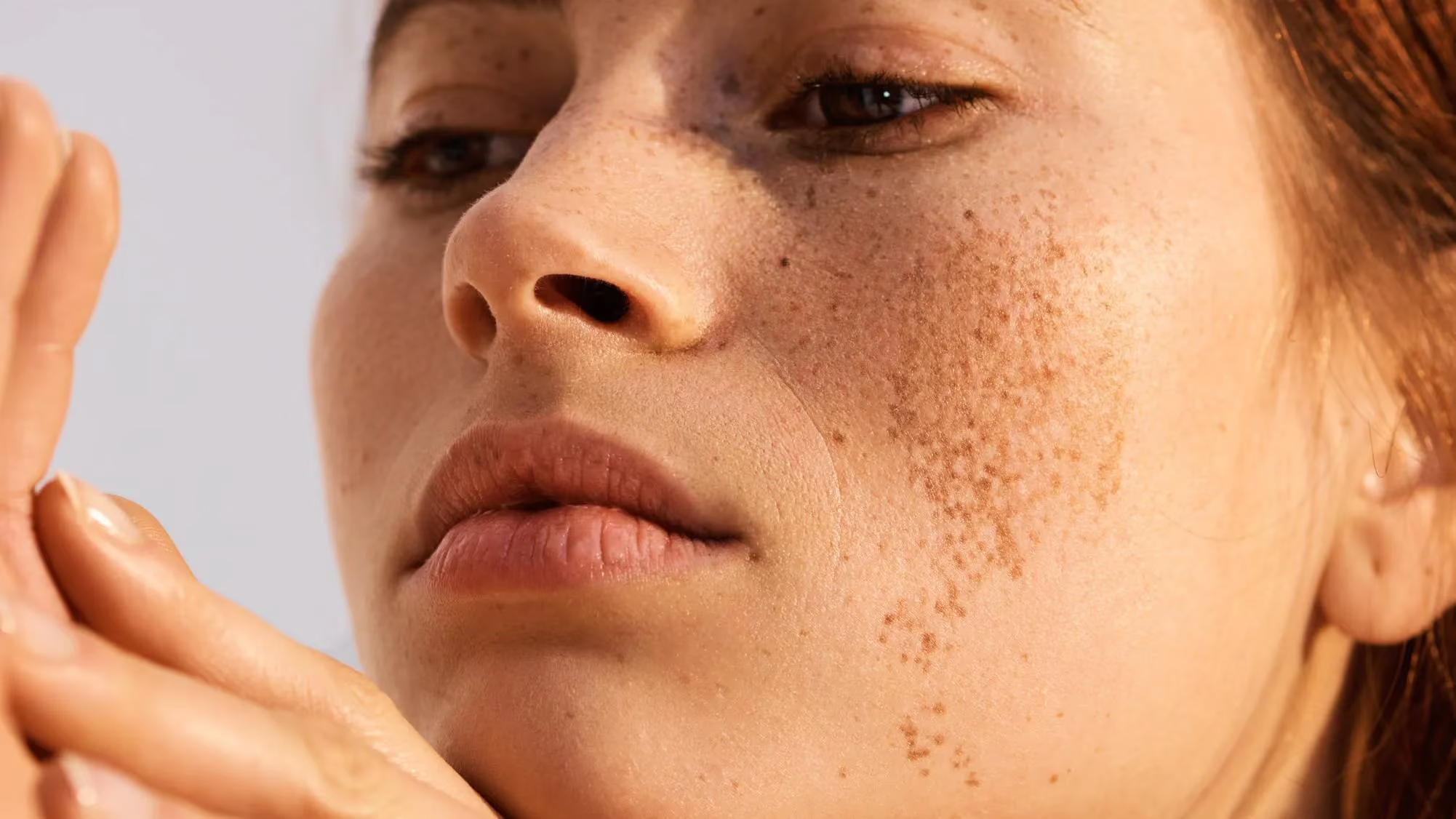
- More pigmentation such as brown spots, freckles, age spots and liver spots.
- White patches on legs, arms and backs of the hands.
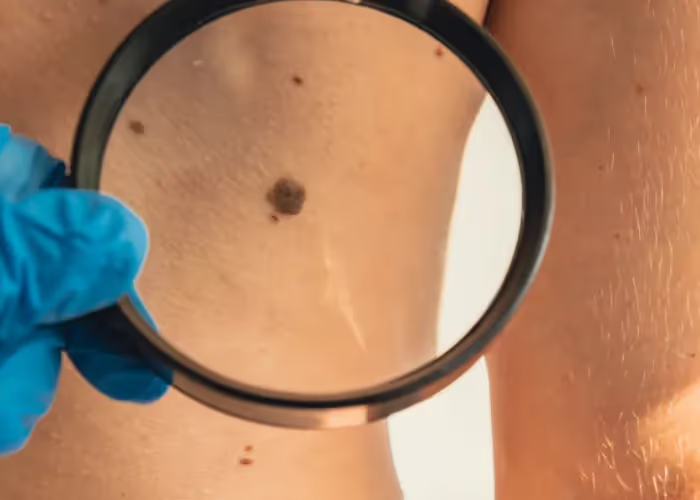
- Increase in moles, some of which can develop into skin cancer.
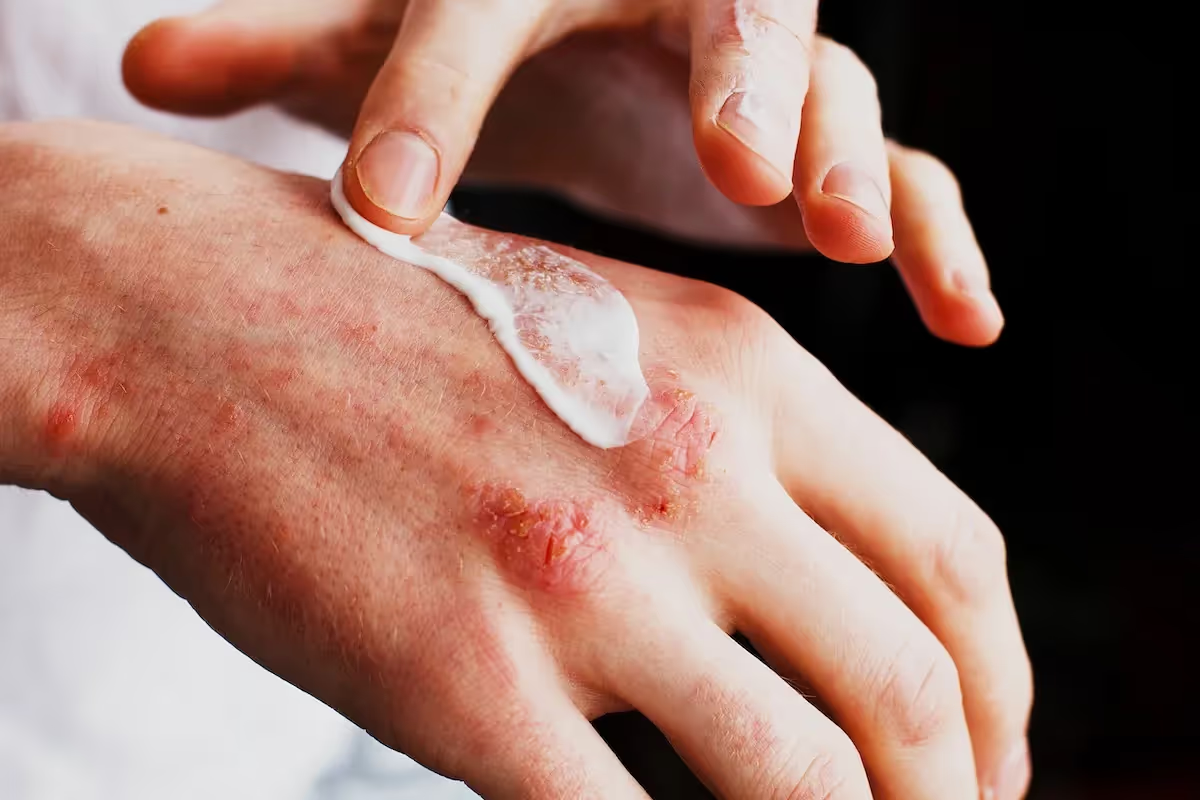
- Abnormal skin changes, including red scaly patches and lesions on the lips, both of which can develop into squamous cell carcinomas.
What does SPF mean?
Your sunscreen always has a Sun Protection Factor on it. This factor indicates how many UVB rays the sunscreen can absorb or reflect. Simply put, SPF indicates how long you can stay in the sun by multiplying how fast you burn.
Preview
Suppose you burn in the sun after an average of 10 minutes. If you wear sunscreen with SPF 50, you can stay in the sun for 500 minutes without burning.
Please note: the strength of the sun is not always the same, so the speed at which you burn unprotected skin is not always the same. Be wise and lubricate regularly.
Although your sunscreen itself naturally also protects you against UVA rays, the SPF says nothing about this. The extent to which you retain sun protection for this will usually not be immediately clear on the packaging itself either. However, the European Commission does require companies that produce sun protection that UVA protection must be at least one third of the UVB protection.
Which factor do I choose?
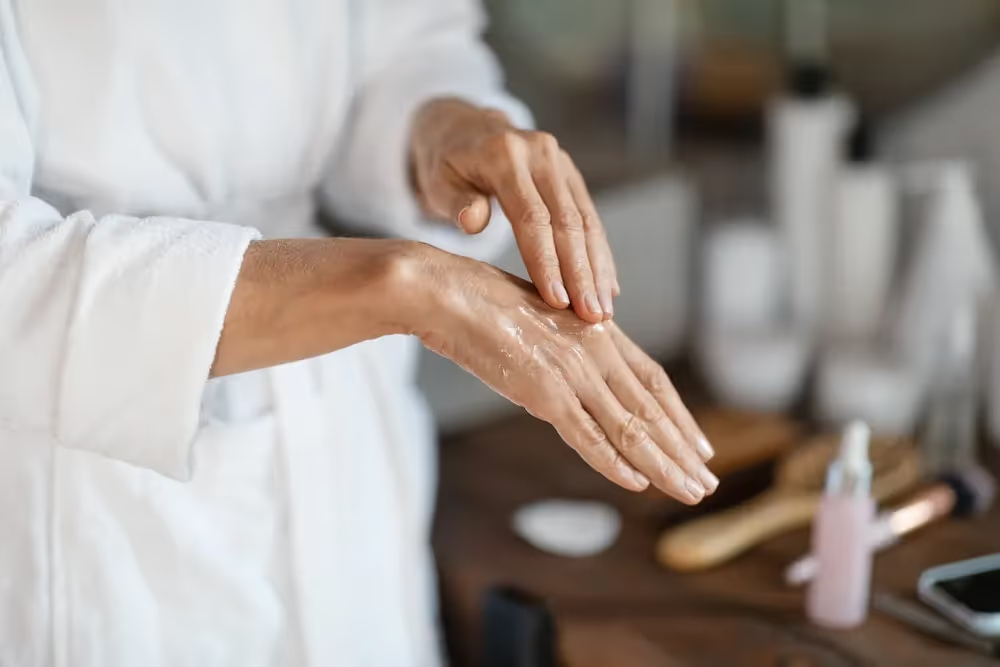
Always go for the highest possible protection with an SPF of at least 30 and preferably even 50+. This way, you don't have to worry about whether you are sufficiently protected and whether the protection still works after an hour. If you have sensitive skin that does not tolerate sunscreen well, choose a cream with a light texture and no perfumes instead of a low SPF.
An SPF of 10 or 15 is only possible if you naturally have dark skin, dark hair and dark eyes and rarely or never burn.
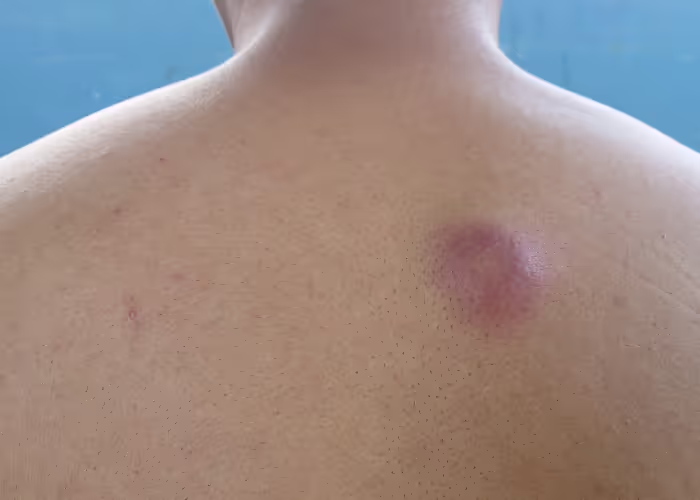
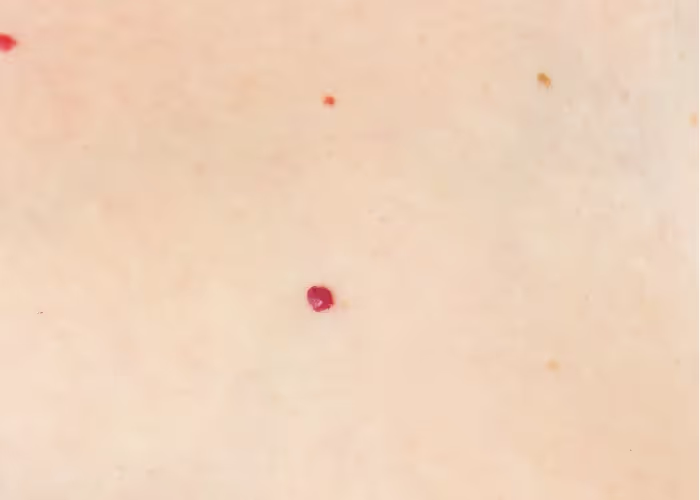
Do you notice damage from the sun: a suspicious spot, fine wrinkles or pigmentation? Then don't wait too long to get you dermatologist to contact. The sooner they get there, the faster they can reassure and help you. Consult via the Skindr app within 48 hours a experienced dermatologist.




%20(1).avif)
.avif)


%20(1).avif)
.avif)
.avif)


.avif)


-min.avif)
-min.avif)
-min.avif)

.avif)


.webp)































.avif)


](https://static.legitscript.com/seals/624359.png)