.webp)




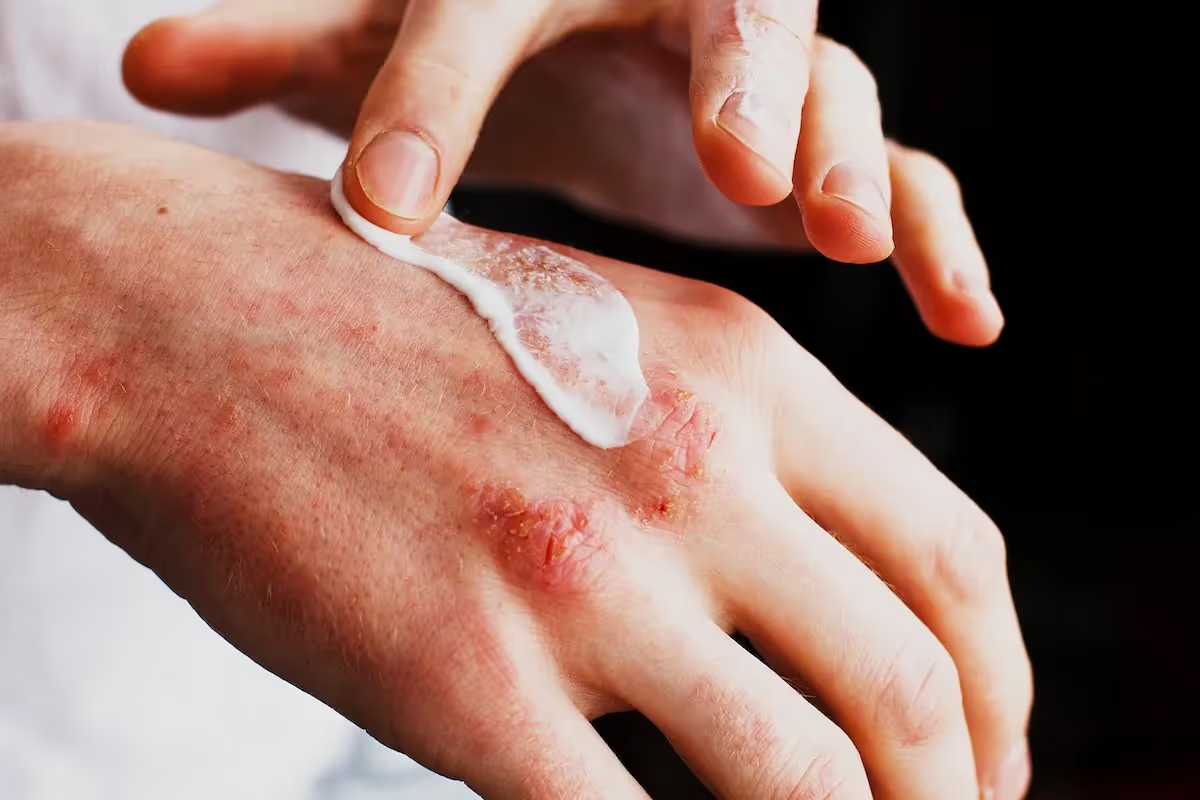
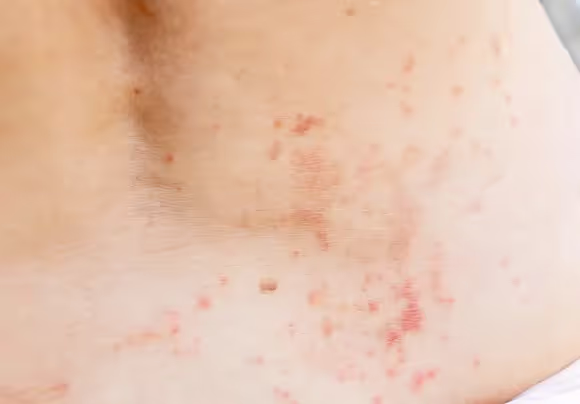
When we think of eczema, we think of red spots that are itchy. It is a skin condition where the skin inflames. This inflammation causes the red, scaly areas that are annoying to itch. There are different types of eczema, but the ones that dermatologists most commonly encountered is atopic eczema, also known as constitutional eczema, neurodermatitis or atopic dermatitis.
Atopic eczema is hereditary, so there is nothing you can do about it if you suffer from it. Patients often have family members who have asthma, hay fever, or a food allergy. This is because all of these disorders are part of the atopic syndrome. A child with hay fever, for example, is therefore more likely to develop eczema and vice versa, a child with atopic eczema has an increased chance of developing hay fever.
Daily eczema care
If you suffer from eczema, there are a few basic rules that can already remedy the problem without a consultation with the dermatologist necessary is:
- Avoid scratching. That will only make the itching worse. If you can't control yourself, try an anti-allergy tablet. Sometimes that will reduce the itching. Keep your nails short and tidy to prevent scratching infections.
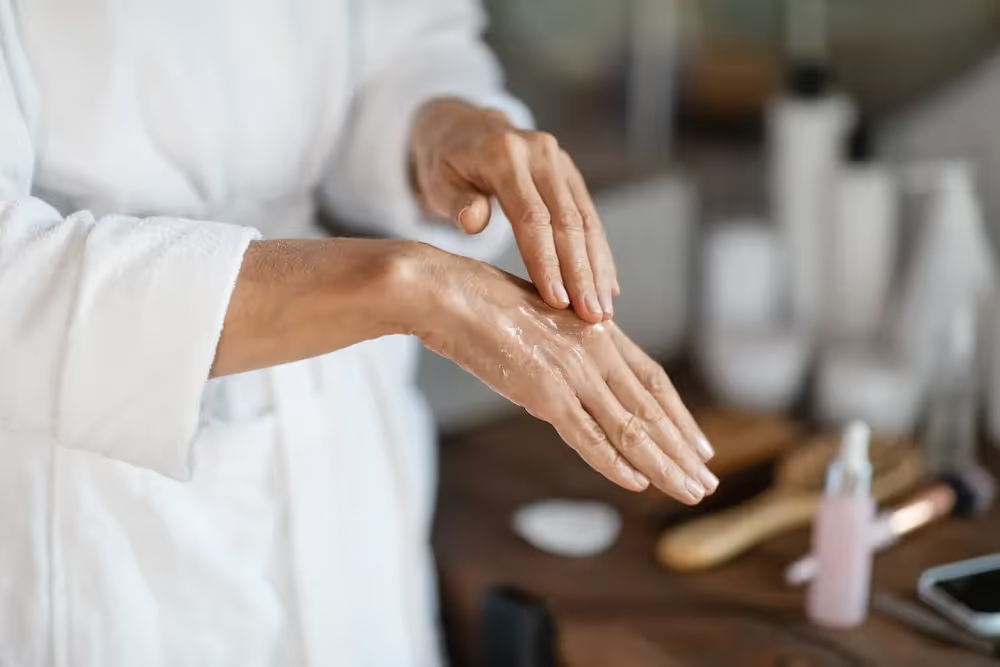
- Do not take hot, long baths or showers and wash yourself with shower oil or hypoallergenic soap. After the shower or bath, lubricate the skin with a moisturizing cream to prevent it from drying out. It is an extra layer of protection for your skin that will prevent itching.
- Wear clothing made of highly absorbent and breathable materials such as cotton or Lyocell. Fabrics that are easy to sweat in, such as nylon, increase itching.
- Avoid contact with chemicals and washing hands too much because this promotes the development of hand eczema.
- Soak up the sun The sun has anti-inflammatory properties and is therefore good against eczema. Of course, don't forget to apply sunscreen. And relax because stress only worsens the eczema.
- Keep pets, carpets, and plush toys out of the bedroom
Need a cortisone ointment? How to use it
Sometimes the eczema is persistent and a cortisone ointment is necessary. This ointment contains corticosteroids. It is prescribed for a variety of skin conditions by the dermatologist, not just against eczema. Corticosteroids inhibit inflammation and accelerated cell division. They also reduce redness and itching.
Cortisone ointments have a bad name. This is because in the early years, fifty years ago, the ointments were used for too long with too strong agents that caused many side effects. This created corticophobia, or an unjustified fear of using cortisone ointment. Today, cortisone ointments are as safe as other ointments. The eczema is even more harmful than the cortisone ointment, even when side effects occur.
It's best to ask for advice from a dermatologist. How do we go about that with Skindr on? After examining your condition, you will receive advice from an experienced person within 48 hours dermatologist. In the beginning, you will usually apply the ointment twice a day, then this will be under your supervision. dermatologist reduced to once a day and later to two to three times a week. But the treatment always depends on the location and severity of the eczema. Sometimes the use of the cortisone ointment is alternated with a neutral ointment.




%20(1).avif)
.avif)


%20(1).avif)
.avif)
.avif)


.avif)


-min.avif)
-min.avif)
-min.avif)

.avif)


.webp)



































.avif)


](https://static.legitscript.com/seals/624359.png)