.webp)


We are very proud of what we can do for patients with skin conditions, but also of the story behind them. Because Skindr comes from a personal experience. An experience that we don't really wish for anyone. Our CEO Jochen was struggling with rosacea, but luckily in the event of an accident, it brought him to Dr. Avermaete after a few wanderings. And that in turn led to Skindr.
Rosacea Month therefore seemed like the perfect time to sit down with Jochen about that founding story.
What were the challenges you faced when dealing with your rosacea, and how did you overcome them?
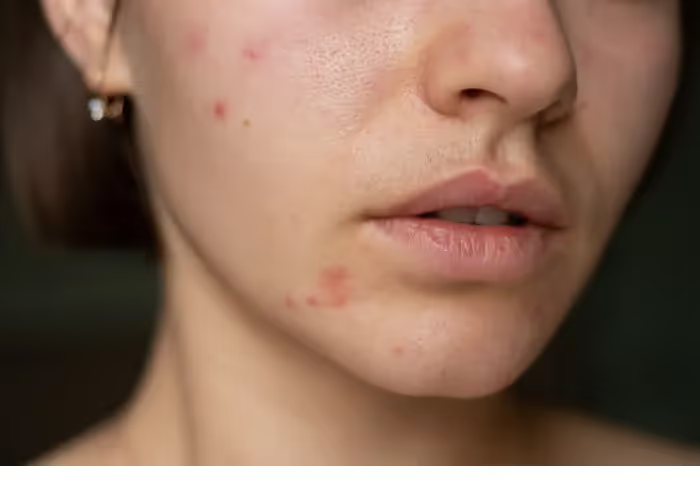
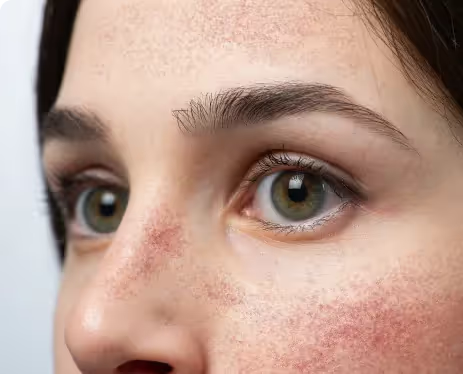
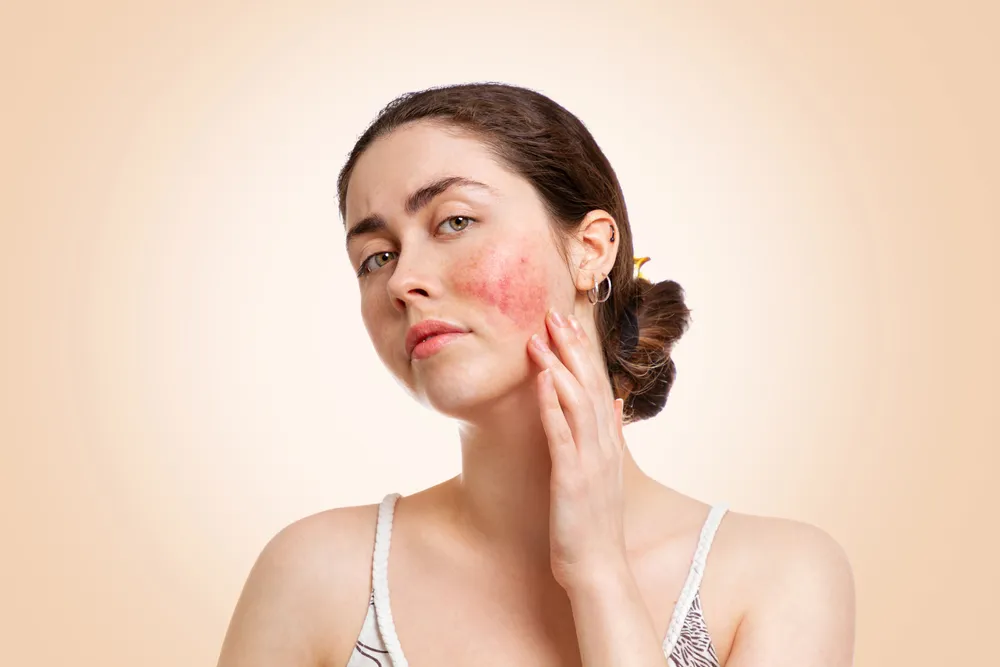
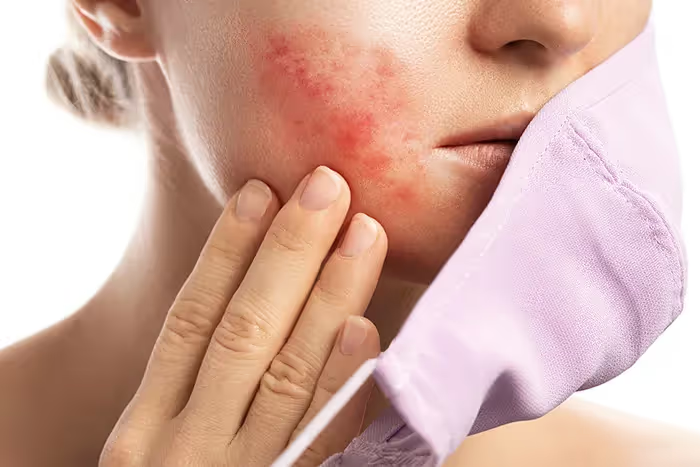
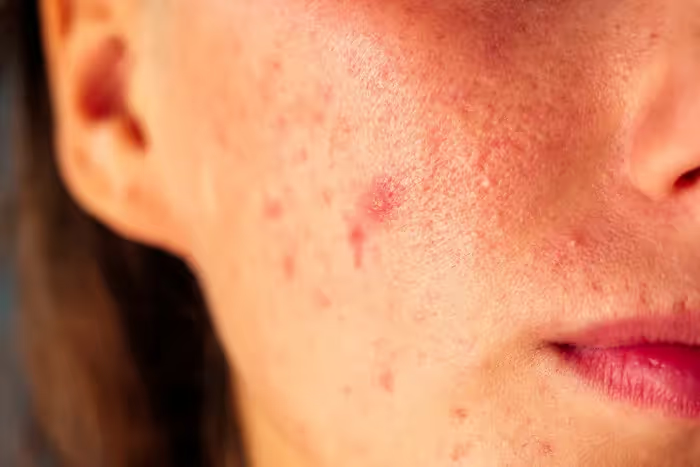
First and foremost, there is the whole thing that is visible rosacea that made me insecure. Rosacea is in fact characterized by severe redness on the face, especially on the cheeks and over and around the nose. Like many others who are struggling with the skin condition, I felt a psychological inhibition as a result: I was ashamed to come out because I didn't want to be seen like that.
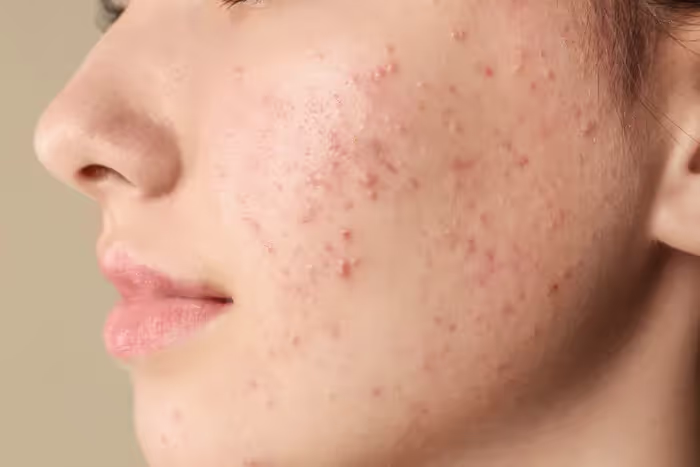
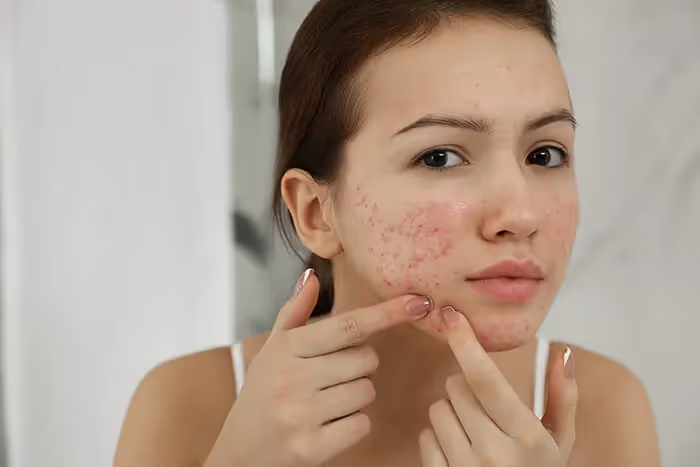
I was 35 when I got rosacea and my faith in dermatologists was already very shaky at that time. Flashbacks to my teenager - and twenties took me to thirteen in a dozen treatments. I then pulled with my acne to different dermatologists, but was told the same story over and over again. A story that didn't work for me.
That trust is something that, like my rosacea, did not improve. As if I had challenged the universe with my frustrations about my acne journey, I immediately received the toughest treatment, a laser treatment. The result: extremely sensitive skin.
So I set out to investigate myself. Hours of researching, getting lost on forums and writing lengthy emails with my own concerns later, I ended up with Dr. Avermaete (now Annelies).
What inspired you to create an app for patients with rosacea, and more generally, patients with a skin condition?
Simply put: miscommunications from my own experience. I only realized later that a acne treatment takes place in a process and, in most cases, it starts in the same way. Hence the same story over and over again. But I wasn't told that clearly either, and even if I indicated that I had already tried those antibiotics, they didn't listen.
So it's a communication problem. Which, thanks to Annelies, I was also able to see the doctor's side: an overwhelming question that is hard to solve. While you're talking to one patient, the next should have been helped already. So there is no room for a detailed explanation or a personal approach.
That's what you get when there is only 1 dermatologist for every 14,000 patients.
Annelies and I found each other at that crossroads: a more efficient way of working for the doctor, a better experience for the patient.
So what do you think the ideal experience for a rosacea patient looks like?
In an ideal world, teledermatology reduce waiting times and guarantee quality, even for the physical appointments that remain necessary.
By using technology, dermatologists can use their time efficiently. What I see with Annelies is that an intake now takes 4 minutes, because the patient takes a large part of it into his own hands. In practice, this takes up to 12 minutes.
Thanks to these 8 minutes of time savings, and the ability to communicate flexibly with each other, teledermatology or online dermatology can mainly increase quality. Space is created to listen to the patient, explain the condition in detail and link it to personal advice.
What are the most common misconceptions about rosacea?
The most common misconception, in my opinion, is the confusion with acne. It therefore seems good, but the cause may be completely different. If you only focus on treating the symptoms, things go wrong.
Secondly, rosacea cannot be cured and there should be more clarity about this. It's not a fun story to tell, but transparency and open communication again with good explanations are important.
How do you approach this (differently) with the app?
We sincerely strive to help people as best we can with their skin concerns. By creating more time to really talk to each other, we can focus on the cause, rather than the symptoms.
How? We pay attention to the patient's history and input. Based on this, we can provide a personalized solution.
What advice would you give to someone who has just been diagnosed with rosacea?
Above all, don't worry too much. Although the condition is chronic, it can be perfectly controlled with the right treatment. A treatment that can be incorporated into your daily habits fairly easily, without many side effects. So don't let rosacea determine your life for six months (or more), it can be resolved after just a few weeks.
Via Skindr you'll even be seen by an expert in a very short time;).
%20(1).avif)
.avif)


%20(1).avif)
.avif)
.avif)

.avif)
-min.avif)
-min.avif)
-min.avif)

.avif)


.webp)


























.avif)


](https://static.legitscript.com/seals/624359.png)