.webp)


.avif)
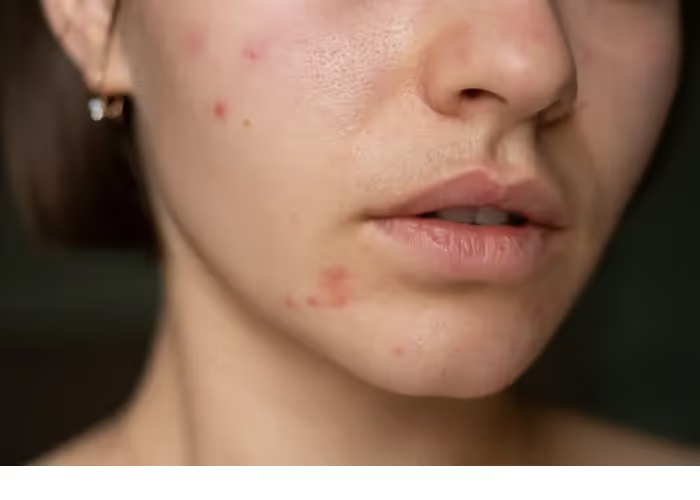
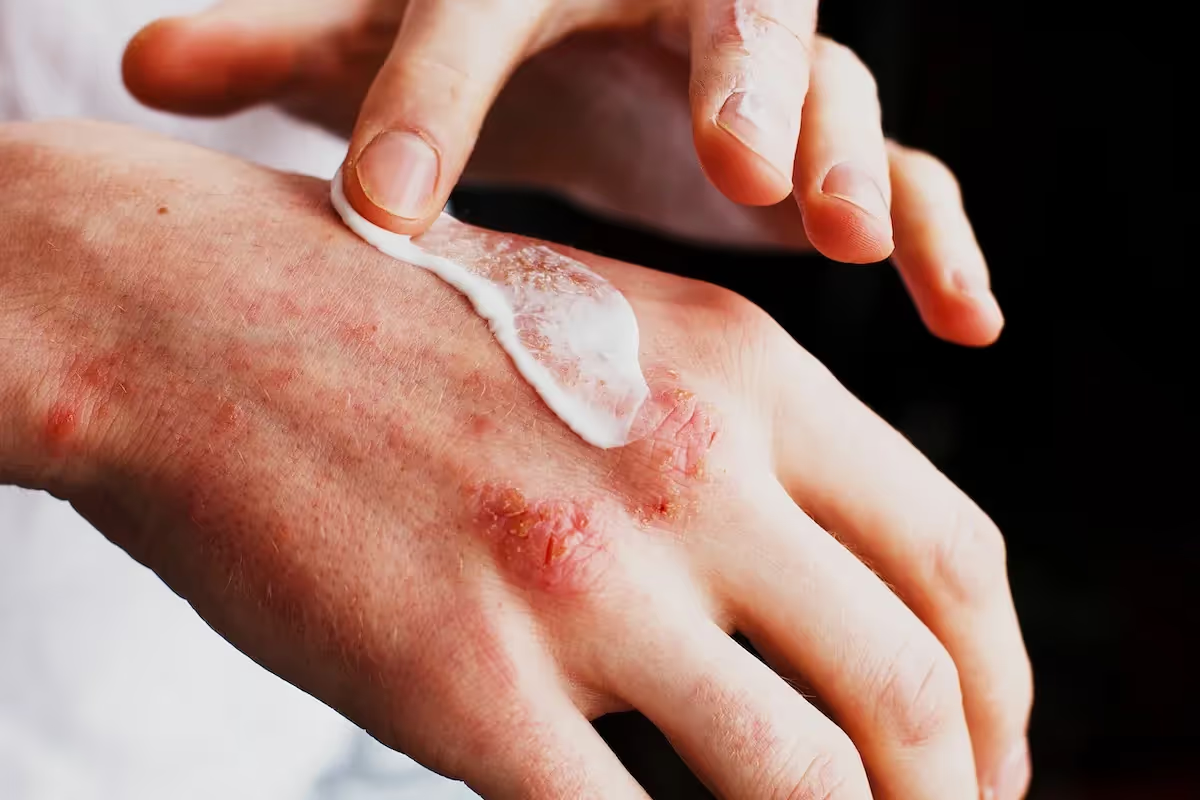
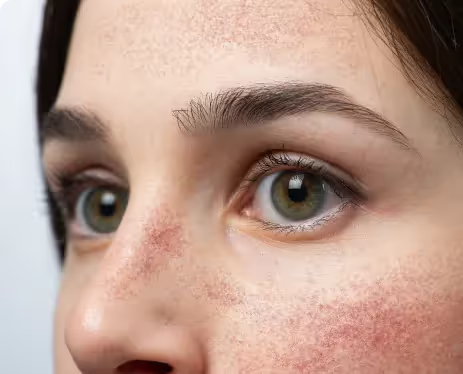
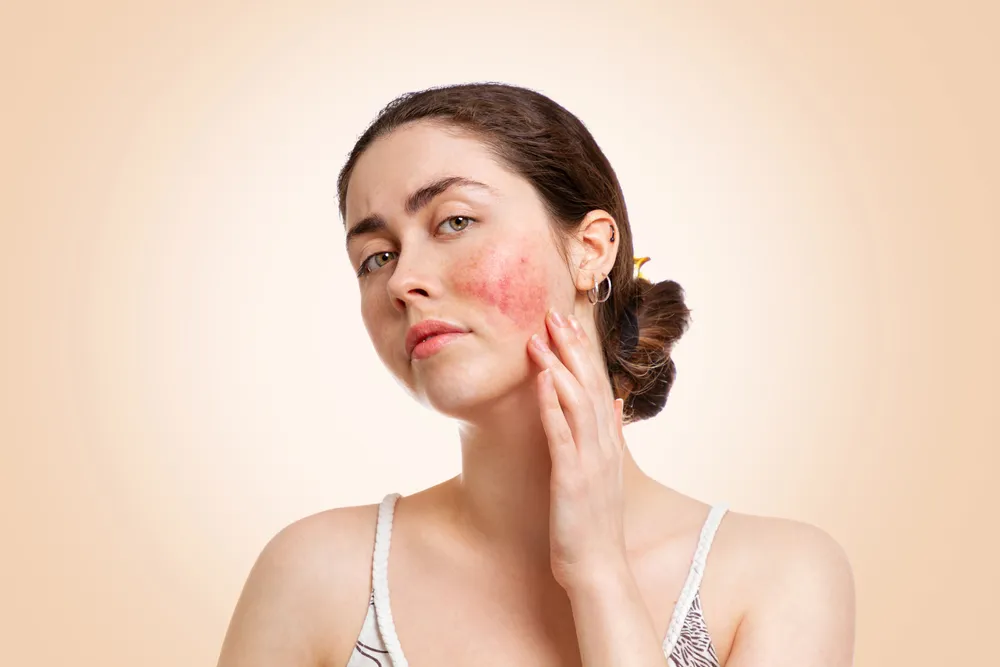
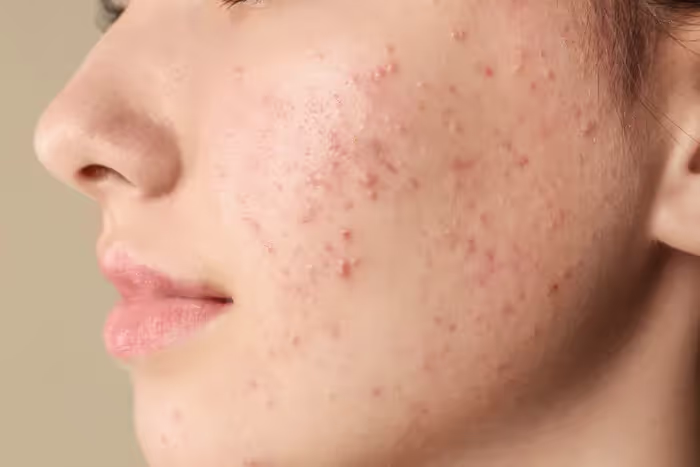
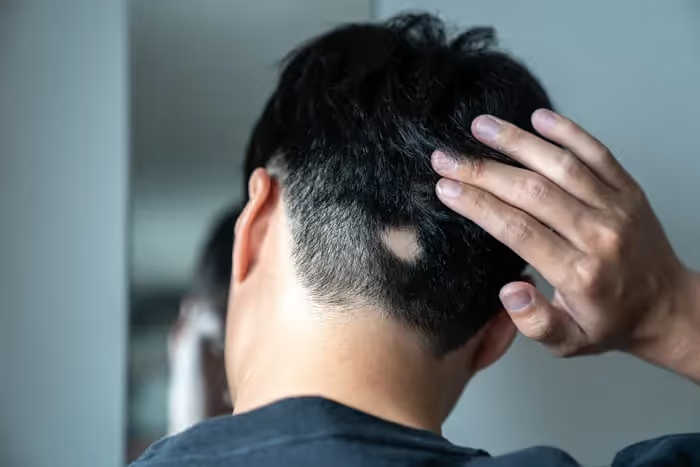
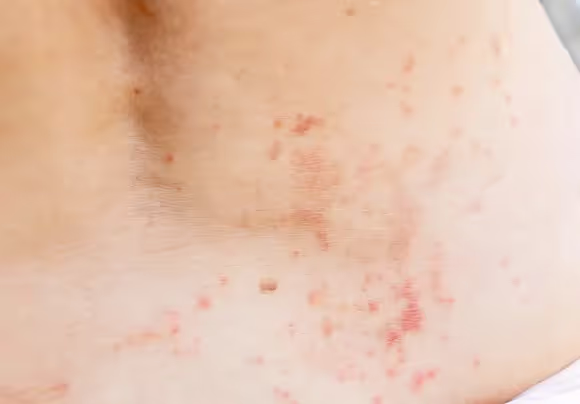
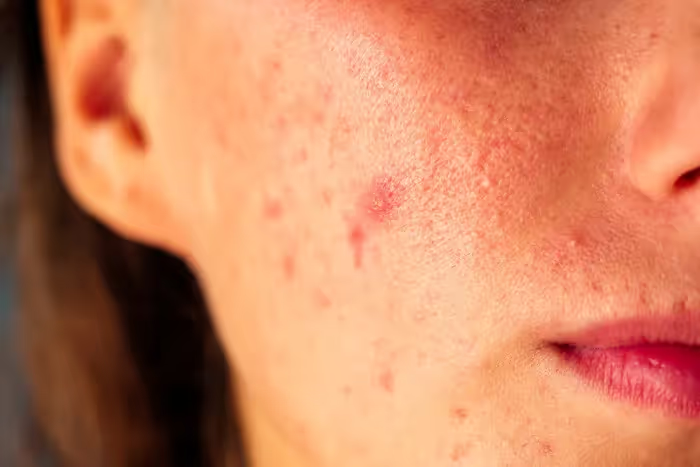
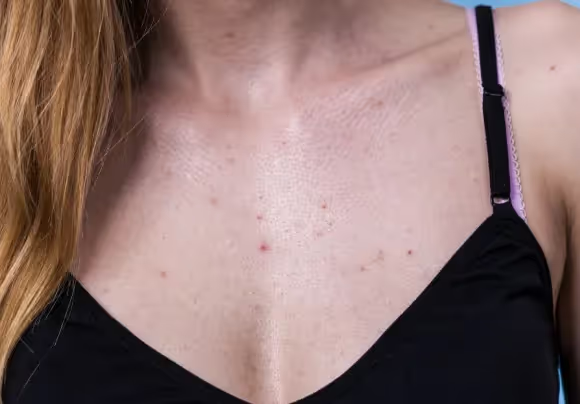
A rash that just won't go away. Skin that suddenly flares up, becomes dry, or starts itching. Acne that feels different than usual. The question that follows is always the same: is this serious? And if so, what now? Where can I get help quickly?
For most people, that first question doesn't lead to a specialist today, but to Google, Gemini, or ChatGPT. That’s because waiting times for a dermatologist in Belgium can easily reach four, six, or sometimes eight months. A GP who needs to provide a referral, a schedule that’s fully booked, and in the meantime, someone at home is holding their arm under a lamp, comparing photos to what they found on Reddit. Or they assume it’s nothing to worry about, when it might actually be something.
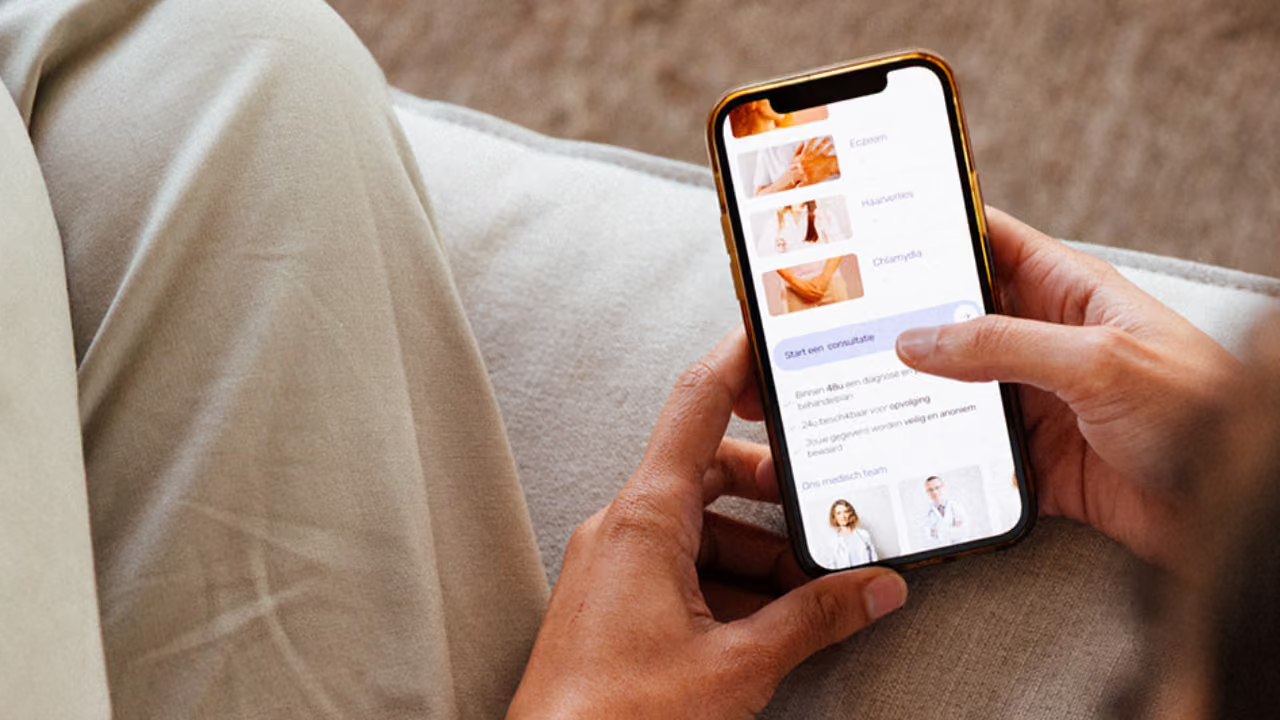
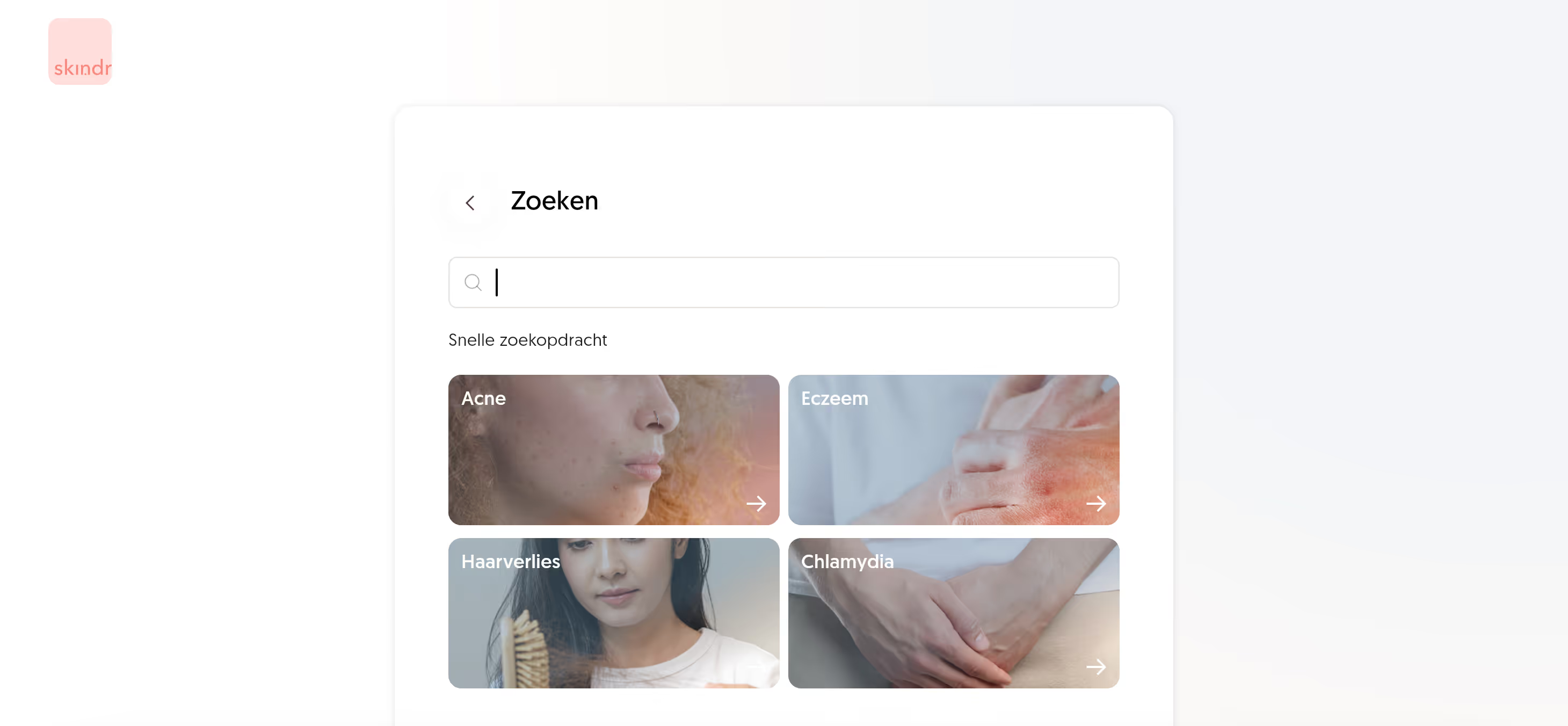
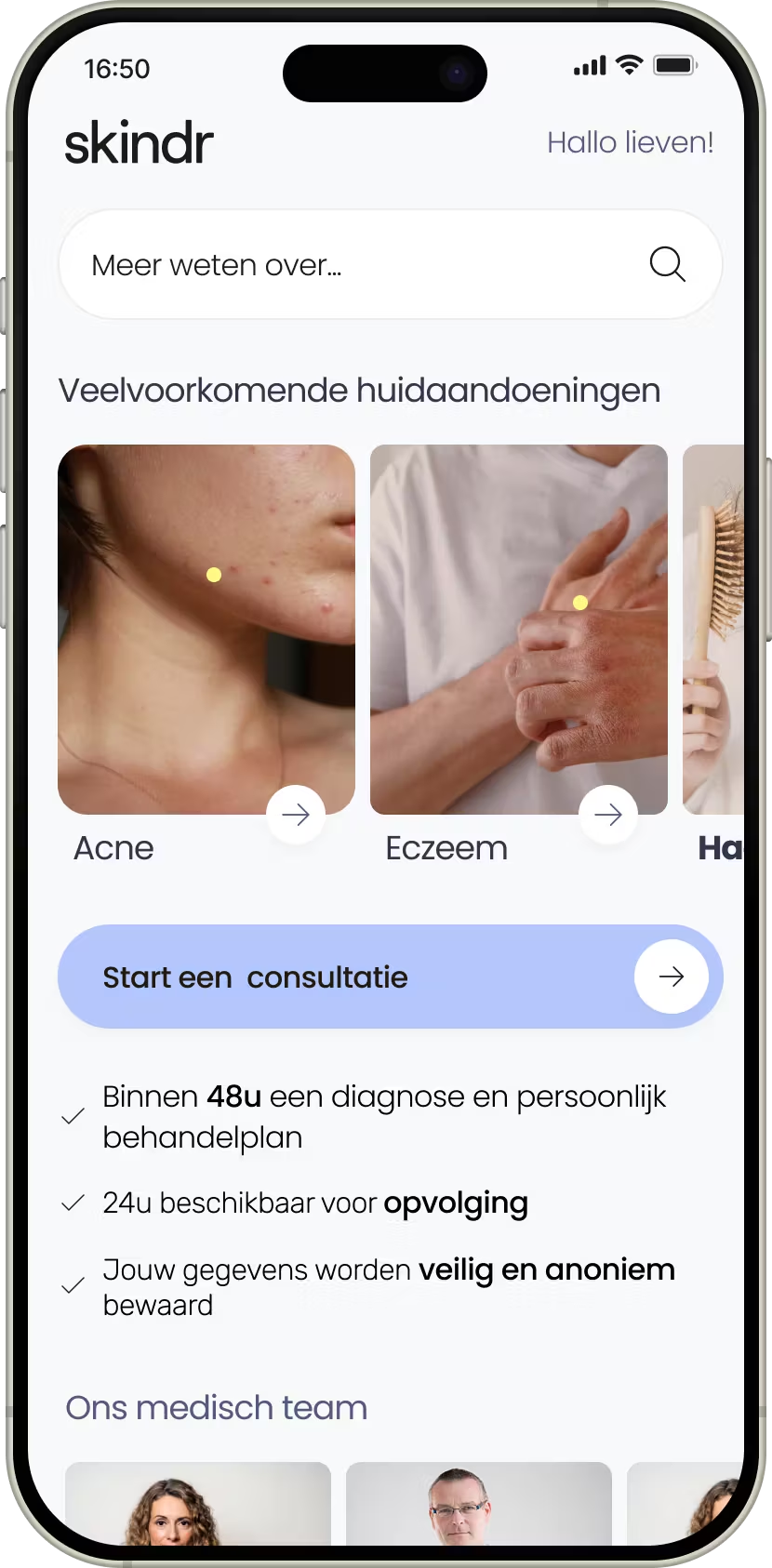
Skindr is introducing a smart skin scan in advance: an AI-driven skin assistant that provides a reliable initial assessment of a skin problem in seconds. No waiting times, no referral needed. Take a photo, get the result, and if necessary: proceed immediately to a certified dermatologist.
This isn't a general AI that scrapes information from the internet. It has been specifically developed for skin conditions and trained on medical images evaluated by dermatologists. This allows you to quickly get an initial, evidence-based assessment. And if further care is needed, you can see a certified dermatologist via Skindr within 48 hours.
The problem with waiting
Dermatology, and healthcare by extension, is struggling with a structural capacity problem. Demand is rising faster than the number of available specialists. Today, an estimated one in four dermatologists is over 65, while only a few dozen new dermatologists graduate each year. This means the pressure on the system won't decrease in the coming years; it will only grow.
This is not the fault of individual doctors. Dermatologists are already working at an exceptionally high pace, with full schedules and a growing stream of patients who are understandably looking for clarity. The problem lies not in the doctors' efforts, but in how scarce specialist time is currently being used.
Not every initial skin concern requires a full specialist consultation immediately. Some questions simply need a quick, reliable assessment: is this likely harmless, should I monitor it, or do I need to see a doctor quickly? When initial triage is handled more effectively, more space is freed up for patients who most need a dermatologist's expertise.
That is the power of this preventive scan: using technology not to replace specialist care, but to direct it more effectively. By combining validated AI with real dermatologists, Skindr can help more patients in the same amount of time and with the same resources, resolve uncertainty faster, and allow doctors to focus more on cases where their human expertise makes the difference.
Anyone who needs further care after the scan can immediately start a full treatment path with a certified Skindr dermatologist. It’s not just a standalone AI assessment, but a smart initial screening backed by a real specialist who already knows the context before the conversation begins.
The smart screening
The scan uses Autoderm, a European-certified medical device for skin analysis. This is not experimental AI, but technology specifically developed to assess skin photos safely and reliably.
That is important, because when it comes to your health, you don't want to rely on just any AI. You want to know that the technology has been verified and complies with medical regulations.
Dermatology is often a visual field. Color, shape, texture, evolution: these are all signals that an experienced dermatologist uses to reach an initial assessment.
This is exactly where well-trained AI can provide support today. Not to replace the specialist, and certainly not for complex cases where medical expertise, context, and sometimes physical examination are required. But it can provide faster direction for an initial skin concern: does this look harmless, should it be monitored, or is further medical advice recommended?
In this way, technology doesn't replace the dermatologist, but acts as an extra layer before the consultation. It helps provide reassurance where possible, speeds up the process where necessary, and makes better use of available specialist time for the patients who need it most.
This is not a threat to the specialist. It is support. There is too much demand for care and too few hands to provide it.
Initial reassurance via AI, the rest via certified dermatologists
When people hear "AI" in healthcare, they often think of a standard chatbot that pulls information from the internet. But that is not what this scan is.
The scan uses Autoderm, a technology specifically developed for skin analysis and trained on verified medical images. It doesn't make things up and doesn't just search online. It helps assess skin photos based on recognizable medical patterns.
Not a wild guess, then, but a well-founded initial assessment.
"As a dermatologist, I see patients every day who have spent months worrying about something we could have ruled out in a single consultation. The skin scan gives people clarity faster and ensures that we, as specialists, can dedicate our time to those who truly need us."
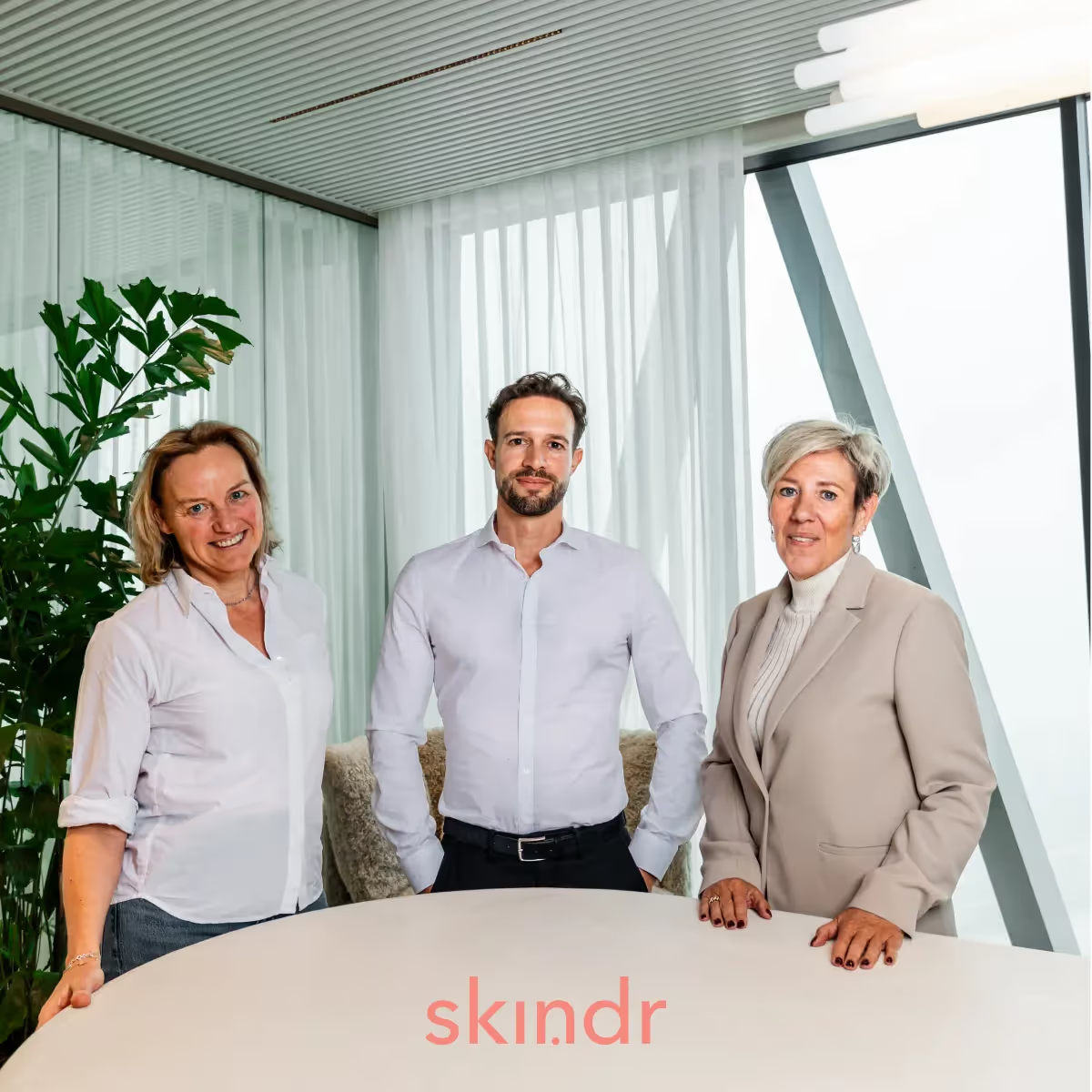
— Annelies Avermaete, co-founder & dermatologist at Skindr
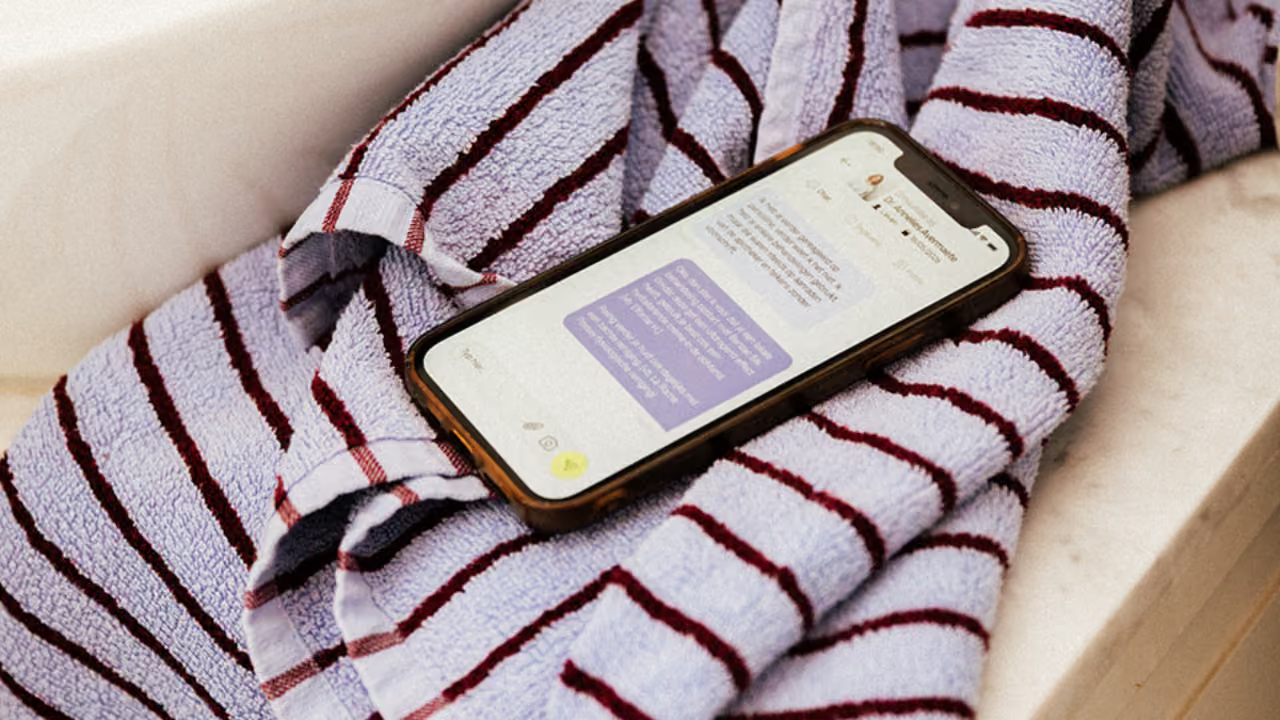
If a consultation is required after the scan, the dermatologist immediately sees the photo and the results in the file. This allows the conversation to start better prepared and enables the doctor to provide targeted advice more quickly.
Skindr remains what it has always been: a platform where certified dermatologists assess your skin condition and determine the treatment plan.
The scan is the preparation. The dermatologist decides.
Care that is affordable and accessible
This approach is based on a simple conviction: quality care should not depend on who you know, where you live, or how long you can wait.
For €15, the scan provides people with a quick, well-founded initial assessment. This removes uncertainty and helps determine the right next step: reassurance, follow-up, or referral to a dermatologist.
For the healthcare system, this means the same thing: less time wasted on questions that can be assessed more quickly, and more room for cases where human expertise is truly needed.
Smart technology and human care are not at odds here. At Skindr, they reinforce each other.
%20(1).avif)
.avif)


%20(1).avif)
.avif)
.avif)

.avif)

-min.avif)
-min.avif)
-min.avif)

.avif)


.webp)





























.avif)


](https://static.legitscript.com/seals/624359.png)