.webp)



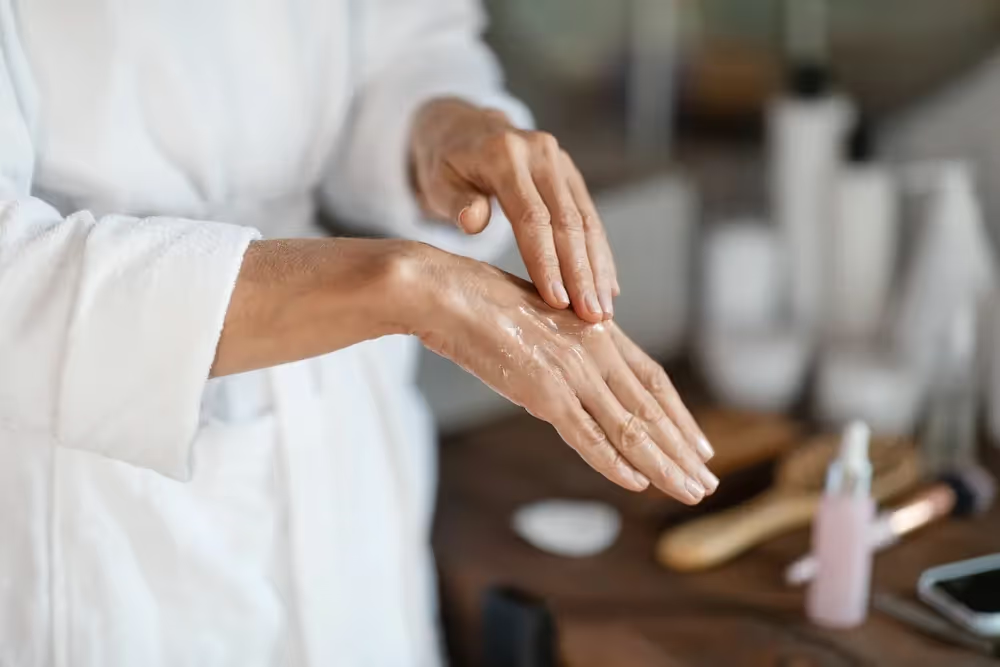
Treating eczema requires a thorough approach, considering different treatments and adapting them to each patient's individual needs and symptoms.
The following is a detailed overview of various medical treatments and therapies commonly used in treating eczema:
Medical treatments for eczema:
Medical treatments include a wide range of approaches, ranging from topical therapies to tablet medications, depending on the type of eczema and the severity of eczema symptoms.
Local treatments
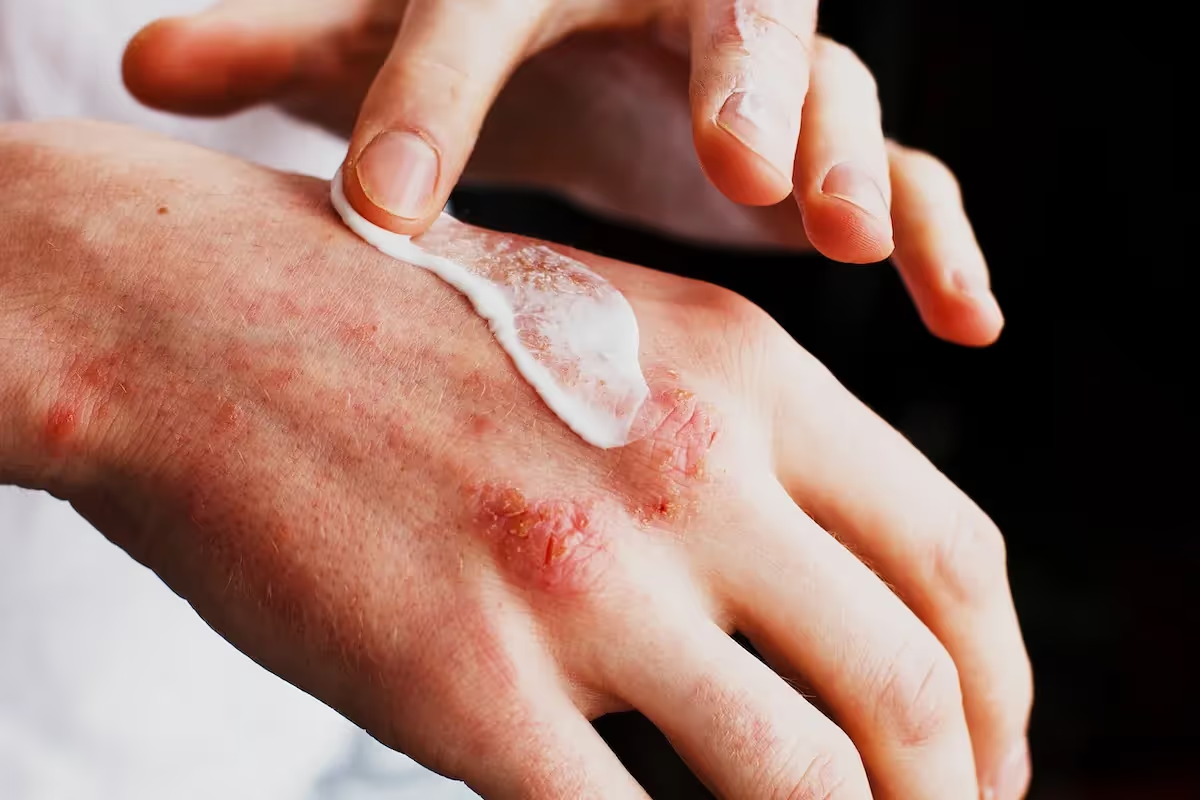
Local therapies are the first line of treatment for mild to moderate cases of eczema. They include the use of creams, ointments, or gels that are applied directly to the affected skin. These agents may include cortisone to reduce inflammation, calcineurin inhibitors to suppress the immune response, and emollients to hydrate and protect the skin.
There is certainly no need to be afraid of cortisone, but make sure you don't forget the follow-up appointments with your dermatologist to keep following your treatment closely.
Light therapy
Light therapy (phototherapy): Light therapy uses specific wavelengths of light, such as the (narrowband) UVB and UVA spectrum, to reduce inflammation and soothe the skin. This treatment is usually performed under medical supervision.
How does light therapy work? About three times a week, you go into a light cabin. At a time, you build up the number of minutes to about ten minutes. You do this for about 30 sessions to calm your skin.
Tablet medication
In cases of severe, persistent eczema outbreaks, medications may be prescribed. This includes corticosteroid tablets (cortisone) to reduce inflammation and antihistamines to relieve itching.
When taking medication to treat eczema, it is necessary to have regular blood tests and follow up the treatment regularly with your dermatologist or doctor.
Biologicals
Biologicals are a relatively new class of medicines. They are medicines that consist of animal or human proteins and inhibit the function of inflammatory proteins or immune cells in the body.
They are used for severe cases of eczema that do not respond to other treatments and are not a standard treatment. Compared to other treatment methods, biologics are also significantly more expensive and are reserved for patients where other treatments do not help. So they are not prescribed for all patients.
It's important to work with a dermatologist or healthcare provider to determine the most appropriate treatment plan for your specific situation. A personalized approach can help control eczema symptoms and improve quality of life.
Want to learn more about eczema? Download our new guide to eczema full of useful information and tips written by our dermatologists.




%20(1).avif)
.avif)



%20(1).avif)
.avif)
.avif)

.avif)


-min.avif)
-min.avif)
-min.avif)

.avif)



.webp)




































.avif)


](https://static.legitscript.com/seals/624359.png)