.webp)




New parents can confirm that having a small baby is a big deal of worry. From food to skin. For the latter, in this blog, we want to give you some peace of mind by helping you get started with your child's skin care. Without strict rules, but with the right background information and advice from dermatologists that you can apply where necessary.
As a parent, you quickly notice that baby skin is sensitive, but why is that actually? And above all: how do you deal with this as carefully as possible?
How does the delicate baby skin develop?
The fact that baby's skin is so soft also means that it is still very vulnerable. In the womb, it is therefore already protected with a natural cream that is full of proteins and fats: the Vernix Caseosa, or the white layer with which your child is born. It offers the first protection after birth, but is also washed off quickly. What after that?
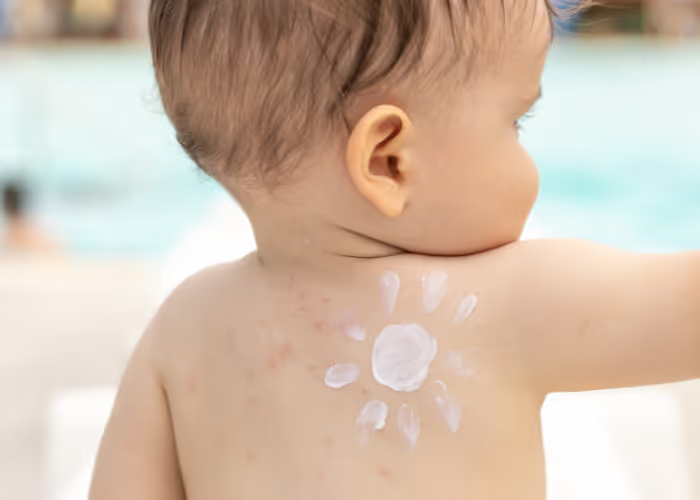
Baby skin is five times thinner than mature skin. So let that be a first indicator of how fragile it really is. After all, your little child is still missing a few 'layers': the acid mantle and the horny layer are still in full growth during the first weeks and months after birth.
The acid mantle - your natural winter jacket
Does your baby suffer from dehydration, irritation or infections? Then that can be traced back to the acid mantle that is not fully developed at that time. You can safely see this as a warm winter jacket for the body and skin: the acid mantle offers a barrier to everything that comes from outside. Think of bacteria, pollution, harmful substances, but also effective temperature fluctuations, which are difficult to penetrate thanks to this layer.
So you can imagine that your child reacts more quickly to these things without that barrier. Nothing to worry about, with the right (neutral) products, you can help the skin create an “acid layer” even in this fragile phase.
The stratum corneum - your ultimate protective layer
Also the stratum corneum, which is part of the epidermis and provides extra protection, only develops later. This layer consists of dead skin cells that, of course, your newborn baby doesn't have yet. After their main task - forming skin tissue - these cells therefore still serve as the ultimate strengthening and protection of the same skin.
Once this top layer is there, from the age of one month, your baby's skin gradually becomes less vulnerable.
How to care for baby's delicate skin
Good care is crucial in the first weeks and months after birth. With the following dermatological advice we help you protect your child's skin from ailments during this vulnerable phase.
- Restrict bathing. Two or three times per week is enough to keep their skin both clean and protected.
- Use lukewarm water. Water that is too hot will dry out your baby's skin more quickly.
- Always choose bath oil above soap before washing. Oil keeps the skin supple and soft, soap further dries out. When your baby is about four months old, you may want to switch to a mild baby soap.
The selection of our dermatologists:
1) The BabyPure Wash Lotion & Shampoo by Louis Widmer, or for very irritated skin, their Remederm Bath Oil.
2) The Ray's baby line. Founded and formulated by Ghent pharmacist Hilde Nys.
3) The Naïf baby line. Founded by two young fathers who discovered that even baby products can contain harmful substances.
- Pat the skin dry instead of rubbing. By rubbing the skin hard, you weaken your child's skin barrier, making it more sensitive to all kinds of irritations.
- Keep skin folds, such as groin and nuchal, dry with zinc liniment or talcum powder. This is because irritation in those folds often occurs because these areas are more moist on their own. They therefore deserve some extra care.
- After the bath: Oily the skin properly with a baby body lotion or other oily skin cream. Opt for neutral products. These ensure that their skin's acidity remains up to par to offer them the necessary protection.
Is your baby experiencing too much dehydration or irritation because of that brittle baby skin? Or do you notice something you're worried about and want help quickly? Via the Skindr app consult a dermatologist who will be happy to answer your questions and concerns within 48 hours, from the comfort of your own home. Consult one of our specialists via this link.

%20(1).avif)
.avif)


%20(1).avif)
.avif)
.avif)

.avif)


-min.avif)
-min.avif)
-min.avif)

.avif)


.webp)




























.avif)


](https://static.legitscript.com/seals/624359.png)