.webp)



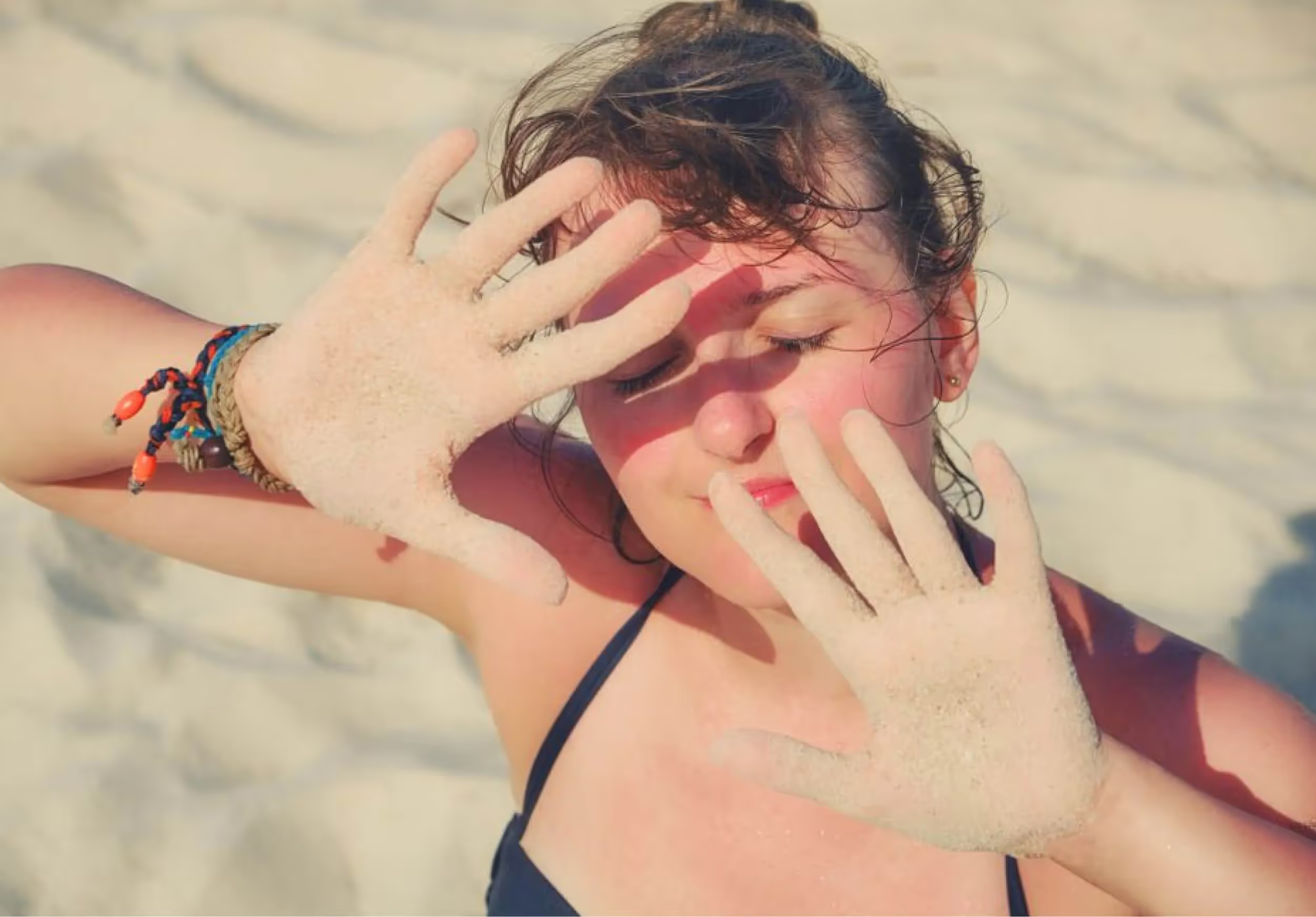
In your circle of friends or among family members, you certainly know someone who suffers from sun allergy or polymorphic light eruption. This allergic reaction affects 10 to 20% of the western population. Light-skinned people are particularly sensitive to it and it is also a women's problem. Twice as many women than men have sun allergies. The annoying thing about an allergy is that it can appear suddenly and is not a one-off. Those who suffer from it will have to be alert to the first rays of the sun the following year to prevent another allergic reaction. Learn more about the condition and how a dermatologist deals with this one.
An abnormal skin reaction after normal sun exposure
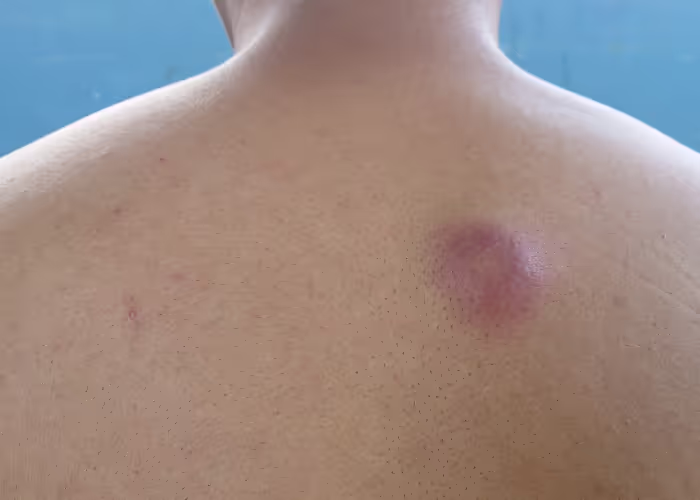
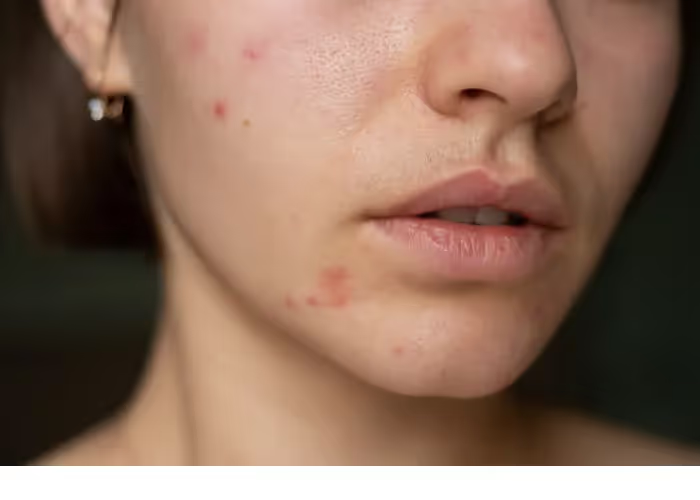
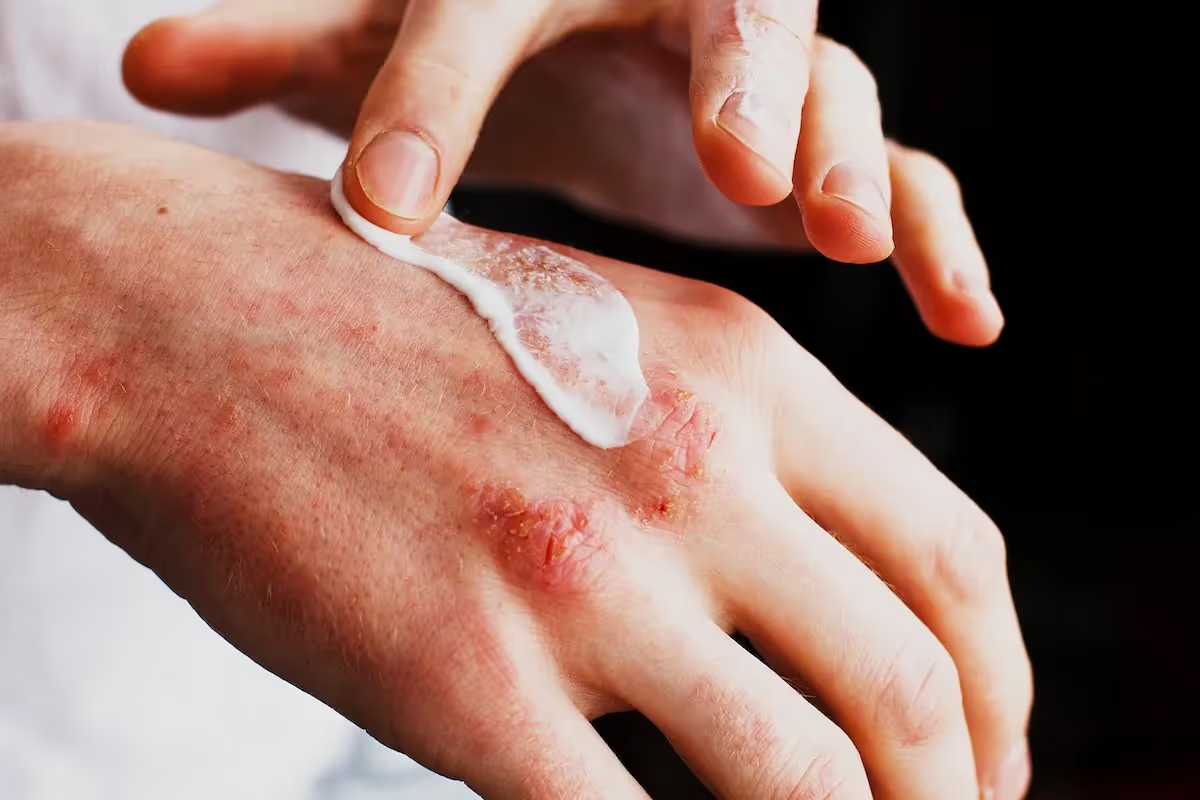
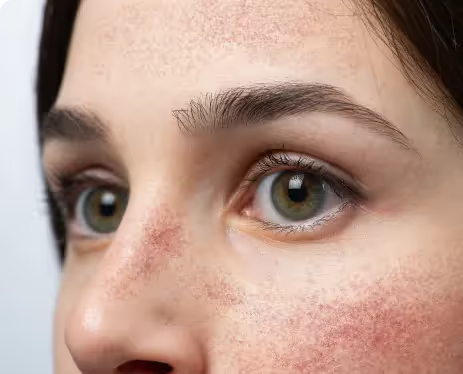
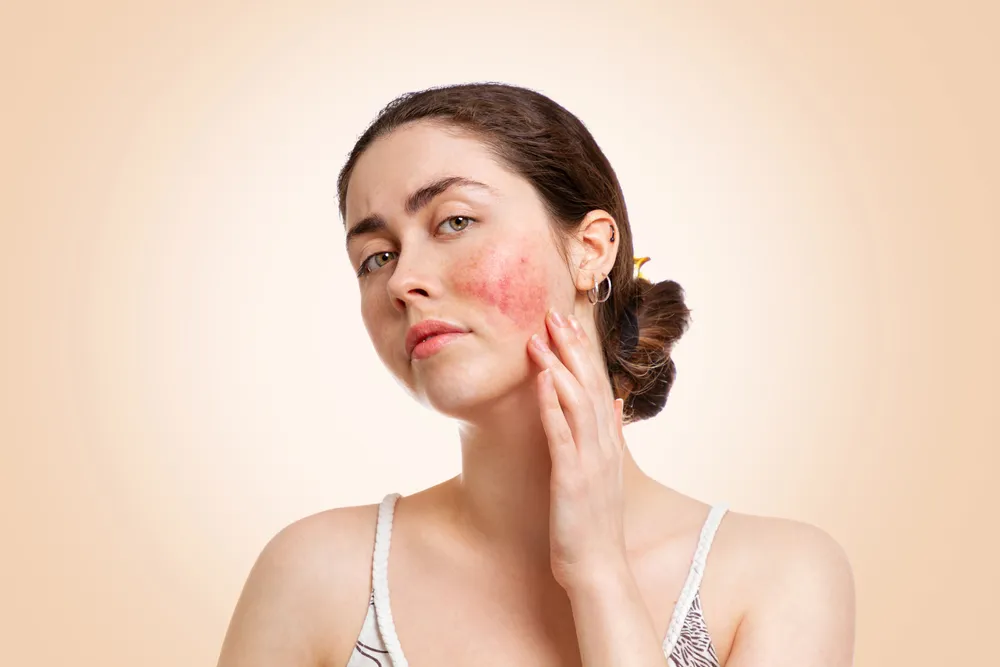
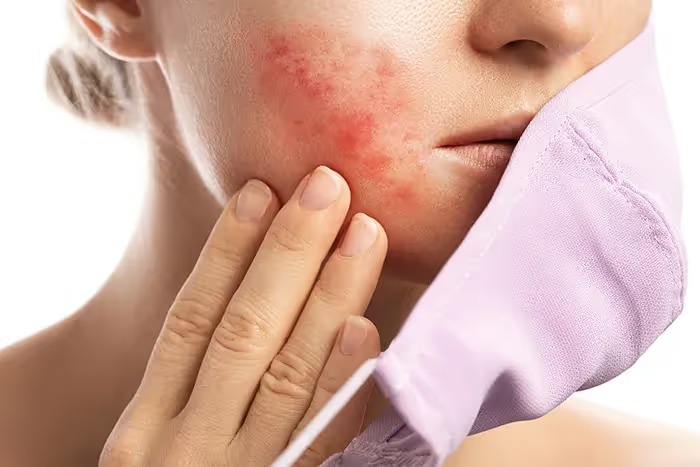
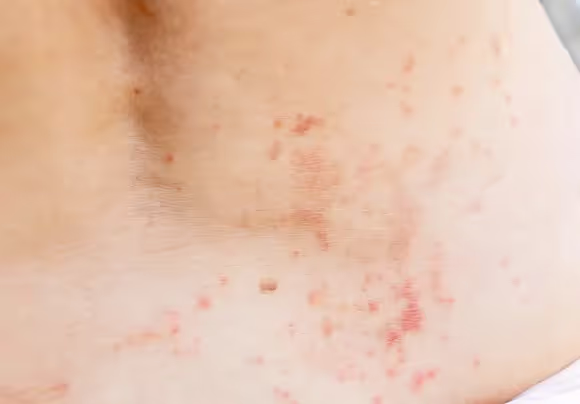
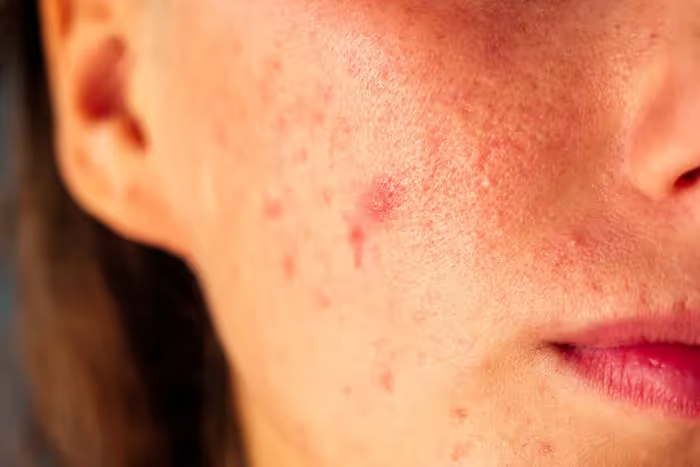
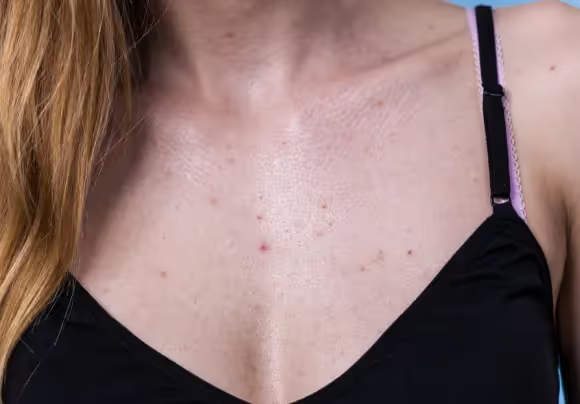
You don't get a sun allergy just because you've been in the sun too much. It is skin that reacts abnormally to normal sun exposure. The allergy is expressed by strongly itchy but small bumps on the skin that is exposed to sunlight. This is often the face, neck, auricle, top of the hands, forearms and lower legs.
The balls may become blisters or the skin may be red, swollen, and scaly. They appear up to five days after sun exposure. Sometimes they spread to parts of the body that are not exposed to the sun at all. Other patients have absolutely nothing on their skin but they do have a lot of itching.
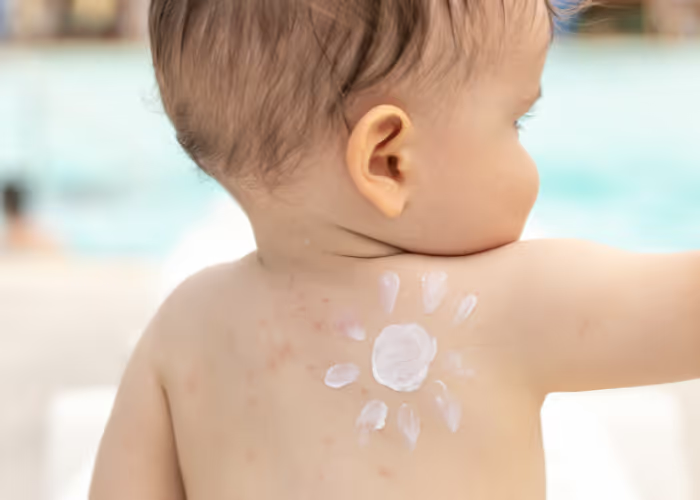
Where does a sun allergy appear? You may experience sun allergy bumps on your face, on your hands, legs, arms... where the sun has been. Polymorphic light eruption occurs in both adults and a child. You can treat the sun allergy with a sun allergy cream or medication, but prevention is of course the best cure.
Sun allergy suddenly pops up
Where sun allergy comes from is not entirely clear. You can travel to the south for years without having an allergic reaction only to suddenly be full of red, itchy bumps. It's not something you're born with. It usually appears for the first time from a teenager and young adult age, but there are also children who suffer from it.
Presumably, the first exposure to UV a rays is the culprit. Sun allergies are therefore often encountered in the spring, after a tanning session or on vacation to the sun when the skin is suddenly exposed to a high dose of UV-A rays. By the way, sun allergy is dose-dependent. This means that the higher the UV radiation, the worse the skin reaction. After the summer, the symptoms are much less.
Preventing sun allergies
As with any allergy, the best way to protect yourself against an attack is to avoid what causes the reaction. In this case, these are UV a rays. Does that mean that those who are hypersensitive to the sun's rays should stay out of the sun? Fortunately not, but you should take your precautions and watch out for the first sunny days of spring or on a sunny vacation. If you do that, you can enjoy the sun just as much as someone who does not suffer from sun allergies.
- Feel free to go out in the sun limit it in time. It's tempting to immediately spend a whole day in the sun after a dark winter on the first warm days, but it's better not to do it. Let your skin get used to the UV rays and start with a low dose. Start with a maximum of 20 minutes and build up gradually.
- Avoid the sun between 11 a.m. and 3 p.m..
- Cover the skin with clothes, a hat, or a hat.
- Sometimes it is difficult to only go out in the sun for short periods, for example when you go on a vacation in the sun. Then lubricate yourself at least fifteen minutes before sunbathing in with a high-factor sunscreen, even for UV-A rays. Be sure to check that on the packaging. Apply again after two hours.
Treat sun allergies with cooling cream
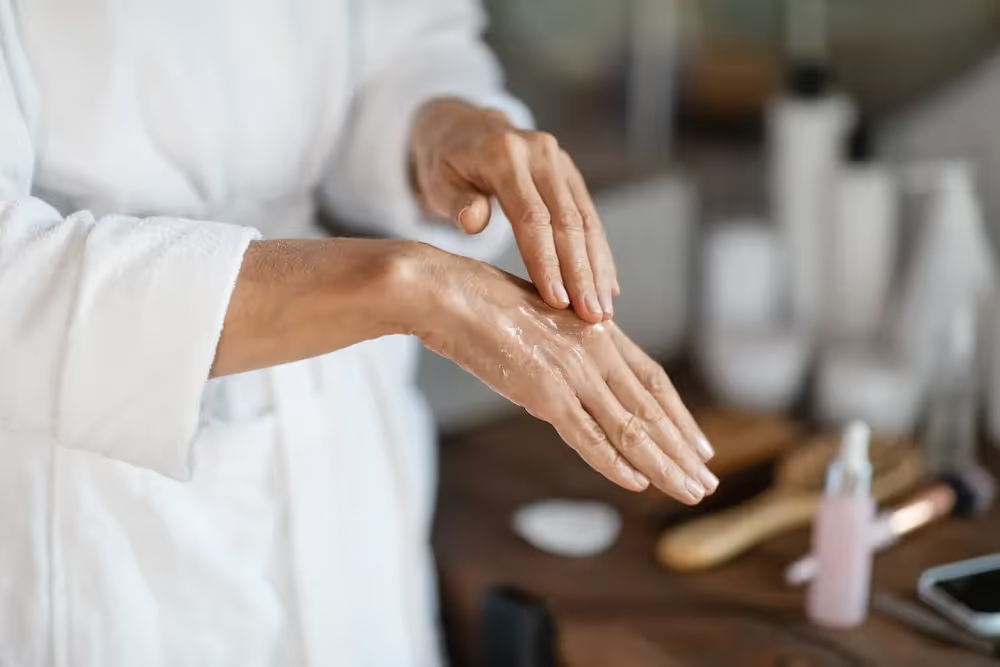
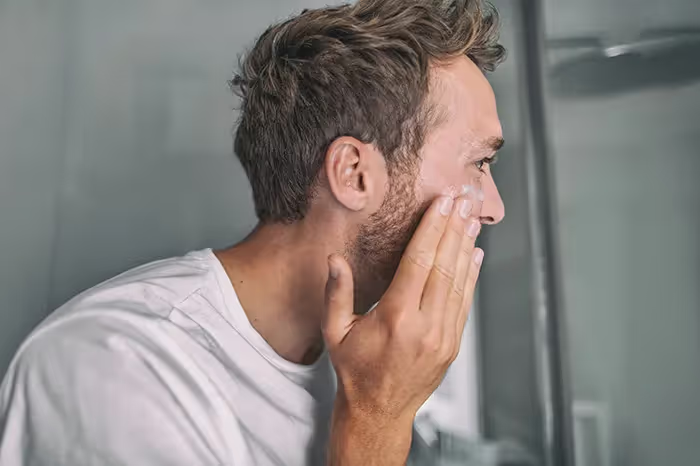
Sun allergy goes away automatically if you stay out of the sun and are therefore no longer exposed to UV-A rays. In most cases, you don't need to see a doctor or dermatologist and an anti-itch cream will suffice. Levomenthol gel, for example, can provide relief. In case of worse symptoms, it is best to visit the dermatologist. He will prescribe a cortisone ointment that you can use for a short period of time. Oral medications taken over a week help with serious complaints.
If the sun allergy keeps coming back, the dermatologist consider starting light therapy. In the hospital, the patient's skin will be exposed to an increasing dose of UV radiation twice a week for 2 to 3 months. This isn't a panacea. It helps completely in 70% of cases, partly in 1 in 5 patients. 1 in 10 patients experiences no effect.


%20(1).avif)
.avif)


%20(1).avif)
.avif)
.avif)

.avif)


-min.avif)
-min.avif)
-min.avif)

.avif)


.webp)


























.avif)


](https://static.legitscript.com/seals/624359.png)