.webp)




How does the dermatologist work when it comes to acne treatment (link to acne treatment)? Through a process that gradually builds up until you find what works against you acne. Dermatologists will therefore always first opt for treatment with a maximum effect and a minimum of side effects.
But if the severity of your acne is already high or you have already tried other medications without results, you will be treated with isotretinoin. What do you need to know about that?
What is isotretinoin?
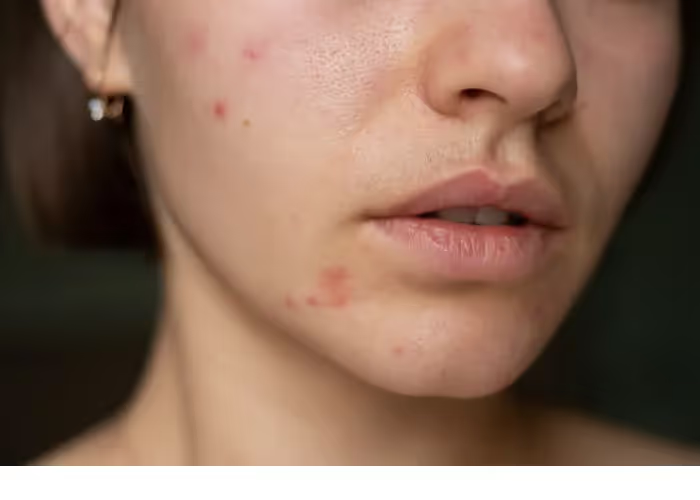
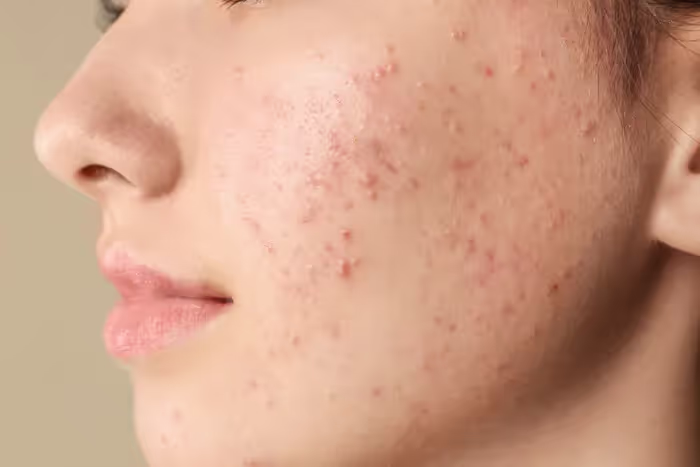
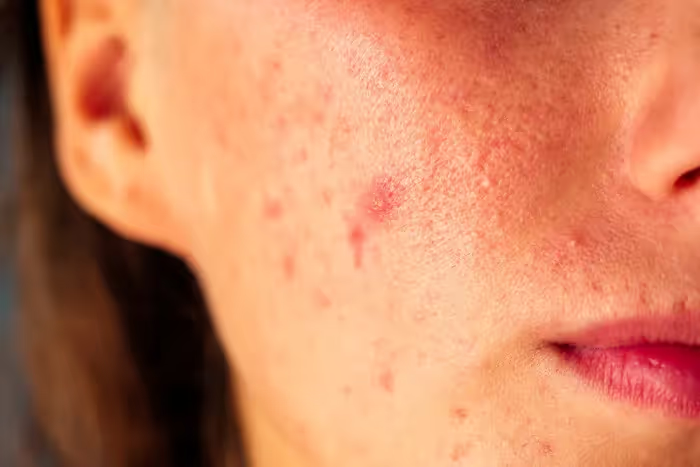
Isotretinoin belongs to the group of retinoids and is therefore related to vitamin A acid. It is reserved for the serious forms of acne with scarring, or for moderate acne that keeps flaring up despite good cream treatment and antibiotic tablets.
It will suppress sebum production in the body. The pimples dry out and the sebum plugs disappear. So this is how you get to the real cause of acne on.
Isotretinoin is not to be confused with tretinoin. Although both are a vitamin A preparation, the uses and effects are different. Indeed, isotretinoin is administered orally as tablets, is mainly prescribed for severe acne and will have to be taken over a longer period of time.
What is the treatment with isotretinoin?
A treatment takes a long time, 8-10 months, and depends on your weight. In the first few weeks, there may be a temporary worsening of acne because blackheads come out first, but after about 6-12 weeks, you will already notice a clear improvement in your skin: the number of new inflammations decreases and the inflammation also goes away more quickly. Moreover, it usually has a lasting effect, even after the end of the treatment, and is thus the only remedy that can “cure” acne.
The treatment requires a good follow-up by the dermatologist. This means that a follow-up should be scheduled every 6 weeks to check whether the dosage of the medication is properly tailored to the needs of your skin, but also of the rest of your body. This happens because isotretinoin is the toughest acne treatment that exists, and because it has a number of side effects. About that to prevent and mitigate side effects in the best possible way, but at the same time the best solution for your acne to offer, the doctor keeps a close eye on you as a patient. These checks are often accompanied by blood samples.
What are the side effects of isotretinoin and what can you do about it yourself?
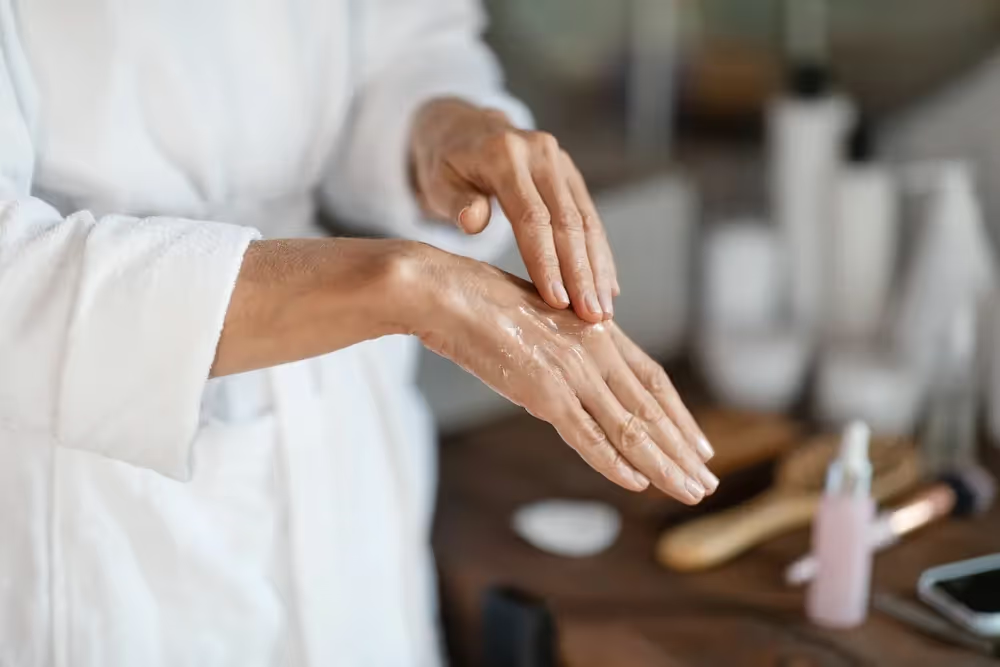
- Isotretinoin has a drying effect and you will notice that you will experience a dry skin. Moisturizing day creams and/or body lotions are therefore a real must to nourish your skin when taking isotretinoin. In addition to dry skin, it also causes dry lips and dry eyes. This can be remedied by using hydrating lip balms and eye drops.
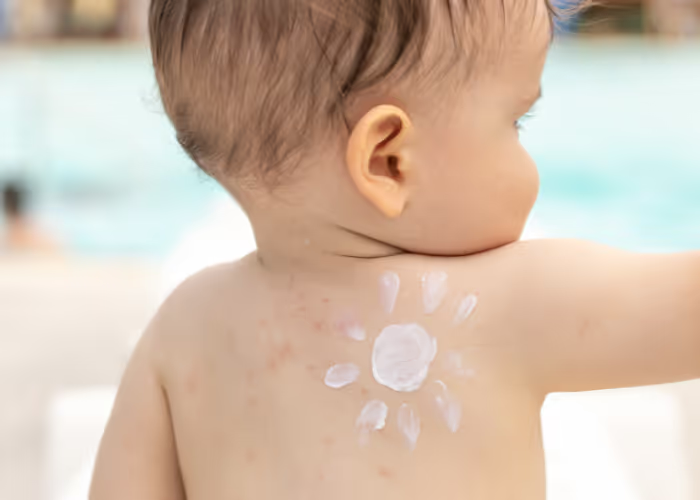
- Your skin will also be affected by the medication become more sensitive to sunlight. A good sunscreen that protects you from both UVA and UVB rays is therefore appropriate. Opt for the highest possible protection (at least factor 50).
- Girls and women are allowed absolutely not/get pregnant during the cure, as the drug causes damage to the unborn fruit. For female patients, a pregnancy test will therefore also be carried out when blood is taken. Of course, you must provide good contraception yourself.
Do you want to receive sufficient follow-up during your acne treatment, without having to make an appointment or move? Via Skindr guides one of our certified dermatologists you from start to finish. From smooth communication to follow-ups at key moments in your journey, you will be supported by a medical expert throughout your treatment.


%20(1).avif)
.avif)


%20(1).avif)
.avif)
.avif)

.avif)


-min.avif)
-min.avif)
-min.avif)
.avif)


.webp)





























.avif)