.webp)




If you often end up on the skincare side of TikTok, you've probably heard of skin cycling. A trend that has little to do with a spinning routine for your skin, but offers a new way to take care of your skin by not using the same products every day. This is how you give your skin rest days. Who does that work for and who should avoid the trend? We'll look at it with you.
What is skin cycling?
Skin cycling is a skincare routine created by a dermatologist, where rest days play a central role. For example, the routine gives the skin the chance to recover after certain products. It would be an effective way of improving the skin by significantly reducing the risk of irritation and inflammation.
What do you need for it?
- An exfoliator
- A retinoid
- Possibly a moisturizer (preferably choose a mild product with as little perfume as possible)
A skin cycle lasts 4 days that are then repeated over and over again. This focuses once on exfoliation, once on treatment with vitamin A, and twice on the skin to recover.
How does skin cycling work?
Day 1: Exfoliate
The first day in the routine is dedicated to exfoliating: you cleanse and pat the skin and then apply a peel. So vremove your dead skin cells from the surface of the skin. That is the most logical first step. Because what's on top of your skin is removed first, the products you apply afterwards can penetrate deeper into the skin and work more effectively.
Tip from the dermatologist
Use a fruit acid-based exfoliant instead of a scrub. This is because scrubs can damage the skin.
Day 2: Retinoid
This second day focuses on retinoids, vitamin A preparations that help reduce fine lines and wrinkles and prevent pustules. This includes stronger creams that support skin renewal and are available through a dermatologist, but also milder, over-the-counter products, such as retinol.
Days 3 and 4: Rest
The last few days in the cycle are the recovery period. During the recovery nights, you omit exfoliating acids and retinoids and give your skin the chance to rest. Focus on nourishing and repairing your skin barrier, so think: hydration and moisture as buffers for “more aggressive” products, and avoid irritating ingredients.
What are the benefits of skin cycling?
- The natural skin barrier can repair
- The risks of side effects are smaller
- Seasonal problems, such as dry skin in winter, are less common
What are the side effects of skin cycling?
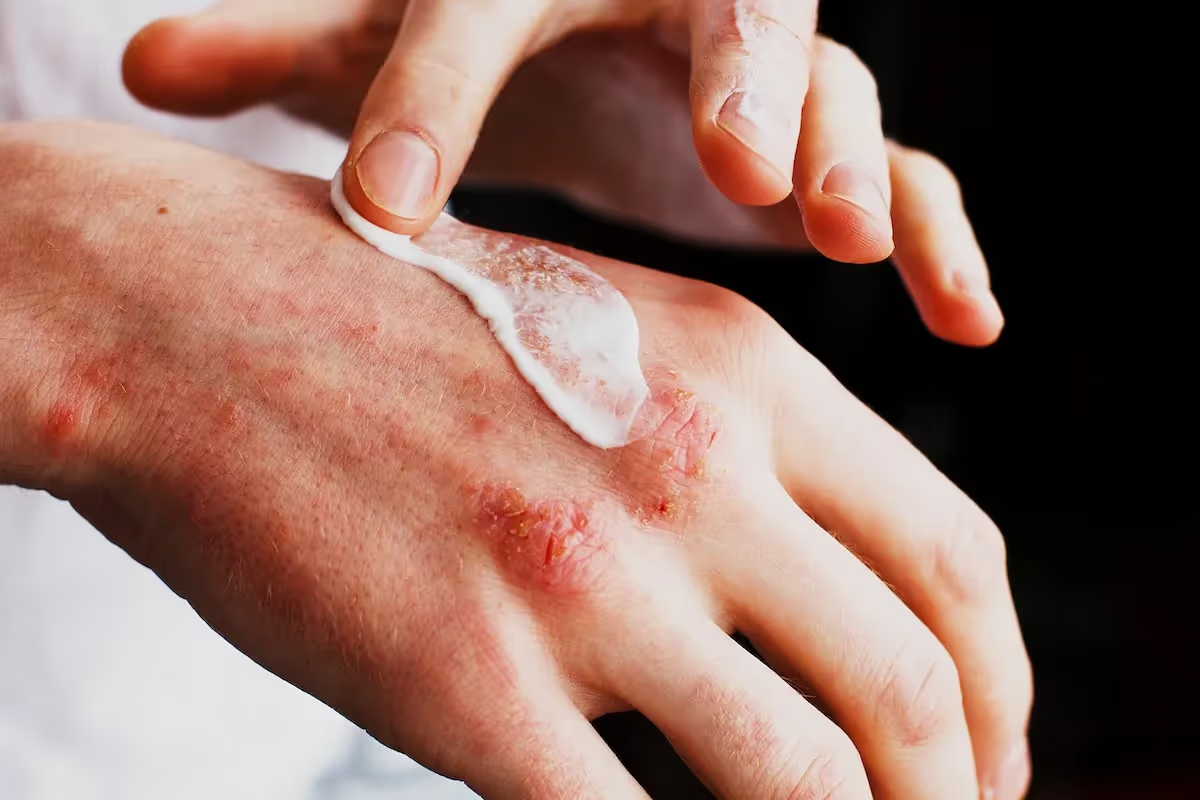
Those who have never used retinoids before will notice that they can dry out the skin very much. Depending on the skin type, some will suffer less from this, some just more. Although skin cycling already partly helps prevent that drying effect, it is still possible that once every 4 days is too frequent for you.
Advice from the dermatologist
Do you want to test this? Then, from a dermatological point of view, we recommend that you first test the cycle in the suggested way, but gradually adapt it to your skin's needs. If you notice that your skin still feels dry or irritated, increase the rest days. If you notice that your skin responds well to acids and retinoids, you can only include one recovery day, for example.
Who should try skin cycling and who should avoid it?
For whom
- Skin cycling is most ideal for people who want to strengthen their skincare routine, but who are not sure where to start and don't want to go too extreme there either. You can see it as a warm-up routine.
- It's also a good routine for people with sensitive, dry skin. By not using the more 'aggressive' products daily and giving the skin a rest, irritations, rashes or allergic reactions can be avoided.
- It can also be used as a reset. Let the skin recover and then return to an already built routine or just before you want to try something new.
For whom not
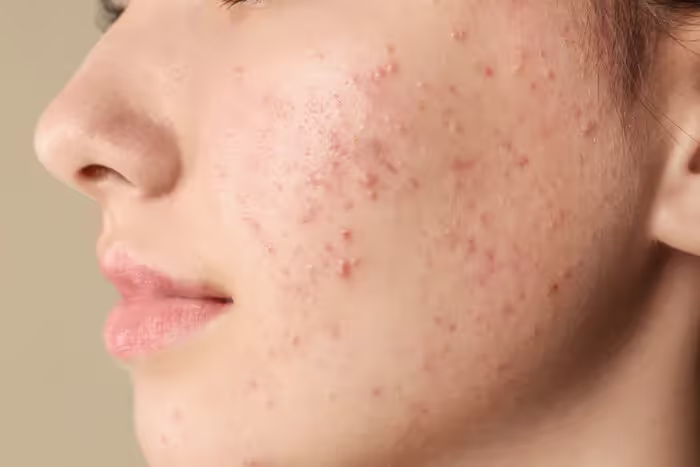
- Skin cycling is not for patients who follow active retinoid treatments for their skin disease, such as acne patients. This is because the prescribed medication must be applied or taken according to a certain pattern and deviating from this will prevent the healing process. In addition, we do not recommend using fruit acids during an acne treatment.
- Do you have oily or acne-prone skin but not to the extent that you need treatment? Then it's smarter to exfoliate more often.
- Even for people with skin that is already used to retinoids, the skin cycling routine does not seem to be the best option. This is because it will have little effect because your skin will be less irritated by the retinoids anyway, but mainly because reducing them will reduce their effect.
- Pregnant women should not use vitamin A and therefore no retinoids.





%20(1).avif)
.avif)




%20(1).avif)
.avif)
.avif)


.avif)


-min.avif)
-min.avif)
-min.avif)


.avif)



.webp)




































.avif)



](https://static.legitscript.com/seals/624359.png)