.webp)




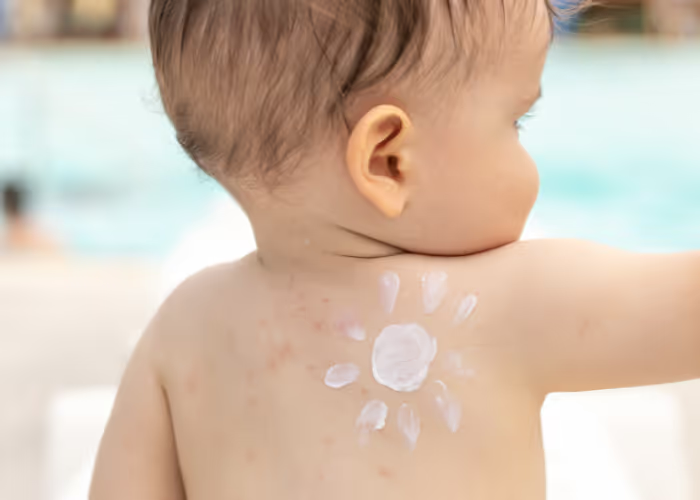
Spotted a spot on your child? Then there is a good chance that your child has one of the blemish diseases. Stain diseases are caused by a bacteria or a virus and are therefore always contagious, but also harmless. Those small infectious spots on your child's skin, where do they come from and how do you know which childhood illness it is?
01 The fifth disease
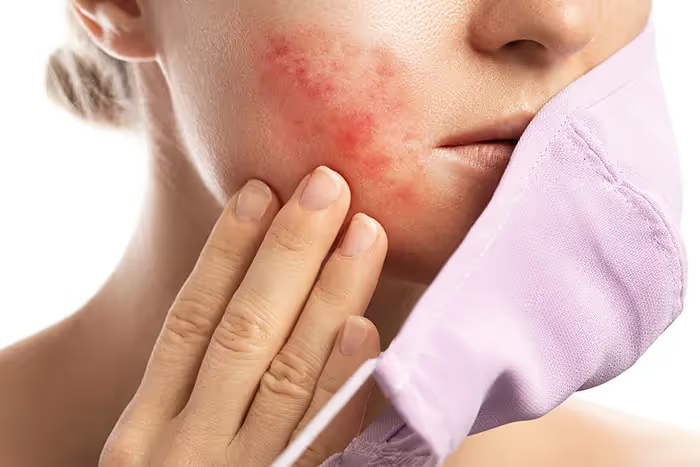
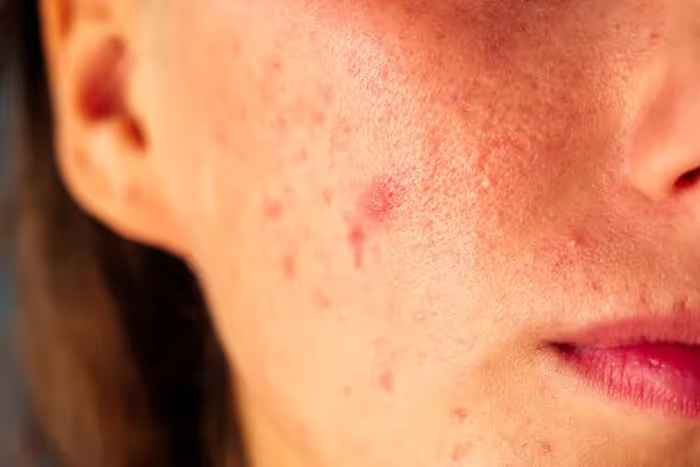
Besides the fact that your child will become a bit hanky, the fifth disease is very harmless. The first symptoms will be butterfly-shaped spots and bright red cheeks see. After that, you can find the spots all over the body. Sometimes there are so many spots that you can barely distinguish them. After about 10 days, they will move away.
Did you know that
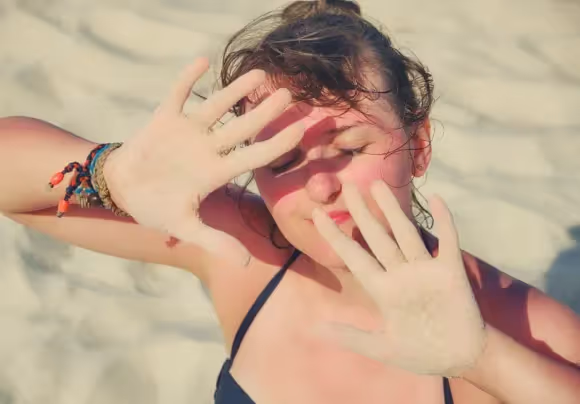
A hot bath or the sun can cause the stains to come back temporarily. So don't worry if your child gets a rash again.
02 The sixth disease
The sixth disease is the most common spot disease among children under the age of two. Your child will first fevers get and you will notice that the glands in the neck and behind the ears can swell very much.
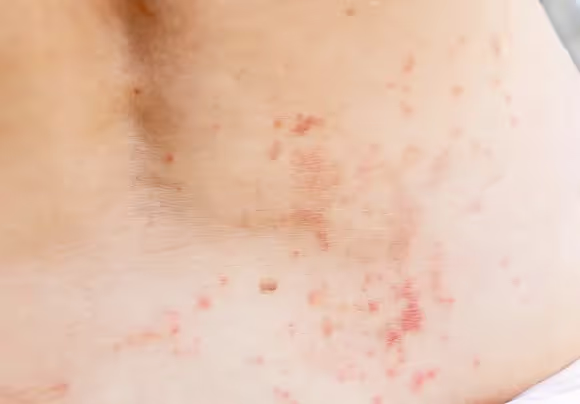
In this condition, the spots only appear when the fever has fallen, and disappear after two days. Recognizable by the small light red spots that don't itch.
03 Measles
Measles starts with a colds, with symptoms such as cough, red eyes and possibly fever. Your child may also be more sensitive to light.
After 3 days, white dots in the mouth, then there are purple-red spots that spread across the body from behind the ears. The spots gradually turn brown and eventually just blend into the skin so you don't work out.
Measles can cause complications. For that reason, the disease is also included in the Child and Family Vaccination Program. This way, you can get your child vaccinated preventively.
04 Scarlet fever
Scarlet fever has a sense of drama, and can seem serious at first: fever, throat and headache and nausea are common symptoms. But don't worry too much. Scarlet fever is rare and easy to cure.
The result starts with a white tongue, after two days you also see dark red speckles (similar to goosebumps) on your child's chest that spread rapidly all over the body. Then the face becomes completely red except for the triangle around the nose and mouth. At the peak is the bright red tongue with bumps (similar to a raspberry).
05 Chicken pox
Chicken pox (or chicken pox) is common and will show up especially in the winter. In most cases, it starts as a colds and your child may get a fever. Chicken pox is a real childhood disease and is highly contagious, but you can only get it once in a lifetime.
Chickenpox can be recognized by the small red blisters that are caused by a virus. They evolve from vesicles to bumps and are dried in after two days.
06 Hand-foot-mouth disease
The hand-foot-mouth disease is a harmless infectious disease that occurs in red spots on the palms, paw padsand/or in the mouth of your child. These spots can grow into blisters that burst easily.
When to see a dermatologist with teething problems?
In case of teething problems with spots, some extra care and love for your little one is usually sufficient. After all, they will go away on their own. Do you notice that your child is getting worse or the spots are not healing? Then there may be more to it. We recommend that you contact your doctor or dermatologist if:
- the stains don't fade when you press them
- your child gets sicker or stays ill for a long time
- your child is less than three months old and has a fever
Of course, you know your child best. Are you worried? Then you can go via the Skindr app always receive professional advice quickly from a dermatologist.



%20(1).avif)
.avif)


%20(1).avif)
.avif)
.avif)

.avif)


-min.avif)
-min.avif)
-min.avif)


.avif)


.webp)





























.avif)



](https://static.legitscript.com/seals/624359.png)