.webp)




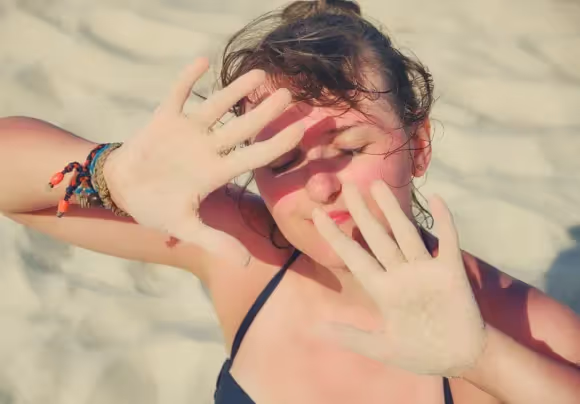
When we talk about summer ailments, sunscreen is definitely number one. Despite all prevention campaigns, we see a lot of burned skin every year. In this blog post, we'll list everything again: how to protect yourself against sunburn, what do you do best if you get burned and when to see a doctor or dermatologist?
How to protect against sunburn?
- Opt for a broad spectrum sunscreen (protects against UVA and UVB rays) with at least SPF 50. By the way, wearing sunscreen doesn't mean you can't get a nice tan anymore.
- Smear regularly, especially after swimming.
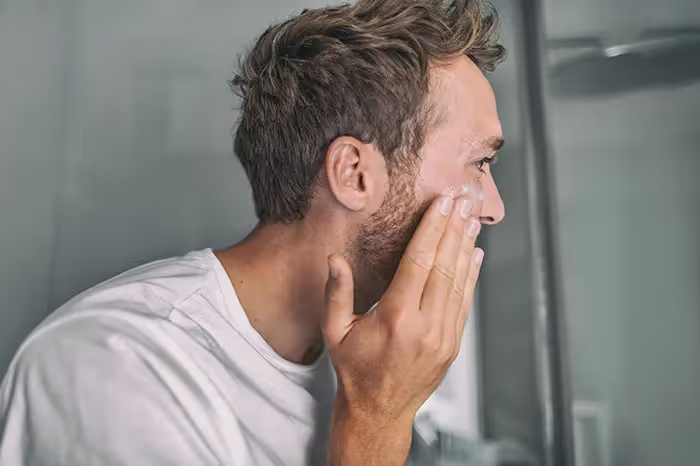
- More is more, for once: use at least 2 full fingers of sunscreen to apply to your face.
- Don't forget your lips. Burnt lips are very painful. Use a lip balm with SPF.
- Protect your scalp with a headgear to wear, and wear as much as possible bProtective clothing.
- Don't forget your eyes, too. We see melanomas behind the eye more and more often. One sunglasses is therefore not only useful for watching, but also for protecting your eyes.
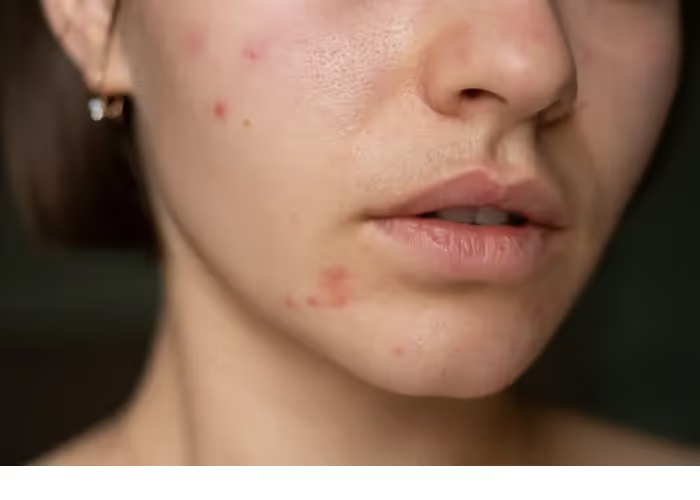
- Also lubricate with a sunscreen if you suffer from acne: your sensitive acne skin must also be well protected against harmful UVA and UVB rays.
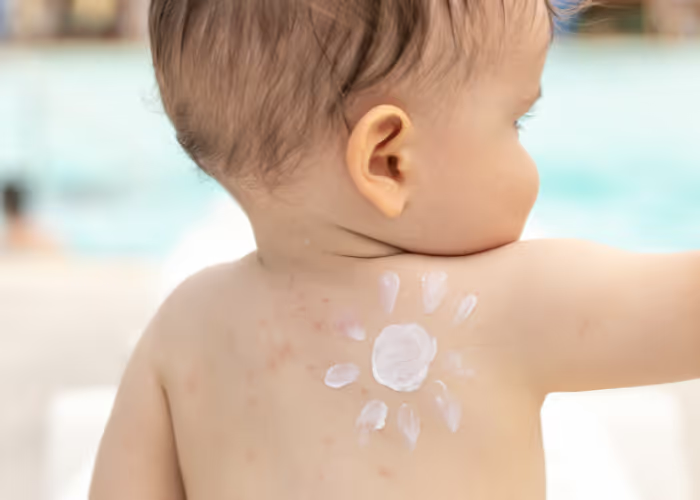
How to protect children from sunburn?
- It is best to keep babies out of the sun by having a parasol to be placed on the pram.
- Always coat them thoroughly with a sunblock. This means at least a factor of 50.
- One hat or sun hat and sunglasses are not an unnecessary luxury.
- Do them the appropriate clothing on. Wide, dry clothing offers the best protection. Wet clothing lets UV rays through better. There are also special UV-blocking clothing (but use sunscreen anyway).
What if your skin does burn?
Despite your good intentions, it can still happen that your skin burns. Who doesn't forget to apply sunscreen on time or unconsciously skips a spot? In that case, it is important to intervene in time. A quick approach can make a big difference and limit skin damage as much as possible.
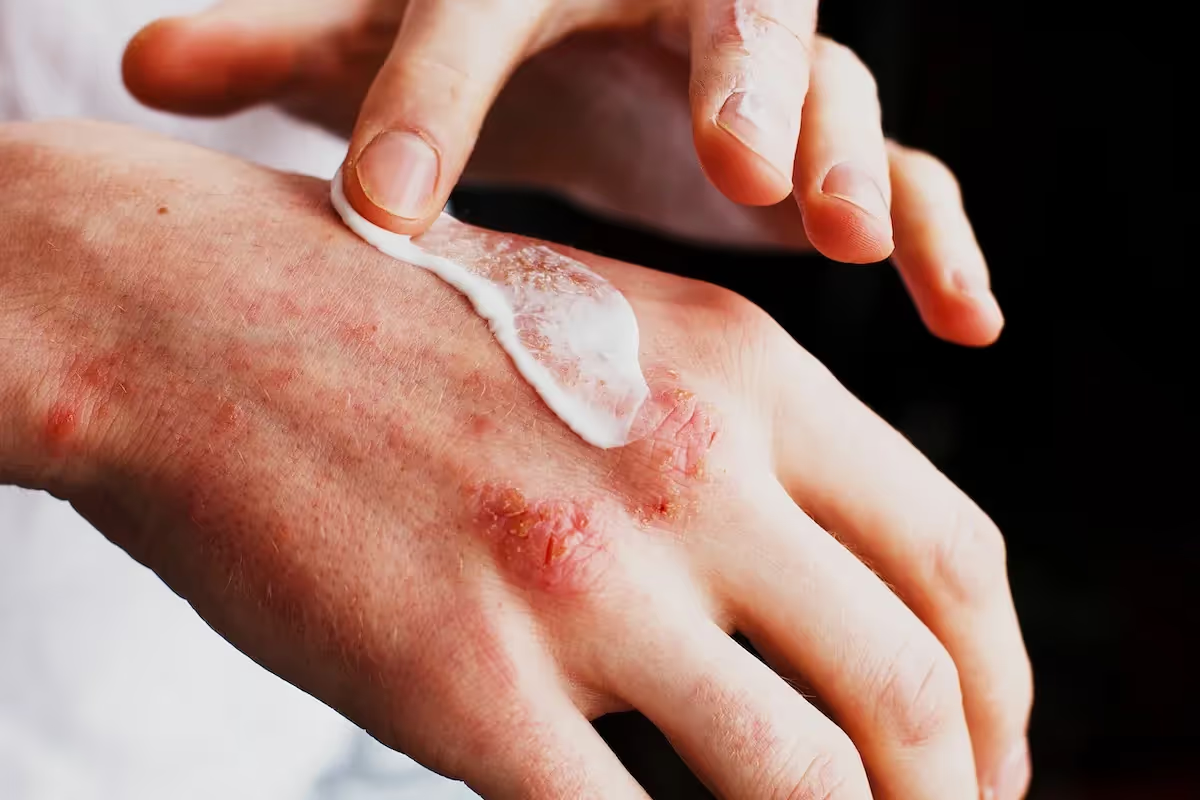
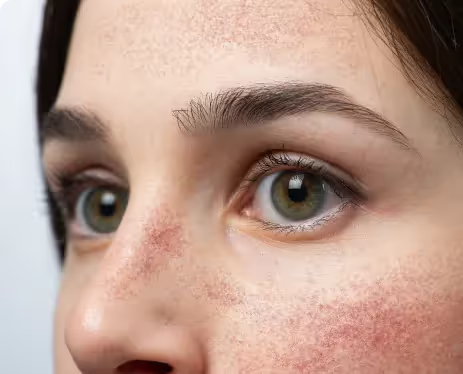
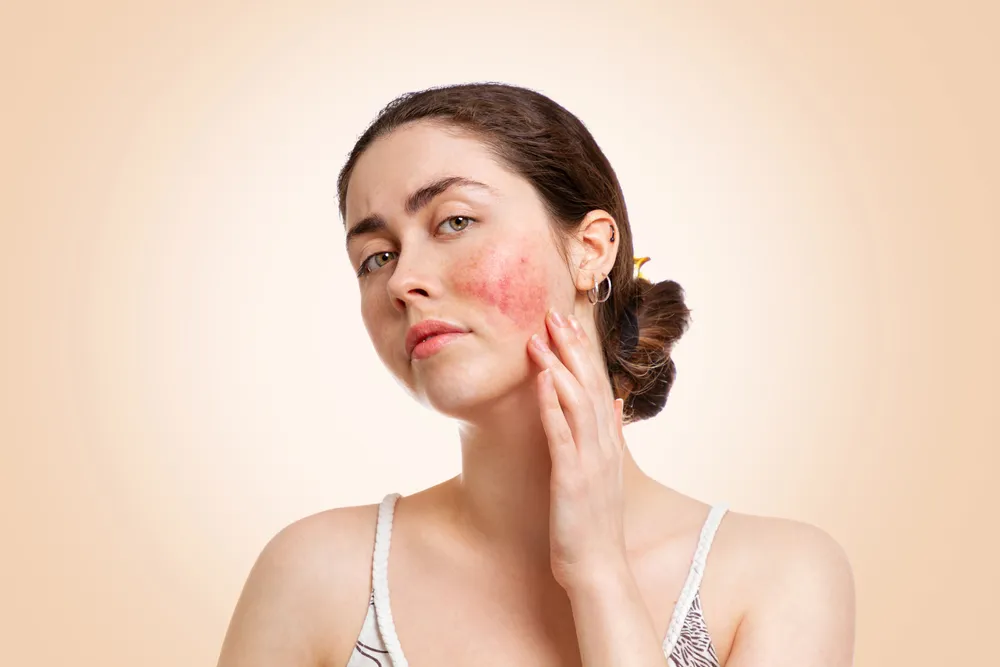
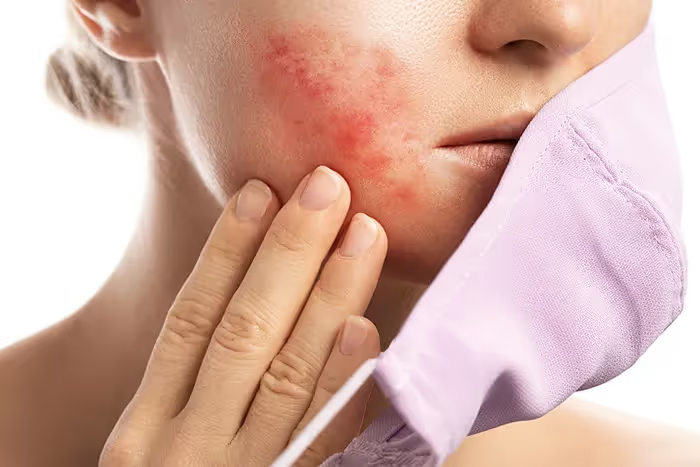
As soon as you notice that the skin feels burning or glowing, immediately sit in the shade. If your skin looks red, it means that an inflammatory reaction has occurred and that is the result of skin damage. Skin that is already slightly red needs immediate care. These tips can help you:
- The first aid consists of a cortisone-containing cream to smear on damaged skin. This cream suppresses inflammation and reduces the degree of damage.
- Take an anti-inflammatory painkiller (NSAID): NSAID stands for Non-Steroidal Anti-Inflammatory Drug. It is a anti-inflammatory agent. Taking an anti-inflammatory drug within the first few hours after combustion may suppress the reaction.
- After bathing, lubricate the skin thoroughly with a water-based hydrating cream.
- Drink enough water.
- Cover the skin with loose clothing so that it does not come into direct contact with the UV rays.
- One refreshing dip in the pool or a cold shower taking will feel comfortable. However, stay not too long lie in the pool or take a cold shower. Keep in mind that the UV rays reflect off the water.
Types of combustion: different degrees
There are different degrees when it comes to your burned skin, including other symptoms. Each degree of combustion also needs a different solution:
First degree incineration
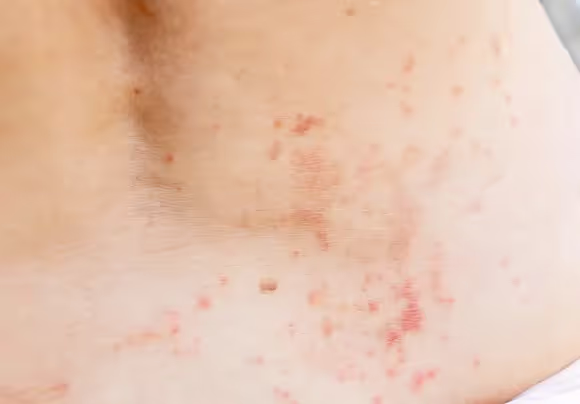
If you have suffered a first-degree burn, your skin is slightly reddened. You see this about six to twenty-four hours after exposure to the sun. You are not bored, you are not feverish or nauseous and the red color disappears after about three days.
Second degree incineration
In a second degree burn, we see red skin that feels warm, hurts and starts to feel that way a few hours after exposure to the sun. After about three days, the skin starts to flake and the skin remains extra pigmented.
Third degree incineration
Did you have a third degree burn? Then you see that the skin is swollen, sore and dark red. Your skin will begin to peel off. After that, you notice that the skin has imperfections and is discolored.
Fourth degree incineration
In a fourth degree burn, we see blisters and red, sore skin. The skin flakes off and there is hyperpigmentation and blotchy pigmentation.
Expired sunscreen?
Also be careful with your sunscreen, as it may expire. If you take your sunscreen out in the sun often, this will quickly reduce the effect. You should also not keep using the sunscreen for too long. After about a year, the effect decreases much and you have to apply sunscreen much more often to get the same protective effect than when the bottle was new.
So be sure to check the shelf life of your sunscreen, solar oil or SPF stick: it may be past its date.
What to do in case of severe sunburn?
Serious sunburn can be recognized by the blisters that come out. At that moment, your skin is so burned that you have second or even third degree burns. Apart from the fact that this is very painful, there is nothing left to do at that moment but a to consult a doctor. The blisters are a risk of infection and possibly scarring. You may feel feverish. A doctor will prescribe appropriate treatment.
Questions about sunburn during your holiday? Through the Skindr app you can ask a dermatologist for personal advice.

%20(1).avif)
.avif)


%20(1).avif)
.avif)
.avif)

.avif)


-min.avif)
-min.avif)
-min.avif)

.avif)


.webp)



























.avif)


](https://static.legitscript.com/seals/624359.png)