.webp)




Hair loss is a common condition that affects both men and women. It can have various causes, including heredity, hormonal changes, medical conditions, stress, and nutritional deficiencies.
Whatever the cause, hair loss has a strong impact. In addition to the obvious physical symptoms, the disorder can also be emotionally difficult. Fortunately, there is specialized help and you can do this at a dermatologist rightly. We would be happy to guide you through the types of hair loss and dermatological treatments.
Is hair loss a male disease?
No, a lot of women also struggle with hair loss. Although hair loss is more likely to occur earlier in life and is more noticeable with their usually shorter hairstyles, many women also lose their hair. For example, they are more susceptible to hair loss due to hormonal changes (menopause, hair loss after childbirth...), or to hair loss related to tight hairstyles (ponytails, braiding, heat caused by styling tools...). Men, on the other hand, are more likely to be hereditary or medical conditions.
What are the most common types of hair loss?
It is quite normal to lose 50 to 100 hairs per day. Are you losing (many) more? Then it's really important to you dermatologist to let you know, because then it is probably a signal of an underlying problem. However, you can lose a lot more hair while washing the hair. That is normal.
Androgenetic alopecia (baldness in men and women)
As the name suggests (cf. genetics), it involves Androgenetic Alopecia for hereditary hair loss. The culprit in this form of hair loss is a substance called dihydrotestosterone, testosterone's angry nephew. This male hormone (cf. andro) causes hair follicles to shrivel. As a result, healthy hair can no longer grow at that area of the scalp and the hair eventually dies. This happens gradually and follows a pattern: starting with a receding hairline followed by a balding spot at the crown.
70% will have to deal with this type of hair loss. This mainly concerns baldness in men, but also shows itself as baldness in women. They can suffer from it during and after their menopause. This has to do with the increase in male hormones.
Alopecia Areata
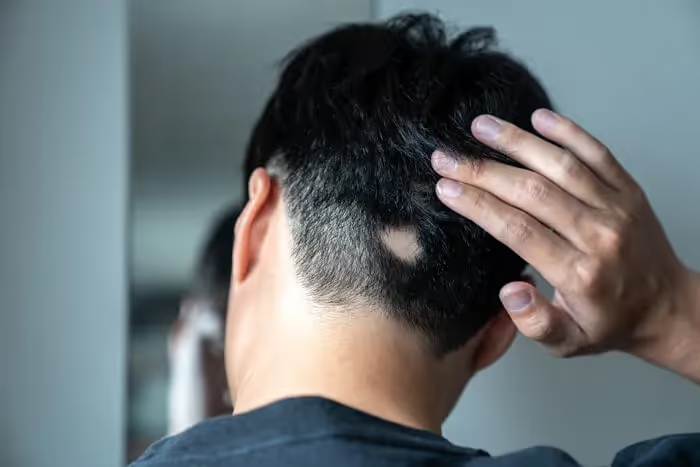
Bee Alopecia Areata there is spot-on hair loss. This means that hair loss only occurs in specific, defined areas. The spots are usually round or oval. Alopecia Areata is an autoimmune disorder in which the body's own immune system attacks the hair follicles. So your immune system is actually working too strongly and is going to fight against something that is not allowed. Fortunately, the hair follicles are not permanently damaged, and the hair can grow back.
Is your immune system recovering? Then your hair will normally grow back. Is this not the case? Then it's best to stop by a dermatologist. They can help you stimulate regrowth or further investigate whether it is not another form of hair loss.
Telogen Effluvium
In other words, hair loss due to too much stress in your body. Normally, your hair goes through 3 phases: the growth phase, the resting phase (= hair no longer grows) and the dying phase (= hair falls out). With healthy hair, 90% of the hair is in the growth phase, 10% in the resting phase. If that 10% suddenly goes to 30% or more, the hair dies after about 4 days. In that case, we speak of telogen hair loss.
It is an acute form of hair loss caused by stress, but hormonal changes, certain medicines or blood shortages can also cause it. For example, it is often seen after a pregnancy. If hair loss lasts longer than 5 months, we speak of chronic telogen hair loss.
Tinea Capitis
Tinea Capitis is a fungal scalp infection that causes sudden hair loss and irritated, itchy scalp. This type of hair loss is less common in adults, but more common in children. The fungal infection can then present itself as a pronounced “rose”. If treated quickly, the hair can grow back. Do you have doubts? Contact one anyway dermatologist. Better safe than sorry.
Traction alopecia
Traction alopecia is a gradual form of hair loss, in which hair that has been under pressure for a longer period of time dies. This includes hairstyles that keep the hair very tight, extensions, a bike helmet that is too tight or too much heat on your hair. Your hair can still recover if you pay attention to this and opt for a loose hair style or change it regularly, but hair loss can also be permanent if you do not intervene.
Traction alopecia will first manifest itself in small bumps at your hair roots, then in the breaking off of hair strands (especially on the forehead) and eventually in your hair falling out.
Trichotillomania
With trichotillomania, the problem is rather mental: people will compulsively pull their own hair out. It often involves eyelashes and eyebrows, but scalp hair can also be pulled out, causing bald spots. Do you notice that you are often picking at your hair, for example when you are under a lot of stress? We recommend that you contact your doctor or psychologist. Because getting rid of it alone is quite difficult.
What can a dermatologist mean for you?
01) Determining what form of hair loss is involved
For you dermatologist you can help, she will first determine what type of hair loss it is. After all, the treatment depends on that. In some forms of hair loss, regrowth occurs spontaneously, while others require dermatological treatment.
02) Determining what causes hair loss and why
Through an expert examination of the scalp, or sometimes through blood tests or a biopsy, you can dermatologist find out the cause of the hair loss. In order to be able to treat with lasting results, it is important to know why your hair falls out.
03) Establish a treatment plan that addresses the cause of the hair problem
Time for action. Your dermatologist will create a customized treatment plan: this can range from local treatment, to medication to scalp injections (hair fillers).
04) Monitor progress during treatment
Restoring hair growth takes time and, in most cases, treatment takes place over a certain period and in phases. It is best to have an expert at your side who monitors the recovery. You dermatologist can assess whether the treatment is working well and make adjustments where necessary.
What treatments are available for hair loss?
Androgenetic Alopecia Treatment
01) Local treatment
Sprays, creams or gels restore your scalp and capillaries to prevent thinning or loss. Usually this is a lotion that reverses the shrinkage of the hair follicle and ensures good blood flow in the capillaries.
02) Medication in pill form
Treatment can also be done with medication in the form of pills that prevent testosterone from being converted to dihydrotestosterone.
03) Injections
When treated with injections, plasma injected into the skin at balding areas to prevent further hair loss and stimulate hair growth. These injections are re-administered every 4 to 8 weeks for best results.
Alopecia Areata Treatment
Specifically for the treatment of Alopecia Areata, the focus is on suppressing immune inflammation and regrowing hair. This happens in a first phase with local cortisone-containing lotion or injections of cortisone preparations into the scalp. In addition, treatment with a low-dose antibiotic to inhibit immune inflammation an opportunity.
Telogen Effluvium Treatment
The treatment of chronic telogen hair loss addresses the influencing factors: stopping the medication that triggers hair loss, supplementing blood shortages, treating any thyroid problems and hormones.
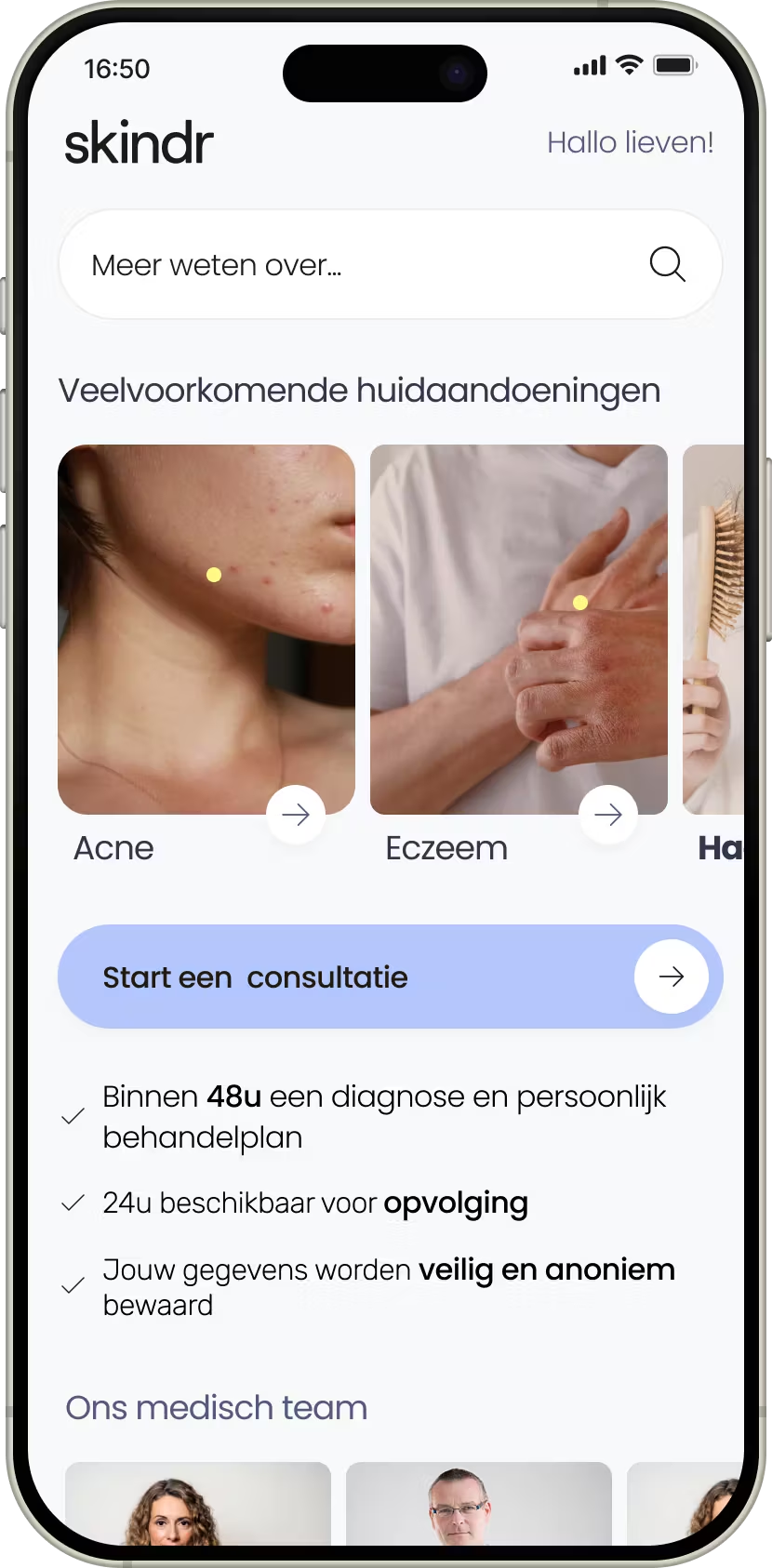
Do you want quick advice from a dermatologist who can closely monitor the treatment? Start regrowing your hair today via the Skindr app. Us team of dermatologists is ready to reverse your hair loss.


%20(1).avif)
.avif)


%20(1).avif)
.avif)
.avif)

.avif)

-min.avif)
-min.avif)
-min.avif)

.avif)


.webp)


























.avif)


](https://static.legitscript.com/seals/624359.png)