.webp)




A painful swelling on the skin is not only annoying, but can also cause uncertainty. Especially when you're not sure whether it's an ordinary furuncle or something more serious, like a nine-eye. In this blog, you can read the difference between these two skin infections, how to recognize, treat and, last but not least, prevent them. We also pay attention to furunculosis, a recurrent form of furunculosis.
What is a furuncle?
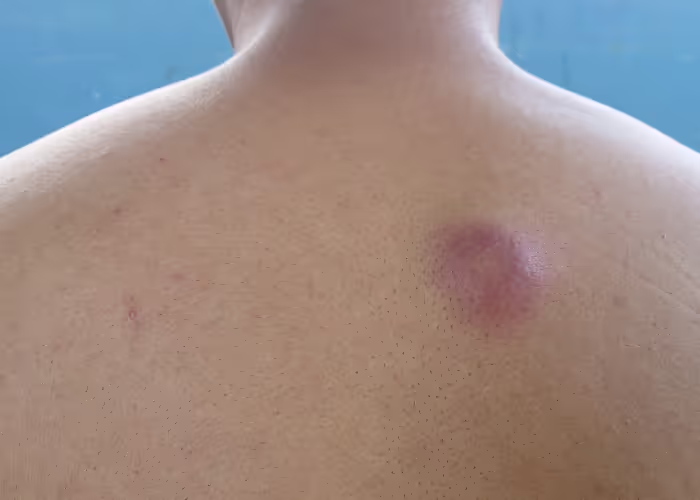
A furuncle, also known as a furuncle, occurs when a hair follicle becomes inflamed. This is usually caused by a bacteria, Staphylococcus aureus, which penetrates the skin through minor damage. Subsequently, a red, painful swelling occurs that is sensitive when touched. Often, a dot with pus forms in the center of the bump. A furuncle can appear on its own, but sometimes several occur at the same time or follow each other.
When multiple furuncles come together and form a larger inflammation, we speak of a nine-eye — a more serious variant.
And what is a nine eye?
A nine eye occurs when several hair follicles become inflamed side by side and together form a large, painful swelling. The skin around it is often redder and warmer than a normal furuncle. The area may be deeper, and it can make you feel really sick, for example with a fever or chills. People with a weakened immune system or underlying conditions such as diabetes are particularly at risk.
A nine-eye requires extra attention, because without proper treatment, the infection can spread further. In such cases, medical attention is necessary.
Furunculosis: furunculosis over and over again
Some people regularly get boils in various parts of their body. Then there is furunculosis. This may indicate a persistent presence of the bacteria on the skin or in the nose, or a reduced immune system. That is why it is important not only to treat the inflammations themselves, but also to pay attention to hygiene and lifestyle.
For example, use antiseptic soap while showering, and make sure towels, underwear and clothing are washed at at least 60°C or with an antibacterial detergent. Keep your nails short and clean, avoid scratching, and don't share towels or razor blades with others.
How do you know if it's a furuncle or a nine-eye?
Both disorders often start the same, but differ in course and intensity. A common furuncle is usually smaller and better defined. The pain is local and you often don't feel sick otherwise. In a nine eye, the inflammation is larger, deeper and hurts more. General complaints such as fever can also occur.
If you notice that the swelling is spreading or multiple pustules are clumping together into a larger mass, it is wise to see a doctor quickly. Especially when it makes you feel sick or if you often suffer from these types of skin problems.
What can you do yourself in case of a furuncle?
Fortunately, you can often do something yourself with a regular furuncle. By placing a warm compress on it (for example a clean washcloth with warm water), you improve blood flow and help the body to expel the pus. Do this several times a day, about 10 to 15 minutes each time.
Never squeeze out a furuncle yourself, as it can worsen the infection or spread bacteria. Optionally, use an antibacterial ointment, but do this in consultation with the pharmacy or doctor.
Does the furuncle not go away by itself or is it getting bigger? Sometimes it is necessary to make a small incision in the skin under local anaesthesia so that the pus (pus) can run out and the wound can then be rinsed thoroughly to prevent further inflammation.
What if it's a nine-eye?
A nine-eye almost always requires medical treatment. The doctor will usually open and clean the area professionally, and antibiotics may also be needed, depending on the severity. In risk groups — such as people with diabetes — it is important to closely monitor how the healing process works.
When should you definitely go to the doctor?
Don't keep walking around with doubts for too long. Contact your doctor if:
- The swelling gets bigger or isn't better after a week.
- You get a fever or you feel generally ill.
- The inflammation spreads to surrounding skin.
- You repeatedly have furuncles or nine eyes.
How do you prevent these skin problems?
Good hygiene and a healthy lifestyle are your best defense. Wear loose-fitting clothing to prevent friction, and make sure you have clean towels and underwear.
Pay extra attention to wounds: disinfect small cuts or scratches immediately. Keep nails short and clean, and avoid sharing personal items such as towels or shavers.
Lastly
Boils and nine eyes are annoying but treatable skin problems. The most important thing is to know what you see and when to intervene. Do you have doubts? Then always contact a doctor. This way, you can prevent worse and discomfort.




%20(1).avif)
.avif)


%20(1).avif)
.avif)
.avif)

.avif)


-min.avif)
-min.avif)
-min.avif)


.avif)



.webp)































.avif)


](https://static.legitscript.com/seals/624359.png)